Valerian
Also known as garden valerian, valerian, valerian root, valeriana officinalis
Key takeaways
- A systematic review concluded that valerian as a sleep aid is safe but not effective (PMID: 17517355).
- An umbrella review of evidence for insomnia suggests that primary studies on valerian's efficacy are inconsistent (PMID: 38359657).
- Cochrane reviews indicate insufficient evidence to support valerian for anxiety disorders (PMID: 17054208).
What the research shows
AI-synthesized from 33 peer-reviewed sources · Updated 2025
Valerian root is a widely used herbal supplement primarily utilized as a sleep aid and for the management of anxiety. While some individual studies suggest benefits, large-scale systematic reviews and meta-analyses generally indicate that its effectiveness for insomnia is inconsistent or negligible.
By condition
Insomnia/Sleep Problems
Weak
Multiple meta-analyses and systematic reviews conclude that valerian is generally safe but lacks consistent evidence of effectiveness for treating insomnia.
Anxiety
Insufficient
Evidence from systematic reviews suggests there is insufficient data to support its use as a primary treatment for anxiety disorders.
ADHD
Insufficient
Systematic reviews of herbal medicines in children with ADHD do not provide strong evidence for the efficacy of valerian.
Effective doses
Specific dose ranges were not provided in the provided abstracts; however, studies often utilize extracts of the root or combinations with other herbs like hops.
Safety & interactions
Generally considered safe for short-term use, though it may interact with other GABAergic substances or sedatives.
Limitations
Research is limited by high heterogeneity in study design and inconsistent results across different meta-analyses. Many studies suffer from small sample sizes or poor methodological quality.
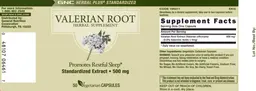
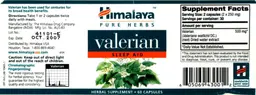
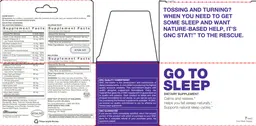
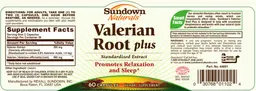
Top-rated Valerian products
Ranked by safety score and evidence coverage
Drug–supplement interactions
76 documented interactions
| Drug | Severity | Mechanism | Evidence |
|---|---|---|---|
| Antiarrhythmics | Critical | Valerian is a weak inhibitor of CYP2C9, which decreases metabolism of CYP2C9 sub | cyp-inferred |
| Anticonvulsants | Critical | Valerian is a weak inhibitor of CYP3A4, which decreases metabolism of CYP3A4 sub | cyp-inferred |
| GI Prokinetics | Critical | Valerian is a weak inhibitor of CYP3A4, which decreases metabolism of CYP3A4 sub | cyp-inferred |
| Immunosuppressants | Critical | Valerian is a weak inhibitor of CYP3A4, which decreases metabolism of CYP3A4 sub | cyp-inferred |
| Theophylline | Critical | Valerian is a weak inhibitor of CYP3A4, which decreases metabolism of CYP3A4 sub | cyp-inferred |
| Warfarin | Critical | Valerian is a weak inhibitor of CYP3A4, which decreases metabolism of CYP3A4 sub | cyp-inferred |
| ADHD Medications | Moderate | Valerian is a weak inhibitor of CYP2D6, which decreases metabolism of CYP2D6 sub | cyp-inferred |
| ARB | Moderate | Valerian is a weak inhibitor of CYP2C9, which decreases metabolism of CYP2C9 sub | cyp-inferred |
| Alcohol | Moderate | Interaction identified from DDInter 2.0 database. Specific drugs: Ethanol, Ethan | ddinter-verified |
| Alimemazine | Moderate | Interaction identified from DDInter 2.0 database. Specific drugs: Alimemazine | ddinter-verified |
How it's sold
Data aggregated from 357 product labels
Research evidence
Showing top 10 of 33 sources, sorted by quality
**Hu et al., 2015** | Cochrane Database Syst Rev | Meta Analysis Hu Rong-Fang, Jiang Xiao-Ying, ... Evans David J W. Non-pharmacological interventions for sleep promotion in the intensive care unit. Cochrane Database Syst Rev. 2015-Oct-06;2…
Sleep problems are widely prevalent and associated with various comorbidities including anxiety. Valerian (Valeriana officinalis L.) is a popular herbal medicine used as a sleep aid, however the outcomes of previous clinical studies are inc…
**Araújo et al., 2021** | BMJ Open | Systematic Review Araújo Jimmy de Oliveira, Bergamaschi Cristiane de Cássia, ... Motta Rogério Heládio Lopes. Effectiveness and safety of oral sedation in adult patients undergoing dental procedures: a s…
BACKGROUND: Anxiety disorders are very common mental health problems in the general population and in primary care settings. Herbal medicines are popular and used worldwide and might be considered as a treatment option for anxiety if shown …
**Leach et al., 2015** | Sleep Med Rev | Meta Analysis Leach Matthew J, Page Amy T. Herbal medicine for insomnia: A systematic review and meta-analysis. Sleep Med Rev. 2015-Dec;24:1-12. doi:10.1016/j.smrv.2014.12.003 Insomnia is a prevalent…
**González-Parejo et al., 2024** | Nutrients | Systematic Review González-Parejo Pedro, Martín-Núñez Javier, ... Valenza Marie Carmen. Effects of Dietary Supplementation in Patients with Restless Legs Syndrome: A Systematic Review. Nutrient…
Insomnia affects approximately one-third of the adult population and contributes to increased rates of absenteeism, health care use, and social disability. Extracts of the roots of valerian (Valeriana officinalis) are widely used for induci…
**Bruni et al., 2021** | Nutrients | Systematic Review Bruni Oliviero, Ferini-Strambi Luigi, ... Pellegrino Paolo. Herbal Remedies and Their Possible Effect on the GABAergic System and Sleep. Nutrients. 2021-Feb-06;13(2). doi:10.3390/nu1302…
**Anheyer et al., 2017** | Complement Ther Med | Systematic Review Anheyer Dennis, Lauche Romy, ... Cramer Holger. Herbal medicines in children with attention deficit hyperactivity disorder (ADHD): A systematic review. Complement Ther Med. …
BACKGROUND: Insomnia is an often seen primary health care problem. Valerian might be an alternative treatment with fewer secondary effects. The aim of this study is to evaluate its effectiveness on insomnia through a meta-analysis of publis…
Frequently asked questions
What is Valerian Root and what is it used for?
Valerian root is a widely used herbal supplement primarily utilized as a sleep aid and for the management of anxiety. While it is popular for these purposes, large-scale systematic reviews generally indicate that its effectiveness is inconsistent or negligible.
Does Valerian Root work for insomnia?
The evidence for valerian treating insomnia is weak, with multiple meta-analyses concluding that it lacks consistent evidence of effectiveness. Although some individual studies suggest benefits, an umbrella review notes that primary studies on its efficacy are inconsistent.
Is Valerian Root effective for anxiety?
There is insufficient evidence to support the use of valerian as a primary treatment for anxiety disorders. Cochrane reviews indicate that current data does not strongly support its efficacy for this condition.
What is the effective dose of Valerian Root?
Specific dose ranges were not provided in the available evidence summaries. However, studies often utilize extracts of the root or combinations with other herbs like hops, so consulting a healthcare provider for personalized dosing advice is recommended.
Is Valerian Root safe to take with other medications?
Valerian may interact with sedatives, potentially causing excessive sedation due to its sedative properties, and has a possible theoretical risk of serotonin syndrome when combined with SSRIs. Because of these moderate to minor interaction risks, you should consult a healthcare provider before use.
Who should avoid taking Valerian Root?
Individuals taking other GABAergic substances, sedatives, or SSRIs should avoid valerian due to potential drug interactions. Additionally, because safety data is limited for long-term use and specific populations, pregnant individuals or those on medication should consult a healthcare provider before starting.
Does Valerian Root help with ADHD?
There is insufficient evidence to support the use of valerian for ADHD. Systematic reviews of herbal medicines in children with ADHD do not provide strong evidence for its efficacy in managing this condition.