Red Yeast Rice
Also known as chinese red rice, hong qu, monacolin k, monascus purpureus
Key takeaways
- Systematic review of 2,021 patients showed a significant impact of red yeast rice on lipid profiles (PMID: 36259545).
- Low-dose red yeast rice containing monacolin K lowered both LDL cholesterol and blood pressure in Japanese patients (PMID: 34587702).
- Meta-analysis of 1,246 adults confirmed the effectiveness of red yeast rice in reducing cholesterol levels (PMID: 28749884).
What the research shows
AI-synthesized from 13 peer-reviewed sources · Updated 2025
Red yeast rice is a traditional supplement containing monacolin K, a naturally occurring statin. Research consistently demonstrates its effectiveness in lowering LDL cholesterol and improving lipid profiles in adults with dyslipidemia.
By condition
Hypercholesterolemia/Dyslipidemia
Strong
Multiple meta-analyses and RCTs confirm significant reductions in LDL cholesterol levels following red yeast rice supplementation.
Effective doses
Specific dose ranges were not detailed in the provided abstracts, though studies utilized both low-dose monacolin K and combined nutraceutical formulations.
Safety & interactions
Critical interaction: Red yeast rice contains monacolin K (lovastatin); combining it with prescription statins can double the dose and increase the risk of myopathy and rhabdomyolysis.
Limitations
While efficacy is well-documented, some reviews note that the overall safety profile remains uncertain due to variability in monacolin K content across products.
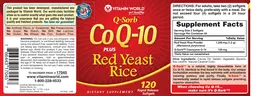
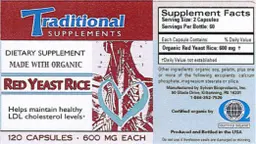
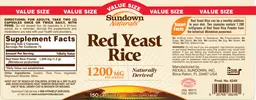
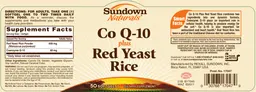
Top-rated Red Yeast Rice products
Ranked by safety score and evidence coverage
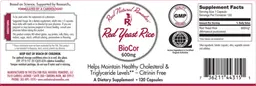
Drug–supplement interactions
1 documented interaction
| Drug | Severity | Mechanism | Evidence |
|---|---|---|---|
| Statins | Critical | Red yeast rice contains monacolin K (lovastatin). Combined with prescription sta | well-established |
How it's sold
Data aggregated from 227 product labels
Research evidence
Showing top 10 of 13 sources, sorted by quality
**Rahmani et al., 2023** | Expert Rev Clin Pharmacol | Meta Analysis Rahmani Parisa, Melekoglu Ebru, ... Sohouli Mohammad Hassan. Impact of red yeast rice supplementation on lipid profile: a systematic review and meta-analysis of randomized…
**Angelopoulos et al., 2023** | Nutrients | Rct Angelopoulos Nicholas, Paparodis Rodis D, ... Livadas Sarantis. Low Dose Monacolin K Combined with Coenzyme Q10, Grape Seed, and Olive Leaf Extracts Lowers LDL Cholesterol in Patients with Mil…
**Peng et al., 2017** | Am J Nurs | Meta Analysis Peng Diane, Fong Amy, Pelt Amanda van. Original Research: The Effects of Red Yeast Rice Supplementation on Cholesterol Levels in Adults. Am J Nurs. 2017-Aug;117(8):46-54. doi:10.1097/01.NAJ.…
**Protic et al., 2022** | Nutrients | Rct Protic Olga, Di Pillo Raffaele, ... Bonfigli Anna Rita. Randomized, Double-Blind, Placebo-Controlled Trial to Test the Effects of a Nutraceutical Combination Monacolin K-Free on the Lipid and Inflam…
**Minamizuka et al., 2021** | Asia Pac J Clin Nutr | Rct Minamizuka Takuya, Koshizaka Masaya, ... Yokote Koutaro. Low dose red yeast rice with monacolin K lowers LDL cholesterol and blood pressure in Japanese with mild dyslipidemia: A multi…
**Jamialahmadi et al., 2026** | Endocrinol Diabetes Metab | Meta Analysis Jamialahmadi Tannaz, Mirhadi Elaheh, ... Sahebkar Amirhossein. Impact of Monacolin K-Containing Supplements on Lipid Profile: A Meta-Analysis of Randomised Controlled…
**Gerards et al., 2015** | Atherosclerosis | Meta Analysis Gerards Maaike C, Terlou Ruben J, ... Gerdes V E A. Traditional Chinese lipid-lowering agent red yeast rice results in significant LDL reduction but safety is uncertain - a systemat…
**Millán et al., 2016** | Clin Investig Arterioscler | Meta Analysis Millán Jesus, Cicero Arrigo F G, ... Anguera Anna. Effects of a nutraceutical combination containing berberine (BRB), policosanol, and red yeast rice (RYR), on lipid profi…
**Verhoeven et al., 2015** | BMC Complement Altern Med | Rct Verhoeven Veronique, Van der Auwera Anastasia, ... Hermans Nina. Can red yeast rice and olive extract improve lipid profile and cardiovascular risk in metabolic syndrome?: A doubl…
**Lee et al., 2017** | Chin J Integr Med | Rct Lee Chien-Ying, Yu Min-Chien, ... Shih Hung-Che. No additional cholesterol-lowering effect observed in the combined treatment of red yeast rice and Lactobacillus casei in hyperlipidemic patient…
Frequently asked questions
What is Red Yeast Rice and how does it work?
Red yeast rice is a traditional supplement that contains monacolin K, which acts as a naturally occurring statin. It is primarily used to lower LDL cholesterol and improve overall lipid profiles in adults with dyslipidemia.
Does Red Yeast Rice work for high cholesterol?
Yes, there is strong evidence supporting its effectiveness for hypercholesterolemia and dyslipidemia. Multiple meta-analyses and randomized controlled trials confirm that it significantly reduces LDL cholesterol levels in adults.
What is the effective dose of Red Yeast Rice?
Specific dose ranges are not detailed in the provided evidence, though studies have utilized both low-dose monacolin K and combined nutraceutical formulations. Because dosing varies, it is important to consult a healthcare provider for personalized guidance.
Can I take Red Yeast Rice with prescription statins?
No, this is a critical interaction. Red yeast rice contains monacolin K (lovastatin), and combining it with prescription statins can double your dose, significantly increasing the risk of serious side effects like myopathy and rhabdomyolysis.
What are the safety risks and side effects of Red Yeast Rice?
The primary safety concern is the risk of muscle damage, including myopathy and rhabdomyolysis, due to its statin-like content. Individuals taking other cholesterol-lowering medications or those with liver issues should avoid this supplement without medical supervision.
Who should avoid taking Red Yeast Rice?
You should avoid Red Yeast Rice if you are currently taking prescription statins due to the critical risk of doubled dosage and severe side effects. Additionally, because it affects lipid profiles, pregnant individuals or those with specific health conditions should consult a healthcare provider before use.
Does Red Yeast Rice help with blood pressure?
Research indicates that low-dose red yeast rice containing monacolin K may lower blood pressure in specific populations, such as Japanese patients. However, its primary and most strongly evidenced use remains the management of cholesterol and lipid profiles.