Berberine
Also known as barberry, berberis, goldenseal extract, oregon grape
Key takeaways
- Berberine significantly improves glycemic and insulin-related traits (PMID: 37598753).
- Effective reduction of C-reactive protein (CRP) levels (PMID: 31519292).
- Demonstrated efficacy in treating dyslipidemias across a large cohort of 2,147 patients (PMID: 30466986).
What the research shows
AI-synthesized from 98 peer-reviewed sources · Updated 2025
Berberine is a bioactive alkaloid used primarily for metabolic health. Research indicates it is effective in improving glycemic control, lipid profiles, and liver function, with significant evidence supporting its use in type 2 diabetes and dyslipidemia.
By condition
Type 2 Diabetes
Strong
Multiple meta-analyses and RCTs demonstrate significant glucose-lowering effects and improvements in insulin-related traits.
Dyslipidemia
Strong
Strong evidence shows berberine effectively lowers lipids both as a monotherapy and when combined with statins.
Non-Alcoholic Fatty Liver Disease (NAFLD)
Moderate
Systematic reviews suggest efficacy in improving liver enzymes and treating pre-fibrotic stages of NAFLD.
Cardiovascular Disease
Moderate
Meta-analyses indicate positive efficacy and safety for several cardiovascular conditions and the reduction of inflammatory markers like CRP.
Colorectal Adenomas
Moderate
Evidence suggests berberine may help prevent the recurrence of colorectal adenomas.
Effective doses
Specific dose ranges were not provided in the provided abstracts, though efficacy is noted across various randomized clinical trials.
Safety & interactions
Generally reported as safe in the analyzed trials, though users should monitor for potential interactions with glucose-lowering medications due to additive effects.
Limitations
While meta-analyses are numerous, some studies rely on smaller RCTs or specific populations (e.g., Chinese patients), and long-term safety data across diverse demographics is needed.
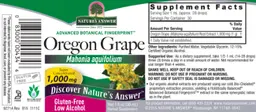
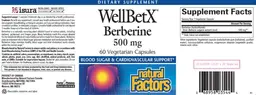
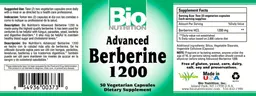
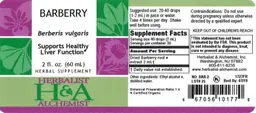
Top-rated Berberine products
Ranked by safety score and evidence coverage
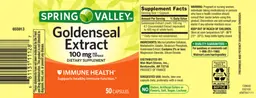
How it's sold
Data aggregated from 363 product labels
Research evidence
Showing top 10 of 98 sources, sorted by quality
**Ju et al., 2018** | Phytomedicine | Meta Analysis Ju Jianqing, Li Jingen, ... Xu Hao. Efficacy and safety of berberine for dyslipidaemias: A systematic review and meta-analysis of randomized clinical trials. Phytomedicine. 2018-Nov-15;50:…
BACKGROUND & AIMS: Despite controversies, no study has systematically summarized findings from earlier studies on the effect of berberine (BBR)-silymarin on liver enzymes. Therefore, the current systematic review and meta-analysis aimed to …
**Yang et al., 2023** | Phytomedicine | Meta Analysis Yang Lele, Zhu Wenyu, ... Shen Tao. Efficacy and safety of berberine for several cardiovascular diseases: A systematic review and meta-analysis of randomized controlled trials. Phytomedi…
**Beba et al., 2019** | Complement Ther Med | Meta Analysis Beba Mohammad, Djafarian Kurosh, Shab-Bidar Sakineh. Effect of Berberine on C-reactive protein: A systematic review and meta-analysis of randomized controlled trials. Complement Th…
**Zhao et al., 2023** | J Nutr | Meta Analysis Zhao Jie V, Huang Xin, ... Blais Joseph E. Overall and Sex-Specific Effect of Berberine on Glycemic and Insulin-Related Traits: a Systematic Review and Meta-Analysis of Randomized Controlled Tr…
**Nie et al., 2024** | J Transl Med | Meta Analysis Nie Qilong, Li Mingyang, ... Li Jianhong. The clinical efficacy and safety of berberine in the treatment of non-alcoholic fatty liver disease: a meta-analysis and systematic review. J Tran…
**Ionita-Radu et al., 2024** | Int J Mol Sci | Systematic Review Ionita-Radu Florentina, Patoni Cristina, ... Bucurica Sandica. Berberine Effects in Pre-Fibrotic Stages of Non-Alcoholic Fatty Liver Disease-Clinical and Pre-Clinical Overview…
**Zhang et al., 2019** | Am J Chin Med | Meta Analysis Zhang Li-Shuang, Zhang Jun-Hua, ... Li Xue-Mei. Efficacy and Safety of Berberine Alone or Combined with Statins for the Treatment of Hyperlipidemia: A Systematic Review and Meta-Analysi…
**Khalili et al., 2023** | Int J Mol Sci | Meta Analysis Khalili Leila, Centner Ann Marie, Salazar Gloria. Effects of Berries, Phytochemicals, and Probiotics on Atherosclerosis through Gut Microbiota Modification: A Meta-Analysis of Animal …
**Ji et al., 2025** | JAMA Netw Open | Rct Ji Linong, Ma Jianhua, ... Liu Liping. Berberine Ursodeoxycholate for the Treatment of Type 2 Diabetes: A Randomized Clinical Trial. JAMA Netw Open. 2025-Mar-03;8(3):e2462185. doi:10.1001/jamanetwo…
Frequently asked questions
What is berberine and what is it used for?
Berberine is a bioactive alkaloid primarily used to support metabolic health. Research indicates it is effective in improving glycemic control, lipid profiles, and liver function, with significant evidence supporting its use in managing type 2 diabetes and dyslipidemia.
Does berberine work for type 2 diabetes?
Yes, there is strong evidence that berberine is effective for type 2 diabetes. Multiple meta-analyses and randomized clinical trials demonstrate significant glucose-lowering effects and improvements in insulin-related traits, making it a well-supported option for glycemic control.
Can berberine help lower cholesterol?
Yes, there is strong evidence that berberine effectively lowers lipids. It has been shown to be effective both as a monotherapy and when combined with statins, with demonstrated efficacy in treating dyslipidemias across large patient cohorts.
Is berberine safe to take with other medications?
While generally reported as safe in analyzed trials, users should monitor for potential interactions with glucose-lowering medications due to additive effects that could lower blood sugar too much. Although no other drug interactions are documented in the provided data, it is crucial to consult a healthcare provider before combining berberine with prescription drugs.
What are the side effects or safety concerns of berberine?
Berberine is generally reported as safe in clinical trials, but specific side effects are not detailed in the provided summary. Individuals who are pregnant or on medications should avoid or strictly monitor use due to potential interactions and lack of safety data for these groups. Always consult a healthcare provider for personal medical advice.
Does berberine help with fatty liver disease?
There is moderate evidence suggesting berberine may help with Non-Alcoholic Fatty Liver Disease (NAFLD). Systematic reviews indicate it can improve liver enzymes and treat pre-fibrotic stages of the condition, particularly when combined with other treatments like silymarin.
Who should avoid taking berberine?
Pregnant individuals should avoid berberine due to safety concerns not fully addressed in the provided summary. Additionally, people taking glucose-lowering medications should use caution due to the risk of additive effects, and anyone on other prescriptions should consult a healthcare provider to rule out interactions.