Tryptophan
Also known as l-tryptophan, tryptophan supplement
Key takeaways
- L-tryptophan supplementation is documented to aid sleep quality (PMID: 33942088).
- Meta-analyses of tryptophan and 5-HTP for depression did not find strong evidence of efficacy (PMID: 11687048, PMID: 12169147).
- Tryptophan combined with mulberry leaf extract may improve sleep and post-wake mood (PMID: 40072601).
What the research shows
AI-synthesized from 29 peer-reviewed sources · Updated 2025
L-Tryptophan is an essential amino acid precursor to serotonin and melatonin. Research suggests it may have beneficial effects on sleep quality and mood, though evidence for treating clinical depression is inconsistent.
By condition
Sleep Quality
Moderate
Systematic reviews and meta-analyses indicate that L-tryptophan supplementation can aid in sleep initiation and improve overall sleep quality.
Depression
Weak
Cochrane reviews and meta-analyses suggest insufficient evidence to conclude that tryptophan is an effective standalone treatment for unipolar depression.
Mood and Anxiety
Insufficient
Evidence is mixed, with some studies showing potential for emotional functioning improvement while others show no effect in specific populations like recovered anorexia patients.
Effective doses
Specific dose ranges were not provided in the provided abstracts.
Safety & interactions
Caution is advised when combining with other serotonergic agents (like SSRIs) due to the risk of serotonin syndrome.
Limitations
Many studies have small sample sizes (e.g., N=11 or N=22) and there is a lack of consistent dosing protocols across the available research.
Top-rated Tryptophan products
Ranked by safety score and evidence coverage
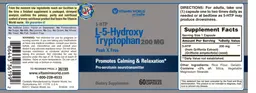
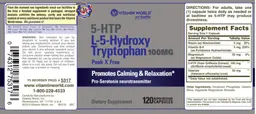
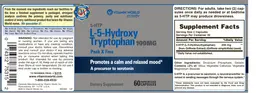
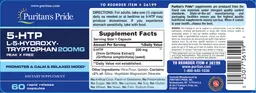
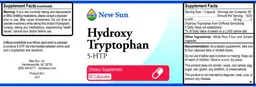
How it's sold
Data aggregated from 80 product labels
Research evidence
Showing top 10 of 29 sources, sorted by quality
**Purton et al., 2021** | Neurosci Biobehav Rev | Meta Analysis Purton Terry, Staskova Lada, ... Marx Wolfgang. Prebiotic and probiotic supplementation and the tryptophan-kynurenine pathway: A systematic review and meta analysis. Neurosci B…
BACKGROUND: 5 Hydroxytryptophan (5-HTP) and tryptophan are so-called natural alternatives to traditional antidepressants, used to treat unipolar depression and dysthymia. OBJECTIVES: To determine whether 5-HTP and tryptophan are more effect…
BACKGROUND: 5 Hydroxytryptophan (5-HTP) and tryptophan are so-called natural alternatives to traditional antidepressants, used to treat unipolar depression and dysthymia. OBJECTIVES: To determine whether 5-HTP and tryptophan are more effect…
CONTEXT: L-tryptophan (Trp) has been documented to aid sleep, but a systematic compilation of its effect on sleep quality is still limited. OBJECTIVE: We assessed the effect of Trp supplementation on sleep quality via meta-analysis and meta…
BACKGROUND: Previous studies have suggested that individuals recovered from anorexia nervosa (AN) are characterized by increased serotonergic (5-HT) activity that might be related to elevated levels of anxiety. Assuming these traits to be a…
Over 50% of women experience mood disturbance in the postpartum period, with significant implications for maternal and infant health but identifying those at risk is not easily possible. The essential amino acid, tryptophan (TRP) through it…
L-tryptophan (TRP), one of the essential amino acids in humans, is a precursor of serotonin, and hence its intake is closely related to the suppression of depressed and anxious moods. We did a systematic review of RCTs to examine the effect…
OBJECTIVES: Fibromyalgia syndrome (FMS) is a chronic clinical condition characterized by pain, fatigue, altered sleep, and cognitive disturbances. The purpose of this study was to compare two alternative treatments (nutraceutical and acupun…
BACKGROUND: The usage of probiotics has expanded beyond the areas of gut and immune health improvement. Several studies have shown the positive impact associated between probiotics and stress, cognition, and mood; a relationship referred to…
**Shaw et al., 2002** | Aust N Z J Psychiatry | Meta Analysis Shaw Kelly, Turner Jane, Del Mar Christopher. Are tryptophan and 5-hydroxytryptophan effective treatments for depression? A meta-analysis. Aust N Z J Psychiatry. 2002-Aug;36(4):4…
Frequently asked questions
What is L-Tryptophan and what is it used for?
L-Tryptophan is an essential amino acid that serves as a precursor to serotonin and melatonin. It is commonly used to support sleep quality and mood, with moderate evidence suggesting it may aid in sleep initiation and overall sleep improvement.
Does L-Tryptophan work for depression?
Research is mixed regarding its effectiveness for clinical depression, with weak evidence indicating it is not an effective standalone treatment for unipolar depression. While some studies show potential benefits for mood, the evidence is insufficient to conclude it reliably treats depression.
Can L-Tryptophan help with sleep problems?
Yes, moderate evidence from systematic reviews indicates that L-tryptophan supplementation can aid in sleep initiation and improve overall sleep quality. Some research also suggests it may improve post-wake mood when combined with other ingredients like mulberry leaf extract.
What are the safety risks and side effects of L-Tryptophan?
Caution is advised due to the risk of serotonin syndrome, a potentially serious condition, especially when combining it with other serotonergic agents. Individuals should be aware that specific effective doses and upper limits are not clearly defined in the available evidence.
Who should avoid taking L-Tryptophan?
People taking serotonergic medications, such as SSRIs, should avoid L-Tryptophan due to the risk of dangerous interactions leading to serotonin syndrome. Because specific safety data for pregnant or nursing individuals is not provided, they should consult a healthcare provider before use.
Does L-Tryptophan help with anxiety or mood?
Evidence for improving mood and anxiety is currently insufficient and mixed. While some studies show potential for emotional functioning improvement, others show no effect in specific populations, such as recovered anorexia patients.
Are there any drug interactions with L-Tryptophan?
The primary documented interaction risk is with other serotonergic agents, which can lead to serotonin syndrome. Although no other specific drug interactions are documented in the summary, consulting a healthcare provider is recommended for personal advice.