Ginger
Also known as ginger root, zingiber, zingiber officinale
Key takeaways
- Ginger is effective for the prevention and relief of postoperative nausea and vomiting (PMID: 34700257, 34312974, 30466995).
- Ginger supplementation is associated with weight loss and improved metabolic profiles in overweight/obese subjects (PMID: 29393665, 38261398).
- Dietary ginger shows efficacy in blood sugar control for type 2 diabetes patients (PMID: 30921234).
What the research shows
AI-synthesized from 151 peer-reviewed sources · Updated 2025
Ginger (Zingiber officinale) is a widely used herbal supplement known for its anti-emetic and metabolic properties. Research indicates significant efficacy in reducing nausea and vomiting across various contexts, as well as potential benefits for weight management and glycemic control.
By condition
Nausea and Vomiting (Pregnancy & Postoperative)
Strong
Multiple meta-analyses demonstrate that ginger is effective in preventing and treating nausea and vomiting during pregnancy and following surgical procedures.
Weight Loss and Metabolic Health
Moderate
Systematic reviews suggest ginger intake can lead to reductions in body weight and improvements in metabolic profiles among overweight and obese adults.
Type 2 Diabetes Mellitus
Moderate
Evidence suggests dietary ginger may serve as a traditional therapy for blood sugar control in patients with type 2 diabetes.
Non-Alcoholic Fatty Liver Disease (NAFLD)
Weak
Preliminary meta-analysis evidence indicates potential benefits for the treatment of NAFLD.
Effective doses
Specific dose ranges were not detailed in the provided abstracts, though evidence is based on randomized controlled trials across various formulations.
Safety & interactions
Generally recognized as safe, but users should consult healthcare providers regarding potential interactions with anticoagulants or diabetes medications due to its effect on blood sugar.
Limitations
While many meta-analyses exist, there is a need for more standardized dosing protocols across trials to determine optimal therapeutic windows.
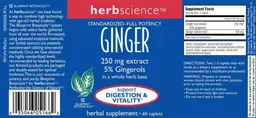
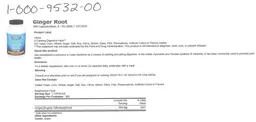
Top-rated Ginger products
Ranked by safety score and evidence coverage



Drug–supplement interactions
56 documented interactions
| Drug | Severity | Mechanism | Evidence |
|---|---|---|---|
| Antiarrhythmics | Critical | Ginger is a weak inhibitor of CYP2C9, which decreases metabolism of CYP2C9 subst | cyp-inferred |
| Anticonvulsants | Critical | Ginger is a weak inhibitor of CYP3A4, which decreases metabolism of CYP3A4 subst | cyp-inferred |
| GI Prokinetics | Critical | Ginger is a weak inhibitor of CYP3A4, which decreases metabolism of CYP3A4 subst | cyp-inferred |
| Theophylline | Critical | Ginger is a weak inhibitor of CYP3A4, which decreases metabolism of CYP3A4 subst | cyp-inferred |
| ARB | Moderate | Ginger is a weak inhibitor of CYP2C9, which decreases metabolism of CYP2C9 subst | cyp-inferred |
| Abciximab | Moderate | Interaction identified from DDInter 2.0 database. Specific drugs: Abciximab | ddinter-verified |
| Acalabrutinib | Moderate | Interaction identified from DDInter 2.0 database. Specific drugs: Acalabrutinib | ddinter-verified |
| Alteplase | Moderate | Interaction identified from DDInter 2.0 database. Specific drugs: Alteplase | ddinter-verified |
| Anistreplase | Moderate | Interaction identified from DDInter 2.0 database. Specific drugs: Anistreplase | ddinter-verified |
| Antibiotics | Moderate | Ginger is a weak inhibitor of CYP3A4, which decreases metabolism of CYP3A4 subst | cyp-inferred |
How it's sold
Data aggregated from 436 product labels
Research evidence
Showing top 10 of 151 sources, sorted by quality
**Jotic et al., 2024** | Int J Mol Sci | Systematic Review Jotic Ana, Savic Vujovic Katarina, ... Cirkovic Ivana. Antibiofilm Effects of Novel Compounds in Otitis Media Treatment: Systematic Review. Int J Mol Sci. 2024-Nov-29;25(23). doi:10…
**Thomas et al., 2019** | Cochrane Database Syst Rev | Meta Analysis Thomas Lois H, Coupe Jacqueline, ... Watkins Caroline L. Interventions for treating urinary incontinence after stroke in adults. Cochrane Database Syst Rev. 2019-Feb-01;2(…
INTRODUCTION: Nausea and vomiting (NV) affect up to 85% of pregnant women, which has multiple effects on pregnancy outcome. The truth etiology of nausea and vomiting in pregnancy (NVP) is still unknown. Considering the potential teratogenic…
**Maharlouei et al., 2019** | Crit Rev Food Sci Nutr | Meta Analysis Maharlouei Najmeh, Tabrizi Reza, ... Asemi Zatollah. The effects of ginger intake on weight loss and metabolic profiles among overweight and obese subjects: A systematic r…
**Zhou et al., 2023** | Afr Health Sci | Meta Analysis Zhou Qun, Peng Ying, ... Dai Jianbo. Ginger supplementation for the treatment of non-alcoholic fatty liver disease: a meta-analysis of randomized controlled trials. Afr Health Sci. 2023…
**Arruda et al., 2019** | BMJ Open | Meta Analysis Arruda Ana Paula Nappi, Zhang Yuchen, ... El Dib Regina. Herbal medications for anxiety, depression, pain, nausea and vomiting related to preoperative surgical patients: a systematic review…
**Zhang et al., 2024** | Front Hum Neurosci | Systematic Review Zhang Ziyun, Shi Peng, ... Feng Xiaosu. The frontal association area: exercise-induced brain plasticity in children and adolescents and implications for cognitive intervention …
**Olasehinde et al., 2025** | Int J Mol Sci | Systematic Review Olasehinde Tosin A, Olaokun Oyinlola O. Zingerone as a Neuroprotective Agent Against Cognitive Disorders: A Systematic Review of Preclinical Studies. Int J Mol Sci. 2025-Jun-25…
**Rafieipour et al., 2024** | Nutr Rev | Meta Analysis Rafieipour Nastaran, Gharbi Negin, ... Mohammadi-Sartang Mohsen. Ginger intervention on body weight and body composition in adults: a GRADE-assessed systematic review and dose-response …
**Ling et al., 2015** | Am J Chin Med | Meta Analysis Ling Wei, Huang Yi, ... Zhao Hai-Lu. Consistent Efficacy of Wendan Decoction for the Treatment of Digestive Reflux Disorders. Am J Chin Med. 2015;43(5):893-913. doi:10.1142/S0192415X1550…
Frequently asked questions
What is ginger and what is it commonly used for?
Ginger (Zingiber officinale) is a widely used herbal supplement known for its anti-emetic and metabolic properties. It is primarily used to reduce nausea and vomiting, as well as to support weight management and blood sugar control.
Does ginger help with nausea during pregnancy?
Yes, there is strong evidence from multiple meta-analyses demonstrating that ginger is effective in preventing and treating nausea and vomiting during pregnancy. However, pregnant individuals should always consult their healthcare provider before starting any new supplement regimen.
Can ginger reduce postoperative nausea and vomiting?
Research indicates strong evidence that ginger is effective for the prevention and relief of postoperative nausea and vomiting. It is considered a significant intervention in this context based on multiple clinical studies.
Does ginger help with weight loss or type 2 diabetes?
There is moderate evidence suggesting ginger intake can lead to reductions in body weight and improvements in metabolic profiles among overweight adults. Additionally, dietary ginger shows moderate evidence for aiding blood sugar control in patients with type 2 diabetes.
Is ginger safe to take with blood thinners or diabetes medication?
Users should consult healthcare providers regarding potential interactions with anticoagulants or diabetes medications due to its effect on blood sugar. Ginger may have mild antiplatelet properties at very high doses, which could theoretically add to the effects of anticoagulants.
Who should avoid taking ginger supplements?
Individuals taking anticoagulants or diabetes medications should exercise caution and consult a healthcare provider due to potential interactions. While generally recognized as safe, those with specific medical conditions or on prescription drugs should seek professional advice before use.
Does ginger help with fatty liver disease?
There is weak evidence from preliminary meta-analyses indicating potential benefits for the treatment of non-alcoholic fatty liver disease (NAFLD). Because the evidence is limited, more research is needed to confirm its efficacy for this condition.