Kava
Also known as awa, kava kava, piper methysticum, yaqona
Key takeaways
- Kava extract is effective for treating anxiety symptoms across multiple systematic reviews and meta-analyses (PMID: 12535473, PMID: 10653213).
- Kava may modulate GABA in the dorsal anterior cingulate cortex in patients with GAD (PMID: 37960239).
- Kava has been shown to reduce anxiety in perimenopausal women (PMID: 12590005).
What the research shows
AI-synthesized from 19 peer-reviewed sources · Updated 2025
Kava is a South Pacific medicinal plant used primarily for its anxiolytic properties. Research generally indicates that kava extract is effective in reducing symptoms of anxiety, often serving as an alternative to synthetic drugs with a different side-effect profile.
By condition
Generalized Anxiety Disorder (GAD)
Moderate
Multiple meta-analyses and RCTs suggest kava is effective for reducing anxiety symptoms in GAD patients.
Perimenopausal Anxiety
Weak
A small RCT indicated that kava administration reduces anxiety in perimenopausal women.
Effective doses
Specific dose ranges were not provided in the provided abstracts.
Safety & interactions
There are warnings regarding hepatotoxicity from the CDC; users should be aware of potential liver risks.
Limitations
Some studies are small in scale (e.g., N=34 or N=64), and there is a need for more long-term safety data regarding hepatotoxicity.
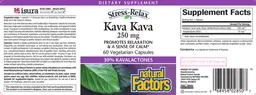
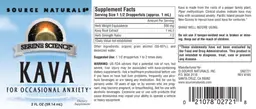
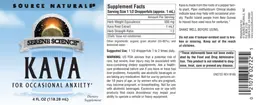
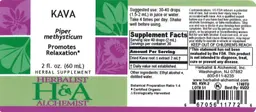
Top-rated Kava products
Ranked by safety score and evidence coverage

Drug–supplement interactions
81 documented interactions
| Drug | Severity | Mechanism | Evidence |
|---|---|---|---|
| ADHD Medications | Critical | Kava is a strong inhibitor of CYP2D6, which decreases metabolism of CYP2D6 subst | cyp-inferred |
| Antiarrhythmics | Critical | Kava is a moderate inhibitor of CYP2C9, which decreases metabolism of CYP2C9 sub | cyp-inferred |
| Anticonvulsants | Critical | Kava is a moderate inhibitor of CYP2C9, which decreases metabolism of CYP2C9 sub | cyp-inferred |
| Antiemetics | Critical | Kava is a strong inhibitor of CYP2D6, which decreases metabolism of CYP2D6 subst | cyp-inferred |
| Antipsychotics | Critical | Kava is a strong inhibitor of CYP2D6, which decreases metabolism of CYP2D6 subst | cyp-inferred |
| Antitussives | Critical | Kava is a strong inhibitor of CYP2D6, which decreases metabolism of CYP2D6 subst | cyp-inferred |
| GI Prokinetics | Critical | Kava is a weak inhibitor of CYP3A4, which decreases metabolism of CYP3A4 substra | cyp-inferred |
| Immunosuppressants | Critical | Kava is a weak inhibitor of CYP3A4, which decreases metabolism of CYP3A4 substra | cyp-inferred |
| Opioids | Critical | Kava is a strong inhibitor of CYP2D6, which decreases metabolism of CYP2D6 subst | cyp-inferred |
| Sedatives | Critical | Kava potentiates GABA-A receptor activity, additive with benzodiazepines and oth | well-established |
How it's sold
Data aggregated from 104 product labels
Research evidence
Showing top 10 of 19 sources, sorted by quality
BACKGROUND: Constraints on resources and time often render treatments for anxiety such as psychological interventions impracticable, while synthetic anxiolytic drugs are effective, but are often burdened with adverse events. Options which a…
BACKGROUND: Generalized anxiety disorder (GAD) is a chronic and debilitating condition characterized by persistent and overpowering anxiety. Treatment of GAD with antidepressants and benzodiazepines is only moderately effective and not free…
BACKGROUND: Synthetic anxiolytic drugs are effective for anxiety, but they are burdened with adverse events. Constraints on resources and time often render treatments such as psychological interventions impracticable. Thus, an effective and…
BACKGROUND: Synthetic anxiolytic drugs are effective for anxiety, but are often burdened with adverse events. Constraints on resources and time often render treatments such as psychological interventions impracticable. Thus, an effective an…
BACKGROUND: To determine if Kava Kava is an effective treatment for combating symptoms of anxiety despite warnings of hepatotoxicity from the Centers for Disease Control and Prevention (CDC). METHODS: Databases PubMed, CINAHL, and PsycINFO …
OBJECTIVE: Previous randomised, double-blind, placebo-controlled studies have shown that Kava (a South Pacific medicinal plant) reduced anxiety during short-term administration. The objective of this randomised, double-blind, placebo-contro…
**Sarris et al., 2009** | J Altern Complement Med | Systematic Review Sarris Jerome, Kavanagh David J. Kava and St. John's Wort: current evidence for use in mood and anxiety disorders. J Altern Complement Med. 2009-Aug;15(8):827-36. doi:10.…
Generalised Anxiety Disorder (GAD) is a prevalent, chronic mental health disorder. The measurement of regional brain gamma-aminobutyric acid (GABA) offers insight into its role in anxiety and is a potential biomarker for treatment response.…
**Ernst et al., 2002** | Ann Intern Med | Meta Analysis Ernst Edzard. The risk-benefit profile of commonly used herbal therapies: Ginkgo, St. John's Wort, Ginseng, Echinacea, Saw Palmetto, and Kava. Ann Intern Med. 2002-Jan-01;136(1):42-53 …
Synthetic anxiolytic drugs are effective for treating anxiety, but they are burdened with adverse effects. Constraints on resources and time often render therapies such as psychologic interventions impracticable. Thus, an effective oral med…
Frequently asked questions
What is Kava and what is it used for?
Kava is a medicinal plant from the South Pacific primarily used for its anxiolytic (anti-anxiety) properties. Research indicates it may serve as an alternative to synthetic drugs for reducing anxiety symptoms, though it has a different side-effect profile.
Does Kava work for Generalized Anxiety Disorder (GAD)?
There is moderate evidence suggesting Kava is effective for reducing anxiety symptoms in patients with GAD. Multiple meta-analyses and randomized controlled trials support this use, and it may work by modulating GABA activity in the brain.
Is Kava effective for perimenopausal anxiety?
Evidence for this specific use is currently weak, based on a small randomized controlled trial. While that study indicated Kava reduced anxiety in perimenopausal women, research is limited and more robust studies are needed to confirm these findings.
What are the safety risks and liver concerns with Kava?
Users must be aware of potential liver risks, as the CDC has issued warnings regarding hepatotoxicity associated with Kava. Because of these serious safety concerns, it is crucial to monitor liver health and consult a healthcare provider before use.
Can I take Kava with sedatives or benzodiazepines?
No, combining Kava with sedatives or benzodiazepines is considered critical due to well-established interactions. Kava potentiates GABA-A receptor activity, which can have additive effects with other CNS depressants, potentially leading to dangerous sedation.
Does Kava interact with antidepressants like SSRIs?
There is a moderate severity interaction possible between Kava and SSRIs. Kava may have weak MAO-inhibiting properties, which could potentially increase serotonin levels when combined with SSRIs, so medical supervision is advised.
Who should avoid taking Kava?
Individuals taking levodopa should avoid Kava because it may enhance dopaminergic effects and potentially cause dyskinesia. Additionally, anyone on sedatives, SSRIs, or those with a history of liver issues should avoid it or consult a doctor first.