St Johns Wort
Also known as hypericum, hypericum perforatum, johnswort, sjw
Key takeaways
- St. John's Wort is more effective than placebo for major depression across a large patient population (N=5489) (PMID: 18843608).
- Hypericum extract showed efficacy comparable to imipramine in patients with moderate depression (PMID: 10591711).
- Meta-analyses confirm its utility in treating depressive disorders with a favorable tolerability profile compared to SSRIs (PMID: 19028540).
What the research shows
AI-synthesized from 43 peer-reviewed sources · Updated 2025
St. John's Wort (Hypericum perforatum) is a herbal supplement widely used for the treatment of depressive disorders. Extensive research, including multiple Cochrane reviews and meta-analyses, suggests it is more effective than placebo and comparable to standard antidepressants for mild-to-moderate depression.
By condition
Major Depressive Disorder (Mild-to-Moderate)
Strong
Multiple systematic reviews and meta-analyses indicate that St. John's Wort is effective for treating mild-to-moderate depression, often showing similar efficacy to standard antidepressants with fewer side effects.
Menopausal Symptoms/Depression
Moderate
Evidence suggests it may be effective in managing depressive symptoms associated with menopause.
Cognitive Enhancement
Weak
Some evidence of cognitive enhancement exists in rodent models, but human data is insufficient.
Effective doses
Specific dose ranges were not detailed in the provided abstracts, though one RCT mentioned the use of STEI 300 extract.
Safety & interactions
St. John's Wort is known for significant drug-drug interactions due to its effect on cytochrome P450 enzymes and may interact with various prescription medications.
Limitations
While evidence for mild-to-moderate depression is strong, there is a lack of consistent evidence for its efficacy in severe major depressive disorder. Some studies are limited by small sample sizes or are based on animal models.
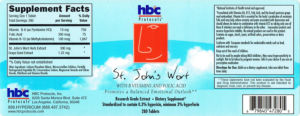
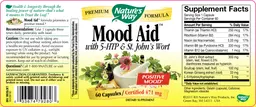
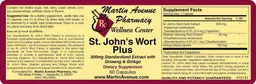
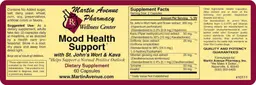
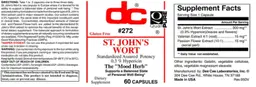
Top-rated St Johns Wort products
Ranked by safety score and evidence coverage
Drug–supplement interactions
133 documented interactions
| Drug | Severity | Mechanism | Evidence |
|---|---|---|---|
| Abemaciclib | Critical | Interaction identified from DDInter 2.0 database. Specific drugs: Abemaciclib | ddinter-verified |
| Abiraterone | Critical | Interaction identified from DDInter 2.0 database. Specific drugs: Abiraterone | ddinter-verified |
| Acalabrutinib | Critical | Interaction identified from DDInter 2.0 database. Specific drugs: Acalabrutinib | ddinter-verified |
| Alpelisib | Critical | Interaction identified from DDInter 2.0 database. Specific drugs: Alpelisib | ddinter-verified |
| Antiarrhythmics | Critical | St Johns Wort is a moderate inducer of CYP2C9, which increases metabolism of CYP | cyp-inferred |
| Anticoagulants | Critical | Interaction identified from DDInter 2.0 database. Specific drugs: Apixaban, Edox | ddinter-verified |
| Anticonvulsants | Critical | St Johns Wort is a strong inducer of CYP3A4, which increases metabolism of CYP3A | cyp-inferred |
| Antidiarrheals | Critical | St Johns Wort is a strong inducer of P-gp, which increases metabolism of P-gp su | cyp-inferred |
| Antifungals | Critical | St Johns Wort is a strong inducer of CYP3A4, which increases metabolism of CYP3A | cyp-inferred |
| Antiplatelet Drugs | Critical | Interaction identified from DDInter 2.0 database. Specific drugs: Cilostazol, Ti | ddinter-verified |
How it's sold
Data aggregated from 280 product labels
Research evidence
Showing top 10 of 43 sources, sorted by quality
**Linde et al., 2008** | Cochrane Database Syst Rev | Systematic Review Linde Klaus, Berner Michael M, Kriston Levente. St John's wort for major depression. Cochrane Database Syst Rev. 2008-Oct-08;2008(4):CD000448. doi:10.1002/14651858.CD00…
INTRODUCTION: St John's wort is a popular herbal remedy recommended by Traditional Chinese Medicine (TCM) practitioners and licensed and widely prescribed for depression in many European countries. However, conflicting data regarding its be…
**Apaydin et al., 2016** | Syst Rev | Meta Analysis Apaydin Eric A, Maher Alicia R, ... Hempel Susanne. A systematic review of St. John's wort for major depressive disorder. Syst Rev. 2016-Sep-02;5(1):148. doi:10.1186/s13643-016-0325-2 BACK…
**Linde et al., 2000** | Cochrane Database Syst Rev | Systematic Review Linde K, Mulrow C D. St John's wort for depression. Cochrane Database Syst Rev. 2000(2):CD000448 BACKGROUND: Extracts of the plant Hypericum perforatum L. (popularly ca…
**Urata et al., 2025** | Neuropsychopharmacol Rep | Meta Analysis Urata Minoru, Sakurai Hitoshi, ... Watanabe Koichiro. Efficacy of Pharmacological Interventions in Milder Depression: A Systematic Review and Meta-Analysis. Neuropsychopharma…
**Linde et al., 2005** | Cochrane Database Syst Rev | Meta Analysis Linde K, Mulrow C D, ... Egger M. St John's wort for depression. Cochrane Database Syst Rev. 2005-Apr-18(2):CD000448 BACKGROUND: Extracts of the plant Hypericum perforatum …
**Linde et al., 2005** | Br J Psychiatry | Meta Analysis Linde Klaus, Berner Michael, ... Mulrow Cynthia. St John's wort for depression: meta-analysis of randomised controlled trials. Br J Psychiatry. 2005-Feb;186:99-107 BACKGROUND: Extract…
**Eatemadnia et al., 2019** | Complement Ther Med | Rct Eatemadnia Alieh, Ansari Somayeh, ... Najar Shahnaz. The effect of Hypericum perforatum on postmenopausal symptoms and depression: A randomized controlled trial. Complement Ther Med. 2…
OBJECTIVES: To assess the efficacy and safety of hypericum extract (STEI 300, Steiner Arzneimittel, Berlin) compared with imipramine and placebo in patients in primary care with a current episode of moderate depression. DESIGN: Randomised, …
**Ben-Eliezer et al., 2016** | Sci Rep | Meta Analysis Ben-Eliezer Daniel, Yechiam Eldad. Hypericum perforatum as a cognitive enhancer in rodents: A meta-analysis. Sci Rep. 2016-Oct-20;6:35700. doi:10.1038/srep35700 Considered an antidepres…
Frequently asked questions
What is St. John's Wort and what is it used for?
St. John's Wort (Hypericum perforatum) is a herbal supplement widely used for treating depressive disorders. Extensive research, including multiple Cochrane reviews, suggests it is more effective than a placebo for mild-to-moderate depression.
Does St. John's Wort work for depression?
Yes, there is strong evidence that St. John's Wort is effective for mild-to-moderate depression, often showing similar efficacy to standard antidepressants with fewer side effects. Meta-analyses confirm its utility in treating depressive disorders with a favorable tolerability profile compared to SSRIs.
Can St. John's Wort help with menopausal symptoms?
There is moderate evidence suggesting it may be effective in managing depressive symptoms associated with menopause. However, research is not as robust for this specific use case compared to its primary application for general depressive disorders.
Does St. John's Wort improve cognitive function?
Evidence for cognitive enhancement is weak, as human data is currently insufficient. While some evidence of cognitive benefits exists in rodent models, this has not been confirmed in human studies.
What are the serious drug interactions with St. John's Wort?
St. John's Wort is known for significant drug-drug interactions because it induces cytochrome P450 enzymes and P-glycoprotein, which can dramatically reduce the effectiveness of other medications. Critical interactions include those with antiretrovirals, immunosuppressants like cyclosporine, and digoxin, which can lead to dangerously low plasma levels of these drugs.
Who should avoid taking St. John's Wort?
Individuals taking prescription medications, particularly antiretrovirals, benzodiazepines, or immunosuppressants, should avoid St. John's Wort due to critical interaction risks. It is also important to consult a healthcare provider before use, especially if you are pregnant or managing a complex medical condition.
What is the effective dose of St. John's Wort?
Specific dose ranges were not detailed in the provided evidence summaries, though one RCT mentioned the use of STEI 300 extract. Because dosing can vary and interactions are significant, you should consult a healthcare provider for personalized advice rather than relying on general guidelines.