Selenium
Also known as se, selenium yeast, selenomethionine, sodium selenite
Key takeaways
- The SELECT trial found no reduction in prostate cancer risk with selenium supplementation (PMID: 21990298).
- Cochrane reviews indicate no significant benefit for the primary prevention of cardiovascular disease (PMID: 23440843).
- Selenium levels are significantly associated with autoimmune thyroid disease (PMID: 33894732).
What the research shows
AI-synthesized from 273 peer-reviewed sources · Updated 2025
Selenium is an essential trace mineral with antioxidant and immune-supporting properties. Overall, research indicates limited efficacy in preventing major chronic diseases like cancer and cardiovascular disease, though it may have specific applications in thyroid health and deficiency states.
By condition
Cancer Prevention
Weak
Large-scale reviews and trials, including SELECT, show no significant reduction in the risk of prostate or other cancers.
Cardiovascular Disease
Weak
Meta-analyses generally indicate that selenium supplementation does not significantly prevent cardiovascular disease or coronary heart disease.
Autoimmune Thyroid Disease
Moderate
Evidence suggests a correlation between selenium levels and thyroid health, with potential benefits for Hashimoto's thyroiditis.
Critically Ill Adults
Insufficient
Research into selenium for critically ill patients has not demonstrated a consistent benefit in improving outcomes.
Cognitive Decline/Dementia
Weak
Trials such as PREADViSE suggest that antioxidant supplements including selenium do not prevent dementia.
Effective doses
Specific effective doses were not provided in the provided abstracts.
Safety & interactions
Selenium has both nutritional and toxicological properties; excessive intake can lead to toxicity.
Limitations
Many studies report inconsistent results, and large-scale trials have failed to replicate early observational findings regarding cancer and heart health.
Dietary Reference Intakes
Source: IOM/NAM · Dietary Reference Intakes: Selenium
| Measure | Value | Description |
|---|
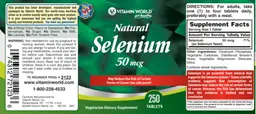
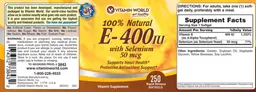
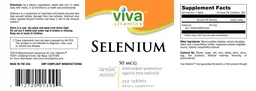
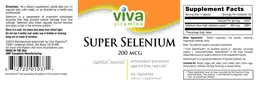
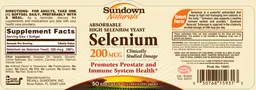
Top-rated Selenium products
Ranked by safety score and evidence coverage
Drug–supplement interactions
6 documented interactions
| Drug | Severity | Mechanism | Evidence |
|---|---|---|---|
| Chelators | Critical | Interaction identified from DDInter 2.0 database. Specific drugs: Dimercaprol | ddinter-verified |
| Chemotherapy | Moderate | Interaction identified from DDInter 2.0 database. Specific drugs: Eltrombopag | ddinter-verified |
| Fluoroquinolones | Moderate | Interaction identified from DDInter 2.0 database. Specific drugs: Levofloxacin | ddinter-verified |
| Gastrointestinal Drugs | Moderate | Interaction identified from DDInter 2.0 database. Specific drugs: Tolevamer | ddinter-verified |
| Iron Chelators | Moderate | Interaction identified from DDInter 2.0 database. Specific drugs: Deferiprone | ddinter-verified |
| Triethylenetetramine | Moderate | Interaction identified from DDInter 2.0 database. Specific drugs: Triethylenetet | ddinter-verified |
How it's sold
Data aggregated from 348 product labels
Research evidence
Showing top 10 of 273 sources, sorted by quality
BACKGROUND: This review is the third update of the Cochrane review "Selenium for preventing cancer". Selenium is a naturally occurring element with both nutritional and toxicological properties. Higher selenium exposure and selenium supplem…
BACKGROUND: Selenium is a key component of a number of selenoproteins which protect against oxidative stress and have the potential to prevent chronic diseases including cardiovascular disease (CVD). However, observational studies have show…
BACKGROUND: Selenium is a trace mineral essential to health and has an important role in immunity, defence against tissue damage and thyroid function. Improving selenium status could help protect against overwhelming tissue damage and infec…
CONTEXT: The initial report of the Selenium and Vitamin E Cancer Prevention Trial (SELECT) found no reduction in risk of prostate cancer with either selenium or vitamin E supplements but a statistically nonsignificant increase in prostate c…
BACKGROUND: Prostate cancer is a growing public health problem. Several human studies have shown a potentially protective effect of selenium, but the conclusions from published reports are inconsistent. OBJECTIVE: The objective was to exami…
BACKGROUND: Hashimoto's thyroiditis is a common auto-immune disorder. The most common presenting symptoms may include anxiety, negative mood, depression, dry skin, cold intolerance, puffy eyes, muscle cramps and fatigue, deep voice, constip…
**Riley et al., 2017** | Cochrane Database Syst Rev | Meta Analysis Riley Philip, Glenny Anne-Marie, ... Worthington Helen V. Pharmacological interventions for preventing dry mouth and salivary gland dysfunction following radiotherapy. Coch…
BACKGROUND: Antioxidants have been promoted for cardiovascular disease (CVD) risk reduction and for the prevention of cancer. Our preliminary analysis suggested that only when selenium was present were antioxidant mixtures associated with r…
BACKGROUND: Selenium is a crucial mineral with antioxidant and immune functions, and selenium deficiency may increase the risk of coronary heart disease (CHD). However, the effect of selenium supplementation on CHD is still controversial ac…
**Wei et al., 2024** | Poult Sci | Meta Analysis Wei Chunbo, Wang Shuo, ... Zhang Ying. Meta-analysis of selenium effects on the meat quality of broilers. Poult Sci. 2024-Apr;103(4):103523. doi:10.1016/j.psj.2024.103523 The effects of sodiu…
Frequently asked questions
What is selenium and what is it used for?
Selenium is an essential trace mineral with antioxidant and immune-supporting properties. It is primarily used to support thyroid health and address deficiency states, though research indicates limited efficacy in preventing major chronic diseases like cancer or cardiovascular disease.
Does selenium help prevent cancer?
Evidence is weak regarding cancer prevention. Large-scale reviews and trials, including the SELECT trial, show no significant reduction in the risk of prostate or other cancers, so it is not recommended for this purpose.
Can selenium prevent heart disease?
Research is weak for this claim. Meta-analyses generally indicate that selenium supplementation does not significantly prevent cardiovascular disease or coronary heart disease.
Is selenium effective for thyroid health?
There is moderate evidence suggesting a correlation between selenium levels and thyroid health, with potential benefits for autoimmune thyroid disease like Hashimoto's thyroiditis.
What is the recommended daily dose of selenium?
The Recommended Dietary Allowance (RDA) for adults is 55 mcg/day. Specific effective doses for therapeutic conditions were not provided in the available evidence summaries.
Is selenium safe to take? What are the risks?
Selenium has toxicological properties, and excessive intake can lead to toxicity. Because of these risks, individuals should not exceed recommended amounts without medical supervision.
Who should avoid taking selenium supplements?
Individuals with selenium toxicity risks or those who are critically ill should be cautious, as research has not demonstrated consistent benefits for critically ill patients. Always consult a healthcare provider before starting, especially if you have existing health conditions.
Does selenium interact with any medications?
No drug interactions have been documented for selenium. However, you should still consult a healthcare provider to ensure it is safe for your specific health profile.