Riboflavin
Also known as lactoflavin, riboflavin-5-phosphate, vitamin b2
Key takeaways
- Riboflavin supplementation is effective for migraine prophylaxis (PMID: 33779525).
- Riboflavin is a key component in photochemical corneal collagen cross-linkage for keratoconus (PMID: 24999102).
- Evidence for riboflavin in lowering blood pressure in adults is being evaluated via Cochrane reviews (PMID: 41123035).
What the research shows
AI-synthesized from 22 peer-reviewed sources · Updated 2025
Riboflavin (Vitamin B2) is a water-soluble vitamin essential for energy metabolism. Research primarily focuses on its role in migraine prophylaxis and its use in specialized medical procedures like corneal cross-linking, with emerging evidence regarding blood pressure and mood.
By condition
Migraine Prophylaxis
Moderate
Multiple systematic reviews and RCTs suggest riboflavin is effective in reducing migraine frequency and symptoms in both adults and children.
Essential Hypertension
Weak
A 2024 network meta-analysis and a Cochrane review have investigated its blood-pressure lowering effects, though evidence remains inconclusive.
Keratoconus/Keratectasia
Strong
Riboflavin is used effectively in photochemical corneal collagen cross-linking to treat corneal instabilities.
Depression
Insufficient
Meta-analysis of dietary intake shows inconsistent associations between riboflavin levels and the risk of depression.
Effective doses
Specific doses vary; high-dose riboflavin is commonly used for migraine prophylaxis, while the RDA for adult males is 1.3 mg/day.
Safety & interactions
Generally safe and well-tolerated; no major contraindications noted in the provided abstracts.
Limitations
Many studies on migraine have small sample sizes (e.g., N=21 or N=42), and dietary association studies for mood are inconsistent.
Dietary Reference Intakes
Source: IOM/NAM · Dietary Reference Intakes: Riboflavin (Vitamin B2)
| Measure | Value | Description |
|---|
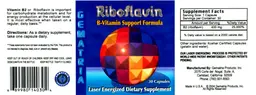
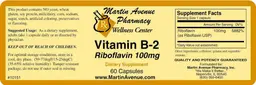
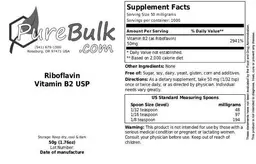
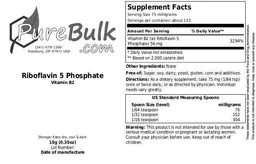
Top-rated Riboflavin products
Ranked by safety score and evidence coverage
How it's sold
Data aggregated from 371 product labels
Research evidence
Showing top 10 of 22 sources, sorted by quality
**Qi et al., 2024** | BMJ Open | Systematic Review Qi Shangwen, Luo Xu, ... Jin Hua. Effect of vitamin B2, vitamin C, vitamin D, vitamin E and folic acid in adults with essential hypertension: a systematic review and network meta-analysis. …
**Chen et al., 2022** | Nutr Neurosci | Meta Analysis Chen Yu-Shiue, Lee Huan-Fang, ... Hu Fang-Wen. Effect of Vitamin B2 supplementation on migraine prophylaxis: a systematic review and meta-analysis. Nutr Neurosci. 2022-Sep;25(9):1801-181…
BACKGROUND: Protein Energy Malnutrition is an important cause of child morbidity and mortality in middle- and low-income countries. It has been suggested that excessive free radical activity may be responsible for the clinical manifestation…
RATIONALE: Higher blood pressure is strongly related to an increased risk of cardiovascular disease. There has been interest in riboflavin (vitamin B2) as a potential intervention to lower blood pressure, particularly for those with a commo…
CONTEXT: The results from epidemiologic studies on the intake of dietary vitamin B1, B2, B6, and B12 and association with risk of developing depression have been inconsistent. OBJECTIVE: The purpose of this systematic review and meta-analys…
**Thompson et al., 2017** | J Clin Pharm Ther | Systematic Review Thompson D F, Saluja H S. Prophylaxis of migraine headaches with riboflavin: A systematic review. J Clin Pharm Ther. 2017-Aug;42(4):394-403. doi:10.1111/jcpt.12548 WHAT IS KN…
**Bruijn et al., 2010** | Cephalalgia | Rct Bruijn Jacques, Duivenvoorden Hugo, ... Arts Willem-Frans. Medium-dose riboflavin as a prophylactic agent in children with migraine: a preliminary placebo-controlled, randomised, double-blind, cro…
**Fard et al., 2023** | Int Ophthalmol | Meta Analysis Fard Ali Mahdavi, Patel Sangita P, Nader Nader D. The efficacy of 2 different phakic intraocular lens implant in keratoconus as an isolated procedure or combined with collagen crosslink…
**Craig et al., 2014** | Ocul Surf | Meta Analysis Craig Joyce A, Mahon James, ... Figueiredo Francisco. Epithelium-off photochemical corneal collagen cross-linkage using riboflavin and ultraviolet a for keratoconus and keratectasia: a syst…
**Gaul et al., 2015** | J Headache Pain | Rct Gaul Charly, Diener Hans-Christoph, Danesch Ulrich. Improvement of migraine symptoms with a proprietary supplement containing riboflavin, magnesium and Q10: a randomized, placebo-controlled, dou…
Frequently asked questions
What is Riboflavin and what does it do?
Riboflavin, also known as Vitamin B2, is a water-soluble vitamin essential for energy metabolism. While the Recommended Dietary Allowance (RDA) for adult males is 1.3 mg/day, research primarily focuses on its use in migraine prevention and specialized medical procedures like corneal cross-linking.
Does Riboflavin help prevent migraines?
Yes, there is moderate evidence suggesting riboflavin is effective in reducing migraine frequency and symptoms in both adults and children. High-dose riboflavin is commonly used for this purpose, with research indicating it can be a beneficial prophylactic treatment.
Is Riboflavin effective for treating high blood pressure?
Evidence for riboflavin lowering blood pressure is currently weak and inconclusive. Although recent network meta-analyses and Cochrane reviews have investigated these effects, research remains limited and has not yet established a definitive benefit for essential hypertension.
What is Riboflavin used for in eye care?
Riboflavin has strong evidence supporting its use in photochemical corneal collagen cross-linking to treat corneal instabilities associated with conditions like keratoconus. It is a key component in this specialized medical procedure to stabilize the cornea.
Can Riboflavin help with depression?
Currently, there is insufficient evidence to support riboflavin for treating depression. Meta-analyses of dietary intake show inconsistent associations between riboflavin levels and the risk of depression, so research is mixed on this condition.
Is Riboflavin safe to take and are there side effects?
Riboflavin is generally safe and well-tolerated with no major contraindications noted in current research. However, individuals who are pregnant, breastfeeding, or taking other medications should consult a healthcare provider before starting supplementation to ensure safety.
Does Riboflavin interact with any medications?
No drug interactions have been documented for riboflavin in the provided evidence. Despite this, it is always recommended to consult a healthcare provider before starting any new supplement, especially if you are on prescribed medications or have underlying health conditions.