Vitamin B12
Also known as adenosylcobalamin, cobalamin, cyanocobalamin, hydroxocobalamin
Key takeaways
- Oral B12 is an effective alternative to intramuscular injections for treating B12 deficiency (PMID: 29543316).
- B12 intake is associated with a lower risk of coronary heart disease in prospective cohort studies (PMID: 30431328).
- B12 supplementation's effect on cognitive function and fatigue is most pronounced in individuals with existing deficiencies (PMID: 33809274).
What the research shows
AI-synthesized from 237 peer-reviewed sources · Updated 2025
Vitamin B12 is an essential micronutrient critical for DNA synthesis, neurological function, and homocysteine regulation. Research indicates it is highly effective for treating deficiency across various administration routes and may play a role in cardiovascular and cognitive health, though benefits in non-deficient populations are less clear.
By condition
Vitamin B12 Deficiency
Strong
Oral, intramuscular, and sublingual routes are all effective for treating deficiency, with oral administration often serving as a viable alternative to injections.
Cardiovascular Health
Moderate
Intake of B12, along with folate and B6, is associated with a reduced risk of coronary heart disease and may influence the formation of intracranial aneurysms.
Cognitive Function & Mood
Weak
Supplementation may improve cognitive function and depressive symptoms, but primarily when a deficiency is present; benefits are limited in those without overt deficiency.
Pregnancy & Fetal Development
Moderate
B12 is critical for neural tube development and maternal-child health outcomes, particularly in populations with high deficiency burdens.
Hyperhomocysteinemia
Strong
B12 supplementation is effective at lowering homocysteine levels, although the magnitude of effect varies by individual baseline levels.
Effective doses
Specific dose ranges were not detailed in the provided abstracts, though efficacy was noted across oral, intramuscular, and sublingual routes.
Safety & interactions
Generally safe; however, it is often studied in combination with other B vitamins or medications (e.g., diclofenac for pain), and clinicians should monitor for interactions in complex metabolic syndromes.
Limitations
Many studies on cognitive and mood benefits show inconsistent results in non-deficient populations. There is a need for more high-powered RCTs to determine optimal dosing for specific neurological outcomes.
Dietary Reference Intakes
Source: IOM/NAM · Dietary Reference Intakes: Vitamin B12 (cobalamin)
| Measure | Value | Description |
|---|
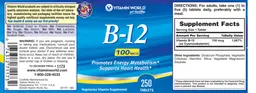
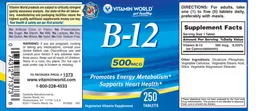
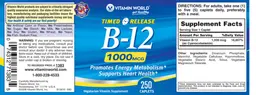
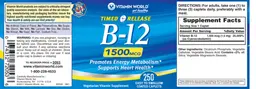
Top-rated Vitamin B12 products
Ranked by safety score and evidence coverage
Drug–supplement interactions
2 documented interactions
| Drug | Severity | Mechanism | Evidence |
|---|---|---|---|
| Antibiotics | Moderate | Interaction identified from DDInter 2.0 database. Specific drugs: Clarithromycin | ddinter-verified |
| Arsenic trioxide | Moderate | Interaction identified from DDInter 2.0 database. Specific drugs: Arsenic trioxi | ddinter-verified |
How it's sold
Data aggregated from 1,165 product labels
Research evidence
Showing top 10 of 237 sources, sorted by quality
**Tavares et al., 2025** | J Clin Neurosci | Meta Analysis Tavares Rodrigues Luiz Phelipe, Medeiros de Souza Gabriel da Costa, ... Figueiredo Eberval Gadelha. Associations between serum Homocysteine, vitamin B9, and vitamin B12 levels and t…
**Jayedi et al., 2019** | Crit Rev Food Sci Nutr | Meta Analysis Jayedi Ahmad, Zargar Mahdieh Sadat. Intake of vitamin B6, folate, and vitamin B12 and risk of coronary heart disease: a systematic review and dose-response meta-analysis of pr…
BACKGROUND: Vitamin B12 deficiency is common, and the incidence increases with age. Most people with vitamin B12 deficiency are treated in primary care with intramuscular (IM) vitamin B12. Doctors may not be prescribing oral vitamin B12 for…
Vitamin B12 is often used to improve cognitive function, depressive symptoms, and fatigue. In most cases, such complaints are not associated with overt vitamin B12 deficiency or advanced neurological disorders and the effectiveness of vitam…
BACKGROUND: This systematic review and network meta-analysis aimed to evaluate the three different administration routes of vitamin B12: oral, intramuscular (IM), and sublingual (SL) routes. METHODS: We searched four electronic databases (P…
**Afsar et al., 2020** | BMJ Open Gastroenterol | Meta Analysis Afsar Md Nure Alam, Jhinu Zannatun Nahar, ... Siddiqua Towfida Jahan. Helicobacter pylori infection and micronutrient deficiency in pregnant women: a systematic review and meta…
BACKGROUND: Vitamin B12 deficiency is a major public health problem worldwide, with the highest burden in elderly people, pregnant women, and young children. Due to its role in DNA synthesis and methylation, folate metabolism, and erythropo…
CONTEXT: Although some research suggests that vitamin B12 (hereafter, B12) supplements can lower homocysteine (Hcy) levels and treat hyperhomocysteinemia, these results are still ambiguous when B12 is taken as an isolated supplement. OBJECT…
**Dos et al., 2024** | Clin Nutr ESPEN | Systematic Review Dos Santos Maria Eduarda Rodrigues Alves, da Silva Karollainy Gomes, ... Barros Waleska Maria Almeida. Relationship between vitamin B12 levels and motor development: A systematic re…
BACKGROUND & AIMS: Metabolic syndrome (MetS) is associated with life-threatening conditions. Several studies have reported an association of vitamin B12, folic acid, or homocysteine (Hcy) levels with MetS. This systematic review and meta-an…
Frequently asked questions
What is Vitamin B12 and what are its main health benefits?
Vitamin B12 is an essential micronutrient critical for DNA synthesis, neurological function, and homocysteine regulation. Research indicates it has strong evidence for treating deficiency and moderate evidence for supporting cardiovascular health and fetal development during pregnancy.
Does Vitamin B12 help with cognitive function or mood?
Evidence for improving cognitive function and depressive symptoms is weak, particularly in individuals without a deficiency. Benefits are primarily observed when a deficiency is present, while research is mixed regarding its efficacy in non-deficient populations.
What is the recommended daily dose of Vitamin B12?
The Recommended Dietary Allowance (RDA) for adults is 2.4 mcg/day. While specific therapeutic dose ranges were not detailed in the provided data, oral administration is noted as an effective alternative to injections for treating deficiency.
Is Vitamin B12 safe to take during pregnancy?
Vitamin B12 is critical for neural tube development and maternal-child health outcomes, with moderate evidence supporting its importance in populations with high deficiency burdens. Pregnant individuals should consult a healthcare provider to ensure adequate intake for fetal development.
Does Vitamin B12 interact with other medications?
No drug interactions are documented in the provided data. However, clinicians should monitor for interactions in complex metabolic syndromes, as B12 is often studied in combination with other B vitamins or medications like diclofenac.
Who should avoid taking Vitamin B12 supplements?
While generally safe, individuals with complex metabolic syndromes or those taking medications like diclofenac should consult a healthcare provider before use. It is also important for those on prescribed medication to ensure supplementation does not interfere with their treatment plan.
Can Vitamin B12 lower homocysteine levels?
Yes, there is strong evidence that B12 supplementation is effective at lowering homocysteine levels. The magnitude of this effect varies depending on an individual's baseline homocysteine levels.