Thiamine
Also known as benfotiamine, thiamin, thiamine mononitrate, vitamin b1
Key takeaways
- Thiamine is a standard treatment for Wernicke-Korsakoff Syndrome in alcohol-dependent populations (PMID: 23818100).
- Combined therapy of thiamine, vitamin C, and hydrocortisone is used in sepsis management, though outcomes on mortality vary across meta-analyses (PMID: 34529397, PMID: 34750650).
- Combination of B vitamins (thiamine, pyridoxine, cyanocobalamin) with diclofenac is effective for low back pain (PMID: 31529101).
What the research shows
AI-synthesized from 100 peer-reviewed sources · Updated 2025
Thiamine (Vitamin B1) is an essential micronutrient critical for glucose metabolism and neurological function. Research indicates it is highly effective for treating thiamine deficiency syndromes and is frequently studied as part of a metabolic cocktail for critically ill patients, though its efficacy in general health conditions remains mixed.
By condition
Wernicke-Korsakoff Syndrome
Strong
Established as the primary treatment for prevention and management in individuals with alcohol abuse.
Sepsis and Septic Shock
Moderate
Often administered as part of a combination therapy with Vitamin C and hydrocortisone, showing varying results on mortality and recovery.
Type 2 Diabetes
Weak
Meta-analysis suggests limited or inconsistent effects on glycemic outcomes.
Heart Failure
Weak
Research into the impact of thiamine supplementation on heart failure patients remains unclear.
Low Back Pain
Moderate
Effective when combined with diclofenac and other B vitamins for pain management.
Effective doses
Specific dose ranges were not detailed in the provided abstracts, though intravenous administration is noted for critically ill patients.
Safety & interactions
Generally safe; however, intravenous administration in critically ill patients should be monitored by medical professionals.
Limitations
Many studies focus on combination therapies (e.g., with Vitamin C), making it difficult to isolate the specific effect of thiamine. There is a lack of consensus on its efficacy for general metabolic outcomes in diabetes and heart failure.
Dietary Reference Intakes
Source: IOM/NAM · Dietary Reference Intakes: Thiamin (Vitamin B1)
| Measure | Value | Description |
|---|
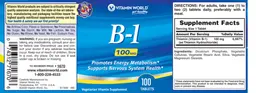
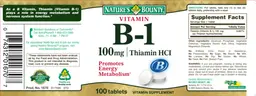
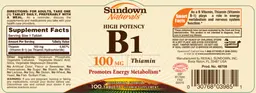
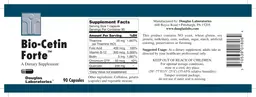
Top-rated Thiamine products
Ranked by safety score and evidence coverage
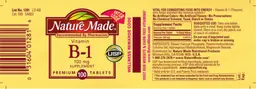
How it's sold
Data aggregated from 1,335 product labels
Research evidence
Showing top 10 of 100 sources, sorted by quality
BACKGROUND: Autopsy studies suggest that Wernicke-Korsakoff syndrome (WKS) is not a rare disorder, particularly in individuals who abuse alcohol. Thiamine has been established as the treatment of choice for over 50 years, but uncertainty re…
**Borges-Vieira et al., 2023** | Nutr Neurosci | Systematic Review Borges-Vieira Jaqueline G, Cardoso Camila K Souza. Efficacy of B-vitamins and vitamin D therapy in improving depressive and anxiety disorders: a systematic review of randomi…
**Muley et al., 2022** | BMJ Open | Meta Analysis Muley Arti, Fernandez Ritin, ... Muley Prasad. Effect of thiamine supplementation on glycaemic outcomes in adults with type 2 diabetes: a systematic review and meta-analysis. BMJ Open. 2022-…
**Nakanishi et al., 2024** | Clin Nutr | Meta Analysis Nakanishi Nobuto, Abe Yoshinobu, ... Kotani Joji. Effect of intravenous thiamine administration on critically ill patients: A systematic review and meta-analysis of randomized controlle…
**Fujii et al., 2022** | Intensive Care Med | Systematic Review Fujii Tomoko, Salanti Georgia, ... Young Paul J. Effect of adjunctive vitamin C, glucocorticoids, and vitamin B1 on longer-term mortality in adults with sepsis or septic shock:…
**Calderon-Ospina et al., 2020** | Pain Med | Meta Analysis Calderon-Ospina Carlos-Alberto, Nava-Mesa Mauricio Orlando, Arbeláez Ariza Carlos Emilio. Effect of Combined Diclofenac and B Vitamins (Thiamine, Pyridoxine, and Cyanocobalamin) fo…
**Assouline et al., 2021** | Crit Care Med | Meta Analysis Assouline Benjamin, Faivre Anna, ... Legouis David. Thiamine, Ascorbic Acid, and Hydrocortisone As a Metabolic Resuscitation Cocktail in Sepsis: A Meta-Analysis of Randomized Contro…
BACKGROUND: Micronutrients can benefit patients with heart failure (HF). Thiamine is a critical vitamin, while the impact of thiamine supplementation on patients with HF remains unclear. Systematic review and meta-analysis were conducted to…
**Lu et al., 2023** | Clin Invest Med | Meta Analysis Lu Difan, Mao Wenchao. Hydrocortisone Combined with Vitamin C and Thiamine in the Treatment of Sepsis/Septic Shock: A Systematic Review with Meta-Analysis and Trial Sequential Analysis. …
BACKGROUND: Autopsy studies suggest that Wernicke-Korsakoff Syndrome (WKS) is not a rare disorder, particularly in individuals who abuse alcohol. Thiamine has been established as the treatment of choice for over 50 years, but there is uncer…
Frequently asked questions
What is thiamine and what is it used for?
Thiamine, also known as Vitamin B1, is an essential micronutrient critical for glucose metabolism and neurological function. It is primarily used to treat thiamine deficiency syndromes and is frequently studied as part of a metabolic cocktail for critically ill patients.
Does thiamine work for Wernicke-Korsakoff Syndrome?
Yes, there is strong evidence that thiamine is the primary treatment for the prevention and management of Wernicke-Korsakoff Syndrome in individuals with alcohol abuse. It is considered a standard treatment for this condition in alcohol-dependent populations.
Is thiamine effective for treating sepsis?
There is moderate evidence that thiamine is often administered as part of a combination therapy with Vitamin C and hydrocortisone for sepsis and septic shock. However, research shows varying results regarding its impact on mortality and recovery rates.
Can thiamine help with low back pain?
There is moderate evidence that thiamine is effective for low back pain when combined with diclofenac and other B vitamins. It is not typically used as a standalone treatment for this condition.
Does thiamine help with Type 2 Diabetes or Heart Failure?
Research is mixed for these conditions. For Type 2 Diabetes, evidence is weak with meta-analyses suggesting limited or inconsistent effects on glycemic outcomes. Similarly, evidence for heart failure is weak, with the impact of supplementation remaining unclear.
What is the recommended daily intake of thiamine?
According to the Institute of Medicine (IOM) 1998 Dietary Reference Intakes, the Recommended Dietary Allowance (RDA) for males aged 19-50 is 1.2 mg/day. Specific dose ranges for therapeutic use were not detailed in the provided evidence.
Is thiamine safe to take, and are there any drug interactions?
Thiamine is generally safe, but intravenous administration in critically ill patients should be monitored by medical professionals. No drug interactions have been documented, but you should consult a healthcare provider for personal advice, especially if you are pregnant or on medications.