Green Tea
Also known as camellia sinensis, catechins, egcg, epigallocatechin gallate
Key takeaways
- Positive impact of antioxidant polyphenol supplementation on cardiometabolic risk factors (PMID: 39683599).
- Green tea consumption is associated with improvements in BMI, lipoprotein, and liver enzymes (PMID: 36036958).
- Cochrane reviews indicate insufficient evidence for green tea in the primary prevention of cardiovascular disease (PMID: 23780706) and cancer prevention (PMID: 32118296).
What the research shows
AI-synthesized from 188 peer-reviewed sources · Updated 2025
Green tea extract is a polyphenol-rich supplement derived from Camellia sinensis. Research indicates potential benefits for metabolic health and cardiometabolic risk factors, though evidence for cancer prevention and significant weight loss remains mixed or inconclusive.
By condition
Cardiometabolic Risk Factors
Moderate
Antioxidant polyphenol supplementation shows a positive effect on improving cardiometabolic risk factors.
Weight Loss and Body Composition
Weak
Meta-analyses show minimal or inconsistent effects on weight loss and maintenance in overweight or obese adults.
Cancer Prevention
Insufficient
Evidence for the prevention of various cancers, including breast and pancreatic, is inconsistent across observational studies and systematic reviews.
Liver Health
Moderate
Consumption is associated with improvements in liver enzymes and potential reductions in liver cancer risk.
Acne
Weak
Systematic reviews suggest limited effectiveness of oral nutraceuticals, including green tea, for treating acne.
Effective doses
Specific dose ranges were not provided in the provided abstracts; however, research focuses on standardized polyphenol and catechin supplementation.
Safety & interactions
Generally safe, but users should monitor for potential interactions with medications and be aware of caffeine content.
Limitations
Much of the evidence relies on observational studies with high heterogeneity. There is a lack of consistent, high-powered RCTs to definitively prove efficacy for weight loss and cancer prevention.
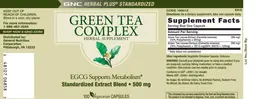
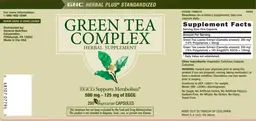
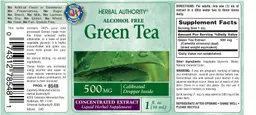
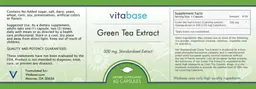
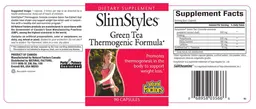
Top-rated Green Tea products
Ranked by safety score and evidence coverage
Drug–supplement interactions
34 documented interactions
| Drug | Severity | Mechanism | Evidence |
|---|---|---|---|
| Antiarrhythmics | Critical | Green Tea is a weak inhibitor of CYP2C9, which decreases metabolism of CYP2C9 su | cyp-inferred |
| Anticonvulsants | Critical | Green Tea is a weak inhibitor of CYP3A4, which decreases metabolism of CYP3A4 su | cyp-inferred |
| GI Prokinetics | Critical | Green Tea is a weak inhibitor of CYP3A4, which decreases metabolism of CYP3A4 su | cyp-inferred |
| Immunosuppressants | Critical | Green Tea is a weak inhibitor of CYP3A4, which decreases metabolism of CYP3A4 su | cyp-inferred |
| Theophylline | Critical | Green Tea is a weak inhibitor of CYP3A4, which decreases metabolism of CYP3A4 su | cyp-inferred |
| ARB | Moderate | Green Tea is a weak inhibitor of CYP2C9, which decreases metabolism of CYP2C9 su | cyp-inferred |
| Analgesics | Moderate | Green Tea is a weak inhibitor of CYP1A2, which decreases metabolism of CYP1A2 su | cyp-inferred |
| Antibiotics | Moderate | Green Tea is a weak inhibitor of CYP3A4, which decreases metabolism of CYP3A4 su | cyp-inferred |
| Antidiabetic Drugs | Moderate | Green Tea is a weak inhibitor of CYP3A4, which decreases metabolism of CYP3A4 su | cyp-inferred |
| Antifungals | Moderate | Green Tea is a weak inhibitor of CYP3A4, which decreases metabolism of CYP3A4 su | cyp-inferred |
How it's sold
Data aggregated from 571 product labels
Research evidence
Showing top 10 of 188 sources, sorted by quality
**Li et al., 2024** | Crit Rev Food Sci Nutr | Meta Analysis Li Mingzhen, Duan Yunjie, ... Yan Jun. The effect of Green green tea consumption on body mass index, lipoprotein, liver enzymes, and liver cancer: An updated systemic review incor…
**Gianfredi et al., 2018** | Nutrients | Meta Analysis Gianfredi Vincenza, Nucci Daniele, ... Realdon Stefano. Green Tea Consumption and Risk of Breast Cancer and Recurrence-A Systematic Review and Meta-Analysis of Observational Studies. Nu…
**Filippini et al., 2020** | Cochrane Database Syst Rev | Meta Analysis Filippini Tommaso, Malavolti Marcella, ... Vinceti Marco. Green tea (Camellia sinensis) for the prevention of cancer. Cochrane Database Syst Rev. 2020-Mar-02;3(3):CD005…
**Wan et al., 2024** | Nutrients | Meta Analysis Wan Sitong, Luo Junjie, ... Xing Qingchang. The Effect of Antioxidant Polyphenol Supplementation on Cardiometabolic Risk Factors: A Systematic Review and Meta-Analysis. Nutrients. 2024-Dec-05…
BACKGROUND: Preparations of green tea are used as aids in weight loss and weight maintenance. Catechins and caffeine, both contained in green tea, are each believed to have a role in increasing energy metabolism, which may lead to weight lo…
**Zeng et al., 2014** | Nutrients | Meta Analysis Zeng Jin-Long, Li Zhi-Hua, ... Zhang Hai-Liang. Green tea consumption and risk of pancreatic cancer: a meta-analysis. Nutrients. 2014-Oct-28;6(11):4640-50. doi:10.3390/nu6114640 Emerging lab…
**Shields et al., 2023** | JAMA Dermatol | Systematic Review Shields Ali, Ly Sophia, ... Barbieri John S. Safety and Effectiveness of Oral Nutraceuticals for Treating Acne: A Systematic Review. JAMA Dermatol. 2023-Dec-01;159(12):1373-1382. …
**van et al., 2019** | Nutrients | Meta Analysis van Baak Marlene A, Mariman Edwin C M. Dietary Strategies for Weight Loss Maintenance. Nutrients. 2019-Aug-15;11(8). doi:10.3390/nu11081916 Weight regain after a successful weight loss interv…
**Hartley et al., 2013** | Cochrane Database Syst Rev | Meta Analysis Hartley Louise, Flowers Nadine, ... Rees Karen. Green and black tea for the primary prevention of cardiovascular disease. Cochrane Database Syst Rev. 2013-Jun-18;2013(6):…
**Poorolajal et al., 2020** | Epidemiol Health | Meta Analysis Poorolajal Jalal, Moradi Leila, ... Gohari-Ensaf Fatemeh. Risk factors for stomach cancer: a systematic review and meta-analysis. Epidemiol Health. 2020;42:e2020004. doi:10.4178…
Frequently asked questions
What is Green Tea Extract and what are its main benefits?
Green Tea Extract is a polyphenol-rich supplement derived from the Camellia sinensis plant. Research indicates moderate evidence for improving cardiometabolic risk factors and liver health, while evidence for weight loss and cancer prevention remains mixed or insufficient.
Does Green Tea Extract help with weight loss?
Research on Green Tea Extract for weight loss shows weak evidence, with meta-analyses indicating minimal or inconsistent effects on weight loss and maintenance in overweight or obese adults. Therefore, it should not be relied upon as a primary weight loss solution.
Can Green Tea Extract improve heart health?
There is moderate evidence that antioxidant polyphenol supplementation from Green Tea Extract has a positive effect on improving cardiometabolic risk factors. However, Cochrane reviews indicate insufficient evidence for Green Tea in the primary prevention of cardiovascular disease.
Is Green Tea Extract safe for my liver?
Moderate evidence suggests that Green Tea consumption is associated with improvements in liver enzymes and potential reductions in liver cancer risk. While generally safe, users should monitor for any adverse effects and consult a healthcare provider if they have pre-existing liver conditions.
What are the drug interactions with Green Tea Extract?
Green Tea Extract may interact with medications, including a moderate interaction with Warfarin due to its vitamin K content, which can reduce the drug's effectiveness. It also has a minor potential interaction with Simvastatin, as catechins may increase its absorption. Always consult a healthcare provider before combining supplements with prescription drugs.
Who should avoid taking Green Tea Extract?
Individuals taking blood thinners like Warfarin or statins like Simvastatin should avoid or carefully monitor Green Tea Extract use due to potential interactions. Additionally, because the supplement contains caffeine, those sensitive to caffeine or pregnant women should exercise caution and consult a healthcare provider.
Does Green Tea Extract help with acne?
Evidence for using Green Tea Extract to treat acne is weak, with systematic reviews suggesting limited effectiveness of oral nutraceuticals for this condition. It is not considered a primary or highly effective treatment for acne based on current research.