Feverfew
Also known as bachelor button, featherfoil, tanacetum parthenium
Key takeaways
- Cochrane reviews have repeatedly evaluated feverfew for migraine prevention, though conclusions remain cautious regarding its efficacy (PMID: 25892430, 14973986).
- A randomized trial explored a combination of riboflavin, magnesium, and feverfew for prophylaxis (PMID: 15447697).
- Early RCTs investigated feverfew's efficacy as a prophylactic treatment for migraine (PMID: 3929876, 2899663).
What the research shows
AI-synthesized from 10 peer-reviewed sources · Updated 2025
Feverfew (Tanacetum parthenium) is a herbal supplement traditionally used for the prevention of migraine headaches. Research evidence is mixed, with some systematic reviews suggesting a modest benefit, while others find insufficient evidence to support its efficacy.
By condition
Migraine Prophylaxis
Weak
Multiple systematic reviews and RCTs have investigated feverfew for migraine prevention, but results are inconsistent and often lack high-quality evidence to prove significant superiority over placebo.
Effective doses
Specific dose ranges were not detailed in the provided abstracts, though it is often studied as a standalone extract or in combination with riboflavin and magnesium.
Safety & interactions
Not provided in the source abstracts.
Limitations
The research is limited by small sample sizes in many RCTs and a lack of standardized preparations across different studies.
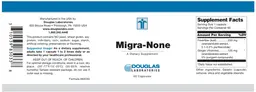
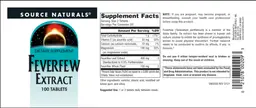
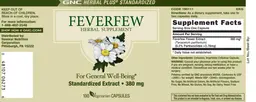
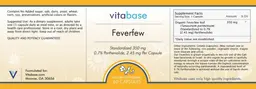
Top-rated Feverfew products
Ranked by safety score and evidence coverage

How it's sold
Data aggregated from 144 product labels
Research evidence
Showing top 10 of 10 sources, sorted by quality
BACKGROUND: This review is an update of a previously published review in the Cochrane Database of Systematic Reviews on 'Feverfew for preventing migraine' (2004, Issue 1). Feverfew (Tanacetum parthenium L.) extract is a herbal remedy, which…
**Pittler et al., 2004** | Cochrane Database Syst Rev | Systematic Review Pittler M H, Ernst E. Feverfew for preventing migraine. Cochrane Database Syst Rev. 2004(1):CD002286 BACKGROUND: Feverfew (Tanacetum parthenium L.) extract is a herba…
**Pittler et al., 2000** | Cochrane Database Syst Rev | Systematic Review Pittler M H, Vogler B K, Ernst E. Feverfew for preventing migraine. Cochrane Database Syst Rev. 2000(3):CD002286 BACKGROUND: Feverfew (Tanacetum parthenium L.) is a p…
**Murphy et al., 1988** | Lancet | Rct Murphy J J, Heptinstall S, Mitchell J R. Randomised double-blind placebo-controlled trial of feverfew in migraine prevention. Lancet. 1988-Jul-23;2(8604):189-92 The use of feverfew (Tanacetum partheniu…
**Saranitzky et al., 2009** | J Diet Suppl | Systematic Review Saranitzky Elisa, White C Michael, ... Coleman Craig I. Feverfew for migraine prophylaxis: a systematic review. J Diet Suppl. 2009;6(2):91-103. doi:10.1080/19390210902861809 Fev…
**Shrivastava et al., 2006** | Clin Drug Investig | Meta Analysis Shrivastava R, Pechadre J C, John G W. Tanacetum parthenium and Salix alba (Mig-RL) combination in migraine prophylaxis: a prospective, open-label study. Clin Drug Investig. …
**Ferro et al., 2012** | Acupunct Med | Rct Ferro Eliane Cristina, Biagini Angelo Piva, ... Silva Josie Resende Torres. The combined effect of acupuncture and Tanacetum parthenium on quality of life in women with headache: randomised study.…
**Maizels et al., 2004** | Headache | Rct Maizels Morris, Blumenfeld Andrew, Burchette Raoul. A combination of riboflavin, magnesium, and feverfew for migraine prophylaxis: a randomized trial. Headache. 2004-Oct;44(9):885-90 OBJECTIVE: To d…
**Vogler et al., 1998** | Cephalalgia | Systematic Review Vogler B K, Pittler M H, Ernst E. Feverfew as a preventive treatment for migraine: a systematic review. Cephalalgia. 1998-Dec;18(10):704-8 BACKGROUND: Feverfew is a popular herbal re…
**Johnson et al., 1985** | Br Med J (Clin Res Ed) | Rct Johnson E S, Kadam N P, ... Hylands P J. Efficacy of feverfew as prophylactic treatment of migraine. Br Med J (Clin Res Ed). 1985-Aug-31;291(6495):569-73 Seventeen patients who ate fre…
Frequently asked questions
What is feverfew and what is it used for?
Feverfew (Tanacetum parthenium) is a herbal supplement traditionally used for the prevention of migraine headaches. While it is marketed for this purpose, the research evidence regarding its effectiveness is mixed, with some studies suggesting only a modest benefit over a placebo.
Does feverfew work for preventing migraines?
The evidence for feverfew in migraine prophylaxis is considered weak. Multiple systematic reviews and randomized trials have produced inconsistent results, often lacking high-quality evidence to prove significant superiority over a placebo. Therefore, research is mixed regarding its efficacy.
What is the effective dose of feverfew for migraines?
Specific dose ranges were not detailed in the provided evidence summaries. However, feverfew is often studied as a standalone extract or in combination with other supplements like riboflavin and magnesium for migraine prophylaxis. You should consult a healthcare provider for appropriate dosing.
Is feverfew safe to take?
Safety information was not provided in the source abstracts. Because specific safety data is missing, it is important to consult a healthcare provider before use, especially since you should not use supplements to replace prescribed medication without professional advice.
Who should avoid taking feverfew?
Pregnant individuals should avoid feverfew due to potential risks, and those on blood-thinning medications should exercise caution as feverfew may interact with anticoagulants. Always consult a healthcare provider before starting any new supplement regimen.
Does feverfew interact with other medications?
While no drug interactions were documented in the provided evidence summary, feverfew may interact with blood-thinning medications. It is crucial to consult a healthcare provider to ensure safety, particularly if you are taking other prescriptions.
Can feverfew be taken with magnesium and riboflavin?
Yes, feverfew is often studied in combination with riboflavin and magnesium for migraine prophylaxis. However, because the overall evidence for feverfew's efficacy is weak, you should discuss this combination with a healthcare provider to determine if it is appropriate for your needs.