Vitamin K
Also known as menaquinone, mk-4, mk-7, phylloquinone
Key takeaways
- Vitamin K antagonists are used as secondary treatment for symptomatic venous thromboembolism (PMID: 25092359).
- Factor Xa inhibitors are compared against vitamin K antagonists for preventing embolism in atrial fibrillation patients (PMID: 29509959).
- Anticoagulation is utilized for long-term treatment of VTE in patients with cancer (PMID: 29920657).
What the research shows
AI-synthesized from 332 peer-reviewed sources · Updated 2025
Vitamin K is a fat-soluble vitamin essential for blood coagulation. The provided research focuses heavily on Vitamin K Antagonists (VKAs), which are used clinically to inhibit clotting for the prevention and treatment of thromboembolic events.
By condition
Venous Thromboembolism (VTE)
Strong
Vitamin K antagonists are widely used for both the primary and secondary prevention of VTE in various populations, including cancer patients and post-surgical patients.
Atrial Fibrillation
Strong
Vitamin K antagonists are effective for preventing cerebral or systemic embolism, though they are frequently compared against newer Factor Xa inhibitors.
Antiphospholipid Syndrome
Strong
Anticoagulants, including those targeting the vitamin K pathway, are used for the secondary prevention of stroke and thromboembolic events.
Effective doses
Not provided in the abstracts; doses for vitamin K antagonists are typically titrated to achieve a specific International Normalized Ratio (INR).
Safety & interactions
Vitamin K antagonists carry a significant risk of bleeding and require careful monitoring of the International Normalized Ratio (INR) to avoid hemorrhage or treatment failure.
Limitations
The provided evidence focuses almost exclusively on the pharmacological antagonism of Vitamin K (anticoagulants) rather than the nutritional supplementation of Vitamin K for health promotion.
Dietary Reference Intakes
Source: IOM/NAM · Dietary Reference Intakes: Vitamin K
| Measure | Value | Description |
|---|
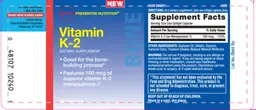
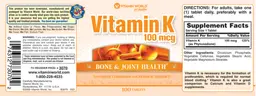
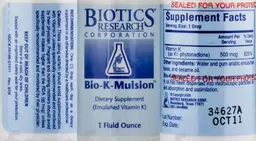
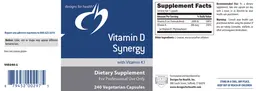
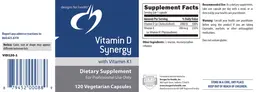
Top-rated Vitamin K products
Ranked by safety score and evidence coverage
Drug–supplement interactions
2 documented interactions
| Drug | Severity | Mechanism | Evidence |
|---|---|---|---|
| Anticoagulants | Critical | Vitamin K antagonizes the effect of all vitamin K antagonist anticoagulants (war | well-established |
| Warfarin | Critical | Vitamin K is required for synthesis of clotting factors II, VII, IX, X. Warfarin | well-established |
How it's sold
Data aggregated from 363 product labels
Research evidence
Showing top 10 of 332 sources, sorted by quality
BACKGROUND: Currently, the most frequently used secondary treatment for patients with venous thromboembolism (VTE) consists of vitamin K antagonists (VKA) targeted at an international normalized ratio (INR) of 2.5 (range 2.0 to 3.0). Howeve…
**Bala et al., 2017** | Cochrane Database Syst Rev | Meta Analysis Bala Malgorzata M, Celinska-Lowenhoff Magdalena, ... Undas Anetta. Antiplatelet and anticoagulant agents for secondary prevention of stroke and other thromboembolic events i…
**Forster et al., 2016** | Cochrane Database Syst Rev | Meta Analysis Forster Rachel, Stewart Marlene. Anticoagulants (extended duration) for prevention of venous thromboembolism following total hip or knee replacement or hip fracture repai…
**Bala et al., 2020** | Cochrane Database Syst Rev | Meta Analysis Bala Malgorzata M, Celinska-Lowenhoff Magdalena, ... Undas Anetta. Antiplatelet and anticoagulant agents for secondary prevention of stroke and other thromboembolic events i…
**Salazar et al., 2025** | Cochrane Database Syst Rev | Meta Analysis Salazar Carlos A, Basilio Flores Juan E, ... Bernardo Roberto. Direct factor Xa inhibitors versus low molecular weight heparins or vitamin K antagonists for prevention of…
**Bruins et al., 2018** | Cochrane Database Syst Rev | Meta Analysis Bruins Slot Karsten Mh, Berge Eivind. Factor Xa inhibitors versus vitamin K antagonists for preventing cerebral or systemic embolism in patients with atrial fibrillation. …
**Shantsila et al., 2022** | Cochrane Database Syst Rev | Systematic Review Shantsila Eduard, Kozieł-Siołkowska Monika, Lip Gregory Yh. Antiplatelet agents and anticoagulants for hypertension. Cochrane Database Syst Rev. 2022-Jul-28;7(7):CD…
**Di et al., 2012** | Cochrane Database Syst Rev | Meta Analysis Di Nisio Marcello, Porreca Ettore, ... Rutjes Anne W S. Primary prophylaxis for venous thromboembolism in ambulatory cancer patients receiving chemotherapy. Cochrane Database …
**Bruins et al., 2013** | Cochrane Database Syst Rev | Meta Analysis Bruins Slot Karsten M H, Berge Eivind. Factor Xa inhibitors versus vitamin K antagonists for preventing cerebral or systemic embolism in patients with atrial fibrillation.…
**Akl et al., 2014** | Cochrane Database Syst Rev | Meta Analysis Akl Elie A, Kahale Lara, ... Schünemann Holger. Anticoagulation for the long-term treatment of venous thromboembolism in patients with cancer. Cochrane Database Syst Rev. 201…
Frequently asked questions
What is Vitamin K and what is it used for?
Vitamin K is a fat-soluble vitamin essential for blood coagulation. While it is naturally found in foods, the provided research primarily focuses on Vitamin K Antagonists (VKAs), which are clinical medications used to inhibit clotting for the prevention and treatment of thromboembolic events.
Does Vitamin K help prevent blood clots?
Research indicates strong evidence that Vitamin K Antagonists are effective for the primary and secondary prevention of Venous Thromboembolism (VTE) in populations such as cancer and post-surgical patients. They are also strongly supported for preventing cerebral or systemic embolism in patients with atrial fibrillation.
What is the recommended daily dose of Vitamin K?
The Dietary Reference Intake (DRI) for males aged 19-50 is an Adequate Intake (AI) of 120 mcg/day. However, for therapeutic use, doses of Vitamin K Antagonists are typically titrated by healthcare providers to achieve a specific International Normalized Ratio (INR) rather than following a fixed daily amount.
Is Vitamin K safe to take with blood thinners like Warfarin?
No, this interaction is classified as CRITICAL. Vitamin K antagonizes the effect of anticoagulants like Warfarin because it is required for the synthesis of clotting factors that these drugs inhibit. Patients taking these medications must carefully monitor their Vitamin K intake to avoid treatment failure or bleeding risks.
What are the safety risks and side effects of Vitamin K supplements?
Vitamin K Antagonists carry a significant risk of bleeding and require careful monitoring of the International Normalized Ratio (INR) to avoid hemorrhage. Because of these risks, individuals on anticoagulant therapy should consult a healthcare provider before using Vitamin K supplements to prevent dangerous interactions.
Who should avoid taking Vitamin K supplements?
Individuals taking Vitamin K Antagonist anticoagulants (such as warfarin) should avoid unsupervised Vitamin K supplementation due to critical drug interactions. Additionally, because the evidence focuses on clinical anticoagulation rather than general supplementation, anyone with bleeding disorders or those on blood-thinning medication should consult a doctor before use.