Taurine
Also known as amino acid, l-taurine, taurine
Key takeaways
- Taurine supplementation significantly lowers resting blood pressure in humans (PMID: 30006901).
- Taurine improves vascular function in individuals with prehypertension (PMID: 26781281).
- Taurine may improve functional capacity and electrical activity in patients with heart failure (PMID: 28118062).
What the research shows
AI-synthesized from 35 peer-reviewed sources · Updated 2025
Taurine is a semi-essential sulfur-containing amino acid found abundantly in the heart and breast milk. Research suggests it may have beneficial effects on cardiovascular health, specifically blood pressure regulation, and potential roles in neonatal development.
By condition
Cardiovascular (Hypertension)
Moderate
Multiple meta-analyses and RCTs indicate that taurine supplementation can lower resting systolic and diastolic blood pressure.
Heart Failure/Cardiomyopathy
Weak
Some evidence suggests improvements in functional capacity and myocardial oxygen consumption, though systematic reviews indicate limited clinical outcome data.
Neonatal Development
Moderate
Taurine is critical for intestinal fat absorption and auditory/visual development in preterm or low birth weight infants.
Metabolic Health/Obesity
Weak
Preliminary evidence suggests a role in regulating glucose and lipid metabolism due to antioxidant and anti-inflammatory actions.
Effective doses
Oral doses of 6g/day have been utilized in clinical trials for portal hypertension (PMID: 29105115).
Safety & interactions
Generally well-tolerated; however, specific drug interactions were not detailed in the provided abstracts.
Limitations
Many studies have small sample sizes (e.g., N=8 or N=12), and there is a need for more large-scale, rigorous clinical trials to confirm efficacy in heart failure and metabolic syndrome.
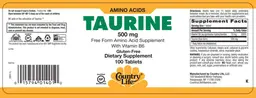
Top-rated Taurine products
Ranked by safety score and evidence coverage
How it's sold
Data aggregated from 182 product labels
Research evidence
Showing top 10 of 35 sources, sorted by quality
BACKGROUND: Branched-chain amino acids (BCAAs) play a vital role in neonatal nutrition. Optimal BCAA supplementation might improve neonatal nutrient storage, leading to better physical and neurological development and other outcomes. OBJECT…
BACKGROUND: Taurine is the most abundant free amino acid in breast milk. Evidence exists that taurine has important roles in intestinal fat absorption, hepatic function, and auditory and visual development in preterm or low birth weight inf…
**Tzang et al., 2024** | Nutr J | Meta Analysis Tzang Chih-Chen, Lin Wei-Chen, ... Özçakar Levent. Insights into the cardiovascular benefits of taurine: a systematic review and meta-analysis. Nutr J. 2024-Aug-15;23(1):93. doi:10.1186/s12937…
PURPOSE OF REVIEW: The aims of this meta-analysis were to investigate the effects of orally administered isolated taurine on resting systolic blood pressure (SBP) and diastolic blood pressure (DBP) in humans. RECENT FINDINGS: There is growi…
The purpose of this study was to determine the effects of pre-exercise amino acid (AA) supplementation on post-exercise iron regulation. Ten healthy males participated under two different sets of conditions in a randomized, double-blind, cr…
Taurine plays a pivotal role in regulating glucose and lipid metabolism, blood pressure homeostasis, and obesity largely due to its cytoprotective, antioxidant, and anti-inflammatory actions. Despite promising data from animal studies in th…
Background: Taurine, 2-aminoethanesulfonic acid, is an amino acid found in animal products. Taurine is produced for human consumption as a supplement and ingredient in beverages. Supplementation is a safe, inexpensive, and effective treatme…
**Salem et al., 2024** | Sports Med Open | Systematic Review Salem Atef, Ben Maaoui Khouloud, ... Chtourou Hamdi. Attenuating Muscle Damage Biomarkers and Muscle Soreness After an Exercise-Induced Muscle Damage with Branched-Chain Amino Aci…
The green tea amino acid, L-theanine (L-THE) is associated with several health benefits, including improvements in mood, cognition and a reduction of stress and anxiety-like symptoms. This systematic review evaluated the effect of pure L-TH…
Taurine, the most abundant, semiessential, sulfur-containing amino acid, is well known to lower blood pressure (BP) in hypertensive animal models. However, no rigorous clinical trial has validated whether this beneficial effect of taurine o…
Frequently asked questions
What is taurine and what is it used for?
Taurine is a semi-essential sulfur-containing amino acid found abundantly in the heart and breast milk. It is primarily researched for its potential beneficial effects on cardiovascular health, specifically blood pressure regulation, and its critical role in neonatal development.
Does taurine work for high blood pressure?
Yes, there is moderate evidence indicating that taurine supplementation can lower resting systolic and diastolic blood pressure. Multiple meta-analyses and randomized controlled trials suggest it may improve vascular function in individuals with prehypertension.
Is taurine effective for heart failure?
The evidence for taurine in treating heart failure is weak. While some studies suggest improvements in functional capacity and myocardial oxygen consumption, systematic reviews indicate that clinical outcome data is limited.
What is the effective dose of taurine?
Oral doses of 6g/day have been utilized in clinical trials, such as those for portal hypertension. However, specific dosing guidelines for other conditions are not detailed in the provided evidence summary.
Is taurine safe to take with other medications?
Taurine is generally well-tolerated, and no drug interactions have been documented in the provided sources. However, because specific interactions were not detailed in the abstracts, you should consult a healthcare provider before combining it with other medications.
Who should avoid taking taurine supplements?
Pregnant individuals and those on prescription medications should consult a healthcare provider before use, as specific safety data for these groups is not fully detailed in the provided evidence. Additionally, while taurine is critical for neonatal development, supplementation decisions for infants should be made by medical professionals.
Does taurine help with obesity or metabolic health?
The evidence for taurine's role in obesity and metabolic health is weak. Preliminary research suggests it may help regulate glucose and lipid metabolism due to antioxidant and anti-inflammatory actions, but more robust clinical data is needed.