Creatine
Also known as creatine hcl, creatine monohydrate, creatine phosphate, phosphocreatine
Key takeaways
- Creatine supplementation combined with resistance training significantly improves muscle strength and mass in older females (PMID: 34836013).
- Creatine effectively enhances both upper- and lower-body strength and power (PMID: 40944139).
- There is insufficient evidence to support the use of creatine for treating general muscle disorders (PMID: 23740606).
What the research shows
AI-synthesized from 739 peer-reviewed sources · Updated 2025
Creatine is a widely used supplement primarily known for enhancing athletic performance and muscle mass. Research generally supports its efficacy in improving strength and power, particularly when combined with resistance training, though evidence for other clinical applications is more mixed.
By condition
Muscle Strength and Mass
Strong
Strong evidence supports creatine's ability to increase muscle strength and mass in both general populations and older females when paired with resistance training.
Athletic Performance (Power/VO2max)
Moderate
Meta-analyses indicate positive effects on upper- and lower-body power, though effects on VO2max are subject to further review.
Depression
Weak
Recent systematic reviews have investigated creatine for depressive symptoms, but findings remain inconsistent.
Muscle Disorders
Insufficient
Cochrane reviews suggest insufficient evidence to definitively recommend creatine for the treatment of general muscle disorders.
Cardiovascular Health
Insufficient
Evidence regarding the use of creatine or its analogues in hypertension and cardiovascular disease is not supportive of a strong clinical benefit.
Effective doses
Specific dose ranges were not provided in the provided abstracts, though it is typically administered as a daily supplement.
Safety & interactions
No specific contraindications were listed in the provided abstracts, but clinical use in patients with kidney disease should be monitored.
Limitations
Many provided studies are meta-analyses of varying quality, and there is a lack of consistent evidence for non-athletic applications such as depression and cardiovascular health.
Dietary Reference Intakes
Source: IOM/NAM · Dietary Reference Intakes: Creatine
| Measure | Value | Description |
|---|
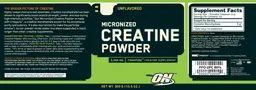
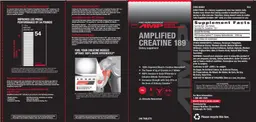
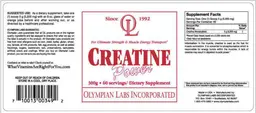
Top-rated Creatine products
Ranked by safety score and evidence coverage


Drug–supplement interactions
1 documented interaction
| Drug | Severity | Mechanism | Evidence |
|---|---|---|---|
| Nephrotoxic Drugs | Minor | Creatine may increase creatinine levels (not necessarily indicating kidney damag | possible |
How it's sold
Data aggregated from 740 product labels
Research evidence
Showing top 10 of 739 sources, sorted by quality
**Merritt et al., 2021** | JAMA Psychiatry | Meta Analysis Merritt Kate, McGuire Philip K, ... Yamasue Hidenori. Association of Age, Antipsychotic Medication, and Symptom Severity in Schizophrenia With Proton Magnetic Resonance Spectroscopy…
**Palmer et al., 2014** | Cochrane Database Syst Rev | Meta Analysis Palmer Suetonia C, Navaneethan Sankar D, ... Strippoli Giovanni F M. HMG CoA reductase inhibitors (statins) for people with chronic kidney disease not requiring dialysis. …
BACKGROUND: Cordyceps sinensis (Cordyceps, Dong Chong Xia Cao), a herbal medicine also known as Chinese caterpillar fungus, is one of the most commonly used ingredients in traditional Chinese medicine for the treatment of people with chroni…
**Smucny et al., 2024** | Biol Psychiatry Cogn Neurosci Neuroimaging | Meta Analysis Smucny Jason, Carter Cameron S, Maddock Richard J. Greater Choline-Containing Compounds and Myo-inositol in Treatment-Resistant Versus Responsive Schizophr…
**Tramacere et al., 2019** | BMC Med | Systematic Review Tramacere Irene, Boncoraglio Giorgio B, ... Moja Lorenzo. Comparison of statins for secondary prevention in patients with ischemic stroke or transient ischemic attack: a systematic re…
Sarcopenia refers to the age-related loss of muscle strength and muscle mass, which is associated with a reduced quality of life, particularly in older females. Resistance training (RT) is well established to be an effective intervention to…
Background: Creatine supplementation is widely used to enhance exercise performance, mainly resistance training adaptations, yet its differential effects on upper- and lower-body strength and muscular power remain unclear across populations…
**Chen et al., 2026** | Medicine (Baltimore) | Meta Analysis Chen Kai, Shao Wei, Zhang Huaxiong. Meta-analysis of the efficacy and safety of Finerenone in diabetic kidney disease. Medicine (Baltimore). 2026-Jan-23;105(4):e47098. doi:10.1097…
**Horjus et al., 2011** | Cochrane Database Syst Rev | Meta Analysis Horjus Deborah L, Oudman Inge, ... Brewster Lizzy M. Creatine and creatine analogues in hypertension and cardiovascular disease. Cochrane Database Syst Rev. 2011-Nov-09;20…
**Palmer et al., 2013** | Cochrane Database Syst Rev | Meta Analysis Palmer Suetonia C, Navaneethan Sankar D, ... Strippoli Giovanni F M. HMG CoA reductase inhibitors (statins) for dialysis patients. Cochrane Database Syst Rev. 2013-Sep-11;…
Frequently asked questions
What is creatine and what is it primarily used for?
Creatine is a widely used supplement primarily known for enhancing athletic performance and increasing muscle mass. It is not an essential nutrient, and there is no official Dietary Reference Intake (DRI) established for it. Typical supplemental doses range from 3 to 5 grams per day.
Does creatine help build muscle strength and mass?
Yes, there is strong evidence that creatine increases muscle strength and mass when paired with resistance training in both general populations and older females. Research confirms it effectively enhances both upper- and lower-body strength and power.
Can creatine improve athletic power or VO2max?
There is moderate evidence from meta-analyses indicating positive effects on upper- and lower-body power. However, the effects on VO2max are subject to further review and are not yet definitively established.
Is creatine effective for treating depression or muscle disorders?
For depression, the evidence is weak and findings remain inconsistent. Regarding general muscle disorders, there is insufficient evidence to definitively recommend creatine for treatment. Therefore, it should not be relied upon for these conditions.
Is creatine safe for people with kidney disease?
Clinical use in patients with kidney disease should be monitored closely. While it may increase creatinine levels, this does not necessarily indicate kidney damage, but caution is advised for those with existing kidney issues.
Does creatine interact with other medications?
Creatine has a minor interaction with nephrotoxic drugs, as it may increase creatinine levels and complicate monitoring. Pregnant individuals or those on medications affecting kidney function should consult a healthcare provider before use.
Is there evidence that creatine helps cardiovascular health?
There is insufficient evidence to support a strong clinical benefit of creatine for hypertension or cardiovascular disease. Current data does not suggest it is effective for treating these conditions.