Sulforaphane
Also known as broccoli sprout extract, isothiocyanate, sulforaphane
Key takeaways
- Induces transcriptional changes in the prostate of men on active surveillance (PMID: 30982861).
- Shows efficacy in skin cancer animal models (PMID: 39556025).
- May restore estrogen receptor expression in breast cancer cell lines (PMID: 29040973).
What the research shows
AI-synthesized from 9 peer-reviewed sources · Updated 2025
Sulforaphane is a bioactive compound derived from cruciferous vegetables, primarily broccoli. Research suggests it possesses potent antioxidant and anti-cancer properties, primarily through the modulation of NRF2 and epigenetic mechanisms.
By condition
Cancer Prevention (General/Prostate/Lung)
Moderate
Evidence indicates potential for transcriptional changes in prostate tissue and a phase II trial for lung cancer prevention in former smokers.
Breast Cancer
Weak
In vitro and meta-analysis data suggest it may restore estrogen receptor expression and exert biological effects on breast cancer cell lines.
Skin Cancer
Insufficient
Systematic review evidence is currently limited to animal models.
Effective doses
Specific dosage ranges were not provided in the provided abstracts, though interventions included glucoraphanin-rich broccoli and broccoli sprout homogenate.
Safety & interactions
No specific interactions or contraindications were mentioned in the provided research summaries.
Limitations
Much of the evidence relies on in vitro studies, animal models, or small-scale clinical trials, with a lack of large-scale, long-term human RCTs.
Top-rated Sulforaphane products
Ranked by safety score and evidence coverage
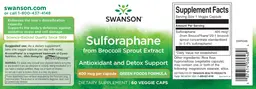
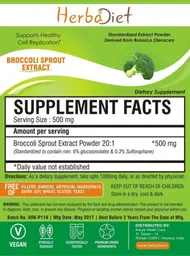
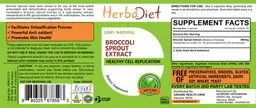

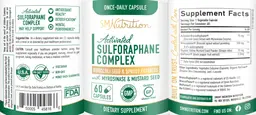
How it's sold
Data aggregated from 21 product labels
Research evidence
Showing top 10 of 9 sources, sorted by quality
**Traka et al., 2019** | Am J Clin Nutr | Rct Traka Maria H, Melchini Antonietta, ... Mithen Richard F. Transcriptional changes in prostate of men on active surveillance after a 12-mo glucoraphanin-rich broccoli intervention-results from th…
**Masoom et al., 2024** | Polim Med | Systematic Review Masoom Md, Khan Mohd Ashif. Efficacy of sulforaphane in skin cancer animal models: A systematic review. Polim Med. 2024;54(2):105-111. doi:10.17219/pim/189406 Globally, skin cancer is …
**Gianfredi et al., 2017** | J Nutrigenet Nutrigenomics | Meta Analysis Gianfredi Vincenza, Vannini Samuele, ... Nucci Daniele. Sulforaphane and Epigallocatechin Gallate Restore Estrogen Receptor Expression by Modulating Epigenetic Events i…
**Gianfredi et al., 2017** | Nutr Cancer | Systematic Review Gianfredi Vincenza, Nucci Daniele, ... Moretti Massimo. In vitro Biological Effects of Sulforaphane (SFN), Epigallocatechin-3-gallate (EGCG), and Curcumin on Breast Cancer Cells: …
**Yuan et al., 2025** | Cancer Prev Res (Phila) | Rct Yuan Jian-Min, Kensler Thomas W, ... Wilson David O. Randomized Phase II Clinical Trial of Sulforaphane in Former Smokers at High Risk for Lung Cancer. Cancer Prev Res (Phila). 2025-Jun-…
Colon cancer is a prevalent malignancy influenced by genetics and environmental factors. Diets rich in charred and fried red meats, thus high in heterocyclic aromatic amines [e.g., 2-amino-1-methyl-6-phenylimidazo[4,5-b]pyridine (PhIP)], ar…
**NCT ID**: NCT00843167 **Phase**: PHASE2 **Status**: COMPLETED **Enrollment**: 54 **Completion**: 2013-12
**NCT ID**: NCT01625130 **Phase**: NA **Status**: COMPLETED **Enrollment**: 16 **Completion**: 2015-06
**NCT ID**: NCT01845493 **Phase**: PHASE1 **Status**: COMPLETED **Enrollment**: 16 **Completion**: 2014-10
Frequently asked questions
What is sulforaphane and where does it come from?
Sulforaphane is a bioactive compound derived primarily from cruciferous vegetables like broccoli. It is known for its potent antioxidant properties and its ability to modulate NRF2 and epigenetic mechanisms, which may support cellular health.
Does sulforaphane help prevent cancer?
Research indicates moderate evidence for potential benefits in prostate and lung cancer prevention, such as inducing transcriptional changes in prostate tissue. However, evidence for breast cancer is weak, relying on in vitro data, and evidence for skin cancer is currently insufficient, limited mostly to animal models.
What is the effective dose of sulforaphane?
The provided research does not specify exact dosage ranges for sulforaphane. Interventions in studies have utilized glucoraphanin-rich broccoli or broccoli sprout homogenate, but specific milligram amounts are not documented in the available summaries.
Is sulforaphane safe to take?
The provided research summaries do not mention specific side effects, contraindications, or an established Upper Limit (UL). While no specific interactions were noted, you should consult a healthcare provider before starting any new supplement to ensure it is safe for your individual health profile.
Does sulforaphane interact with medications?
No drug interactions have been documented in the provided evidence summaries. However, because specific interaction data is limited, individuals currently taking prescription medications should consult their healthcare provider to avoid potential unforeseen effects.
Who should avoid taking sulforaphane supplements?
Specific groups to avoid are not explicitly listed in the evidence, but general caution is advised for pregnant or breastfeeding women and those on medications due to limited safety data. Always consult a healthcare professional before use, especially if you have underlying health conditions.
Can sulforaphane restore estrogen receptors in breast cancer?
Weak evidence from in vitro studies and meta-analyses suggests sulforaphane may restore estrogen receptor expression in breast cancer cell lines. However, this research is limited to laboratory settings, and evidence is not strong enough to confirm clinical efficacy in humans.