Same
Also known as ademetionine, s-adenosyl methionine, s-adenosyl-l-methionine
Key takeaways
- SAMe may serve as an effective adjuvant therapy for patients with depression (PMID: 38199136).
- Meta-analysis indicates potential efficacy for alcoholic liver diseases (PMID: 16625556).
- Oral SAMe may increase hepatic glutathione levels in patients with liver disease (PMID: 2781235).
What the research shows
AI-synthesized from 12 peer-reviewed sources · Updated 2025
S-adenosyl-L-methionine (SAMe) is a naturally occurring compound used primarily for mood disorders and liver health. Research suggests it may be effective as an antidepressant and as a supportive therapy for chronic liver diseases, though evidence quality varies.
By condition
Depression
Moderate
Meta-analyses suggest SAMe can be effective as both a monotherapy and an adjuvant treatment for depression.
Chronic Liver Disease
Moderate
Evidence indicates potential benefits for liver health and the treatment of chronic liver diseases, including alcoholic liver disease.
Effective doses
Specific dose ranges were not provided in the provided abstracts.
Safety & interactions
No specific safety notes or contraindications were provided in the source abstracts.
Limitations
Some liver disease evidence is based on very small sample sizes (e.g., N=15 or N=9), and some Cochrane reviews have been withdrawn or indicate a need for more high-quality data.
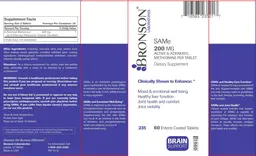
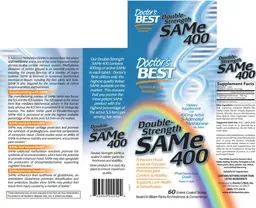
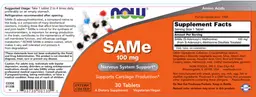
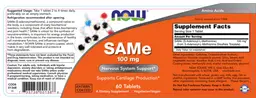
Top-rated Same products
Ranked by safety score and evidence coverage
Drug–supplement interactions
2 documented interactions
| Drug | Severity | Mechanism | Evidence |
|---|---|---|---|
| Ssri | Moderate | SAMe may enhance serotonin synthesis and signaling; combined with SSRIs may incr | probable |
| Tricyclic Antidepressants | Moderate | SAMe may enhance antidepressant effect of tricyclics, potentially causing excess | probable |
How it's sold
Data aggregated from 94 product labels
Research evidence
Showing top 10 of 12 sources, sorted by quality
**Rambaldi et al., 2006** | Cochrane Database Syst Rev | Meta Analysis Rambaldi A, Gluud C. S-adenosyl-L-methionine for alcoholic liver diseases. Cochrane Database Syst Rev. 2006-Apr-19(2):CD002235 BACKGROUND: Alcohol is a major cause of li…
**Galizia et al., 2016** | Cochrane Database Syst Rev | Meta Analysis Galizia Ilaria, Oldani Lucio, ... Young Allan H. S-adenosyl methionine (SAMe) for depression in adults. Cochrane Database Syst Rev. 2016-Oct-10;10(10):CD011286 BACKGROUND…
**De et al., 2024** | Ann Rheum Dis | Meta Analysis De Matteis Arianna, Bindoli Sara, ... Mitrovic Stéphane. Systemic juvenile idiopathic arthritis and adult-onset Still's disease are the same disease: evidence from systematic reviews and m…
**Poonchuay et al., 2024** | Am J Cardiovasc Drugs | Meta Analysis Poonchuay Natnicha, Saokaew Surasak, Incomenoy Supatcha. SAMe-TT2R2 Score to Predict Time in Therapeutic Range of Vitamin K Antagonists in Asian and Non-Asian patients: A Sy…
**Peng et al., 2024** | Gen Hosp Psychiatry | Meta Analysis Peng Tzu-Rong, Cheng Han-Yu, Wu Ta-Wei. S-Adenosylmethionine (SAMe) as an adjuvant therapy for patients with depression: An updated systematic review and meta-analysis. Gen Hosp Ps…
**Rambaldi et al., 2001** | Cochrane Database Syst Rev | Systematic Review Rambaldi A, Gluud C. S-adenosyl-L-methionine for alcoholic liver diseases. Cochrane Database Syst Rev. 2001(4):CD002235 BACKGROUND: Alcohol is a major cause of liver…
**Rambaldi et al., 2015** | Cochrane Database Syst Rev | Meta Analysis Rambaldi Andrea, Gluud Christian. WITHDRAWN: S-adenosyl-L-methionine for alcoholic liver diseases. Cochrane Database Syst Rev. 2015-Nov-11;2015(11):CD002235. doi:10.1002…
**Guo et al., 2015** | PLoS One | Meta Analysis Guo Tao, Chang Lei, ... Liu Quanyan. S-adenosyl-L-methionine for the treatment of chronic liver disease: a systematic review and meta-analysis. PLoS One. 2015;10(3):e0122124. doi:10.1371/journ…
**Baden et al., 2024** | Nutrients | Systematic Review Baden Kyrie Eleyson R, McClain Halley, ... Chen Aleda M H. S-Adenosylmethionine (SAMe) for Liver Health: A Systematic Review. Nutrients. 2024-Oct-28;16(21). doi:10.3390/nu16213668 BACKG…
**Incomenoy et al., 2024** | Ann Pharmacother | Meta Analysis Incomenoy Supatcha, Saokaew Surasak, Poonchuay Natnicha. SAMe-TT2R2 to Predict Clinical Outcomes and Time in Therapeutic Range in Patients on Vitamin K Antagonists: A Systematic …
Frequently asked questions
What is SAMe and what is it used for?
S-adenosyl-L-methionine (SAMe) is a naturally occurring compound primarily used to support mood disorders and liver health. Research suggests it may be effective for depression and as a supportive therapy for chronic liver diseases, though the quality of evidence varies.
Does SAMe work for depression?
There is moderate evidence suggesting SAMe can be effective as both a standalone treatment and an adjuvant therapy for depression. Meta-analyses indicate it may serve as an effective option for patients with this condition, but you should consult a healthcare provider before starting.
Is SAMe effective for liver disease?
Evidence indicates potential benefits for liver health in the treatment of chronic liver diseases, including alcoholic liver disease, with moderate research support. Oral SAMe may also help increase hepatic glutathione levels in patients with liver disease.
What is the effective dose of SAMe?
Specific dose ranges for SAMe were not provided in the available research sources. Because effective dosing is not clearly defined in the evidence summary, it is essential to consult a healthcare provider to determine an appropriate regimen for your needs.
What are the safety risks and drug interactions of SAMe?
SAMe may interact with SSRIs and tricyclic antidepressants, potentially increasing serotonin levels and causing excessive serotonergic effects. While specific safety notes are limited in the sources, individuals on these medications should be cautious and seek medical advice.
Who should avoid taking SAMe?
Individuals taking serotonergic medications like SSRIs or tricyclic antidepressants should avoid SAMe or use it only under strict medical supervision due to interaction risks. Additionally, because specific safety data is limited, pregnant individuals or those with other health conditions should consult a healthcare provider before use.