Alpha Lipoic Acid
Also known as ala, alpha lipoic acid, alpha-lipoic acid, lipoic acid
Key takeaways
- ALA is effective in treating symptomatic diabetic peripheral neuropathy (PMID: 22837391, 32370731).
- ALA supplementation improves glycemic control and lipid profiles in patients with metabolic diseases (PMID: 29990473).
- ALA may influence iron homeostasis (PMID: 40134249).
What the research shows
AI-synthesized from 21 peer-reviewed sources · Updated 2025
Alpha-Lipoic Acid (ALA) is a potent antioxidant used primarily for the management of diabetic complications. Research indicates it is most effective in reducing neuropathic pain and improving glycemic control in patients with diabetes.
By condition
Diabetic Peripheral Neuropathy
Strong
Multiple meta-analyses and RCTs demonstrate ALA's efficacy in reducing neuropathic pain and improving symptoms of diabetic neuropathy.
Glycemic Control/Metabolic Disease
Moderate
Evidence suggests ALA can improve glucose control and lipid profiles in patients with metabolic diseases and obesity.
Non-Alcoholic Fatty Liver Disease (NAFLD)
Weak
Preliminary RCT evidence suggests ALA, when combined with other supplements, may improve metabolic profiles and liver function in obese patients.
Athletic Performance
Insufficient
Research indicates ALA fails to improve anaerobic or aerobic performance in trained cyclists despite reducing blood lactate.
Effective doses
300 mg to 600 mg (administered orally or i.v.)
Safety & interactions
Generally well-tolerated; however, users should monitor for potential interactions with glucose-lowering medications due to its effect on glycemic control.
Limitations
Some studies rely on small sample sizes (e.g., N=11 or N=36) and often use ALA as part of a multi-ingredient cocktail, making it difficult to isolate the specific effect of ALA alone.
Top-rated Alpha Lipoic Acid products
Ranked by safety score and evidence coverage
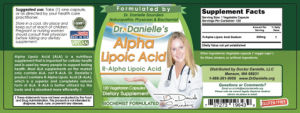
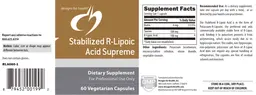
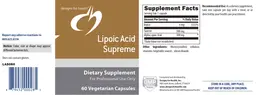


How it's sold
Data aggregated from 502 product labels
Research evidence
Showing top 10 of 21 sources, sorted by quality
BACKGROUND: Diabetic peripheral neuropathy (DPN) is a frequent complication in people living with type 1 or type 2 diabetes. There is currently no effective treatment for DPN. Although alpha-lipoic acid (ALA, also known as thioctic acid) is…
AIM: To investigate the efficacy of Palmitoylethanolamide (PEA, 300 mg), Superoxide Dismutase (SOD, 70 UI), Alpha Lipoic Acid (ALA, 300 mg), vitamins B6 (1.5 mg), B1 (1.1 mg), B12 (2.5 mcg), E (7.5 mg), nicotinamide (9 mg), and minerals (Mg…
**Sharifi-Zahabi et al., 2024** | Int J Vitam Nutr Res | Meta Analysis Sharifi-Zahabi Elham, Abdollahzad Hadi. Alpha Lipoic Acid Supplementation and Iron Homeostasis: A Comprehensive Systematic Review and Meta-Analysis of Randomized Control…
BACKGROUND: This systematic review explores the most current evidence regarding the mechanisms of neuropathic pain in patients with different types of diabetes and how this pain affects different functional and structural components of the …
OBJECTIVE: This systematic review and meta-analysis of randomized controlled trials (RCTs) was performed to summarize the effect of alpha-lipoic acid (ALA) supplementation on glycemic control and lipid profiles among patients with metabolic…
OBJECTIVE: To evaluate the effects and safety of 300-600 mg α-lipoic acid (ALA) given i.v. for diabetic peripheral neuropathy (DPN). METHODS: We searched the databases of Medline, Embase, and Cochrane central register of Controlled Trials a…
BACKGROUND: Alpha-lipoic acid (ALA) was used in the treatment of diabetic peripheral neuropathy (DPN) using different routes, doses and treatment durations. The aim of this work is to assess the efficacy of oral 600mg ALA twice daily over 6…
BACKGROUND: Diabetic peripheral neuropathy (DPN) is a chronic microvascular complication in diabetic mellitus patients due to chronic hyperglycemia, resulting in platelet hyperactivity and dyslipidemia. Alpha-lipoic acid (ALA) is a potent a…
OBJECTIVES: Current medications for diabetic neuropathy (DN) recommended by the American Diabetes Association and American Academy of Neurology do not address the pathologic process of denervation among patients with DN, because ancillary t…
To investigate the effect of tanshinone IIA sulfonate sodium combined with α-Lipoic acid on fasting blood sugar (FPG), 2h postprandial blood glucose (2hPG), total cholesterol (TG), triacylglycerol (TC) and therapeutic effect in patients wit…
Frequently asked questions
What is Alpha-Lipoic Acid and what is it used for?
Alpha-Lipoic Acid (ALA) is a potent antioxidant primarily used for managing diabetic complications. Research indicates it is most effective in reducing neuropathic pain and improving glycemic control in patients with diabetes.
Does Alpha-Lipoic Acid work for diabetic neuropathy?
Yes, there is strong evidence that ALA is effective in treating symptomatic diabetic peripheral neuropathy. Multiple meta-analyses and randomized controlled trials demonstrate its efficacy in reducing neuropathic pain and improving symptoms.
Can Alpha-Lipoic Acid help with blood sugar control?
There is moderate evidence suggesting ALA can improve glucose control and lipid profiles in patients with metabolic diseases and obesity. However, because it affects glycemic control, users should monitor their blood sugar levels closely.
What is the effective dose of Alpha-Lipoic Acid?
The effective doses for ALA range from 300 mg to 600 mg. These doses can be administered either orally or intravenously, depending on the specific medical guidance provided.
Is Alpha-Lipoic Acid safe to take?
ALA is generally well-tolerated, but it may influence iron homeostasis and interact with glucose-lowering medications. Pregnant individuals, those on diabetes medication, or people with liver conditions should consult a healthcare provider before use to avoid potential risks.
Does Alpha-Lipoic Acid improve athletic performance?
Research is insufficient to support claims that ALA improves athletic performance. Studies indicate it fails to enhance anaerobic or aerobic performance in trained cyclists, despite its ability to reduce blood lactate.
Can Alpha-Lipoic Acid help with fatty liver disease?
Evidence for this use is weak, with only preliminary RCTs suggesting potential benefits when combined with other supplements. Research is limited regarding its standalone efficacy for Non-Alcoholic Fatty Liver Disease (NAFLD), so consulting a doctor is recommended.