Vitamin E
Also known as alpha-tocopherol, d-alpha-tocopherol, tocopherol, tocotrienol
Key takeaways
- Vitamin E does not reduce the risk of prostate cancer (PMID: 21990298).
- Evidence for Vitamin E in treating Alzheimer's dementia and mild cognitive impairment remains inconclusive across multiple Cochrane reviews (PMID: 28418065, PMID: 18646084).
- A 2023 meta-analysis investigated the effects of Vitamin E in rheumatoid arthritis (PMID: 35468933).
What the research shows
AI-synthesized from 253 peer-reviewed sources · Updated 2025
Vitamin E is a fat-soluble antioxidant used to reduce oxidative stress and treat various chronic conditions. Research evidence is mixed, showing limited efficacy for cognitive decline and cancer prevention, while some studies explore its role in inflammatory diseases.
By condition
Alzheimer's Disease and MCI
Weak
Multiple Cochrane reviews and meta-analyses indicate limited or inconsistent evidence that Vitamin E significantly improves cognitive function or slows progression.
Prostate Cancer
Strong
The SELECT trial demonstrated that Vitamin E supplementation does not reduce the risk of prostate cancer.
Rheumatoid Arthritis
Moderate
Recent meta-analysis suggests potential effects of Vitamin E supplementation in managing rheumatoid arthritis.
Pregnancy
Insufficient
Cochrane evidence suggests insufficient data to support routine Vitamin E supplementation during pregnancy.
Chronic Kidney Disease
Weak
Meta-analysis of antioxidants, including Vitamin E, shows limited benefit for chronic kidney disease.
Effective doses
Specific effective dose ranges were not provided in the provided study abstracts.
Safety & interactions
General safety is high, but high-dose supplementation should be monitored for potential interactions and is not recommended for cancer prevention by the USPSTF.
Limitations
Many studies are meta-analyses of small trials or observational data, and there is a lack of consistent dosing standards across the research.
Dietary Reference Intakes
Source: IOM/NAM · Dietary Reference Intakes: Vitamin E (alpha-tocopherol)
| Measure | Value | Description |
|---|
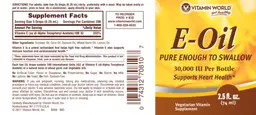
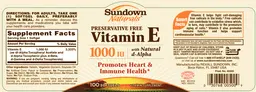
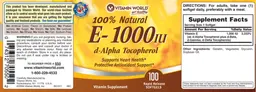
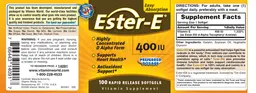
Top-rated Vitamin E products
Ranked by safety score and evidence coverage
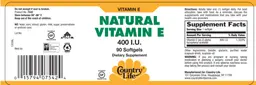
Drug–supplement interactions
38 documented interactions
| Drug | Severity | Mechanism | Evidence |
|---|---|---|---|
| Abciximab | Moderate | Interaction identified from DDInter 2.0 database. Specific drugs: Abciximab | ddinter-verified |
| Altretamine | Moderate | Interaction identified from DDInter 2.0 database. Specific drugs: Altretamine | ddinter-verified |
| Aluminum | Moderate | Interaction identified from DDInter 2.0 database. Specific drugs: Sevelamer | ddinter-verified |
| Anticoagulants | Moderate | Interaction identified from DDInter 2.0 database. Specific drugs: Apixaban, Edox | ddinter-verified |
| Antiplatelet Drugs | Moderate | High-dose vitamin E may inhibit platelet aggregation, additive with antiplatelet | probable |
| Antithrombin III human | Moderate | Interaction identified from DDInter 2.0 database. Specific drugs: Antithrombin I | ddinter-verified |
| Argatroban | Moderate | Interaction identified from DDInter 2.0 database. Specific drugs: Argatroban | ddinter-verified |
| Arsenic trioxide | Moderate | Interaction identified from DDInter 2.0 database. Specific drugs: Arsenic trioxi | ddinter-verified |
| Azacitidine | Moderate | Interaction identified from DDInter 2.0 database. Specific drugs: Azacitidine | ddinter-verified |
| Betrixaban | Moderate | Interaction identified from DDInter 2.0 database. Specific drugs: Betrixaban | ddinter-verified |
How it's sold
Data aggregated from 1,521 product labels
Research evidence
Showing top 10 of 253 sources, sorted by quality
**Rumbold et al., 2015** | Cochrane Database Syst Rev | Meta Analysis Rumbold Alice, Ota Erika, ... Crowther Caroline A. Vitamin E supplementation in pregnancy. Cochrane Database Syst Rev. 2015-Sep-07;2015(9):CD004069. doi:10.1002/14651858.…
BACKGROUND: Vitamin E occurs naturally in the diet. It has several biological activities, including functioning as an antioxidant to scavenge toxic free radicals. Evidence that free radicals may contribute to the pathological processes behi…
BACKGROUND: Vitamin E is a dietary compound that functions as an antioxidant scavenging toxic free radicals. Evidence that free radicals may contribute to the pathological processes of cognitive impairment including Alzheimer's disease (AD)…
BACKGROUND: Vitamin E is a dietary compound that functions as an antioxidant scavenging toxic free radicals. Evidence that free radicals may contribute to the pathological processes of cognitive impairment including Alzheimer's disease has …
**Lane et al., 2017** | Cochrane Database Syst Rev | Meta Analysis Lane Risha, Harwood Amy, ... Leng Gillian C. Exercise for intermittent claudication. Cochrane Database Syst Rev. 2017-Dec-26;12(12):CD000990. doi:10.1002/14651858.CD000990.p…
**Wang et al., 2021** | Nutr Neurosci | Meta Analysis Wang Wanyu, Li Jiao, ... Zhang Xiaofeng. Effects of vitamin E supplementation on the risk and progression of AD: a systematic review and meta-analysis. Nutr Neurosci. 2021-Jan;24(1):13-2…
**Kou et al., 2023** | Eur J Clin Nutr | Meta Analysis Kou Haiyang, Qing Zhong, ... Ma Jianbing. Effect of vitamin E supplementation in rheumatoid arthritis: a systematic review and meta-analysis. Eur J Clin Nutr. 2023-Feb;77(2):166-172. do…
CONTEXT: The initial report of the Selenium and Vitamin E Cancer Prevention Trial (SELECT) found no reduction in risk of prostate cancer with either selenium or vitamin E supplements but a statistically nonsignificant increase in prostate c…
BACKGROUND: Vitamin E occurs naturally in the diet. It has several biological activities, including functioning as an antioxidant to scavenge toxic free radicals. Evidence that free radicals may contribute to the pathological processes behi…
IMPORTANCE: According to National Health and Nutrition Examination Survey data, 52% of surveyed US adults reported using at least 1 dietary supplement in the prior 30 days and 31% reported using a multivitamin-mineral supplement. The most c…
Frequently asked questions
What is Vitamin E and what is it used for?
Vitamin E is a fat-soluble antioxidant primarily used to reduce oxidative stress and manage various chronic conditions. While it is widely marketed for general health, research evidence is mixed, showing limited efficacy for cognitive decline and cancer prevention, though some studies explore its role in inflammatory diseases.
Does Vitamin E help prevent prostate cancer?
No, strong evidence from the SELECT trial demonstrates that Vitamin E supplementation does not reduce the risk of prostate cancer. Consequently, the USPSTF does not recommend Vitamin E for cancer prevention. Individuals should not take it for this purpose.
Can Vitamin E improve Alzheimer's disease or memory loss?
Evidence for Vitamin E in treating Alzheimer's dementia and mild cognitive impairment remains inconclusive, with multiple Cochrane reviews indicating limited or inconsistent benefits. Research is mixed regarding its ability to significantly improve cognitive function or slow disease progression.
Is Vitamin E effective for rheumatoid arthritis?
There is moderate evidence suggesting potential effects of Vitamin E supplementation in managing rheumatoid arthritis, based on recent meta-analyses. However, it is not a standalone cure, and patients should consult their healthcare provider for comprehensive treatment plans.
What is the recommended daily dose of Vitamin E?
The Recommended Dietary Allowance (RDA) for adults is 15 mg/day of alpha-tocopherol. Specific effective dose ranges for treating medical conditions were not provided in the available study abstracts, so general dietary intake guidelines should be followed unless advised otherwise by a doctor.
Is Vitamin E safe to take with blood thinners like Warfarin?
High-dose Vitamin E may interact with antiplatelet drugs and Warfarin, potentially increasing the risk of bleeding or enhancing anticoagulant effects. Because of this moderate severity interaction, individuals on these medications should monitor their intake and consult a healthcare provider.
Who should avoid taking Vitamin E supplements?
Pregnant individuals should avoid routine supplementation due to insufficient evidence supporting its safety and efficacy during pregnancy. Additionally, people with chronic kidney disease may see limited benefit, and those on blood-thinning medications should avoid high doses due to bleeding risks.