Lysine
Also known as l-lysine, lysine hcl, lysine hydrochloride
Key takeaways
- Lysine analogues are used to mitigate bleeding risks in patients with thrombocytopenia (PMID: 41670018)
- Systematic reviews evaluate the role of antifibrinolytics in preventing bleeding for haematological disorders (PMID: 26978005)
- Research indicates a need for prophylactic measures against bleeding in patients with haematological disorders (PMID: 23897323)
What the research shows
AI-synthesized from 3 peer-reviewed sources · Updated 2025
L-Lysine analogues are used as antifibrinolytic agents to prevent bleeding in patients with haematological disorders. The provided research focuses on their efficacy in reducing bleeding risks associated with thrombocytopenia.
By condition
Haematological disorders (bleeding prevention)
Moderate
Lysine analogues are utilized to prevent severe or life-threatening bleeding in patients with reduced platelet counts.
Effective doses
Not specified in the provided abstracts.
Safety & interactions
Not provided in the source text.
Limitations
The provided data consists of meta-analyses focusing on lysine analogues rather than L-Lysine as a dietary supplement, and specific outcome metrics are missing from the abstracts.
Top-rated Lysine products
Ranked by safety score and evidence coverage
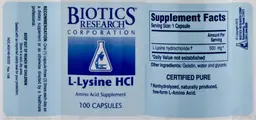
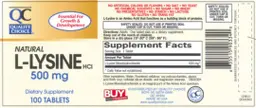
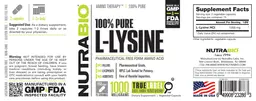

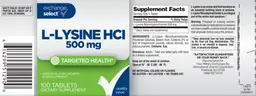
How it's sold
Data aggregated from 168 product labels
Research evidence
Showing top 10 of 3 sources, sorted by quality
RATIONALE: People with haematological disorders are frequently at risk of severe or life-threatening bleeding as a result of thrombocytopenia (reduced platelet count). This is despite the routine use of prophylactic platelet transfusions to…
BACKGROUND: People with haematological disorders are frequently at risk of severe or life-threatening bleeding as a result of thrombocytopenia (reduced platelet count). This is despite the routine use of prophylactic platelet transfusions t…
BACKGROUND: Patients with haematological disorders are frequently at risk of severe or life-threatening bleeding as a result of thrombocytopenia. This is despite the routine use of prophylactic platelet transfusions (PlTx) to prevent bleedi…
Frequently asked questions
What is L-Lysine and what is it used for?
L-Lysine is an amino acid, and its analogues are primarily used as antifibrinolytic agents to prevent bleeding in patients with haematological disorders. Research indicates these analogues help mitigate bleeding risks associated with thrombocytopenia, which is a condition involving reduced platelet counts.
Does L-Lysine help with bleeding risks in haematological disorders?
There is moderate evidence that Lysine analogues are utilized to prevent severe or life-threatening bleeding in patients with reduced platelet counts. Systematic reviews evaluate the role of these antifibrinolytics in preventing bleeding for haematological disorders, indicating a need for such prophylactic measures.
What is the effective dose of L-Lysine for bleeding prevention?
The provided research does not specify effective doses for L-Lysine or its analogues. Because specific dosage information is not available in the evidence summary, you should consult a healthcare provider for appropriate dosing guidance.
Is L-Lysine safe to take?
Safety data for L-Lysine is not provided in the current evidence summary. Since safety profiles are not documented, it is essential to consult a healthcare provider before use, especially if you have underlying health conditions.
Does L-Lysine have any drug interactions?
No drug interactions for L-Lysine are documented in the provided evidence. However, because safety information is limited, you should always check with a healthcare provider to ensure it is safe for your specific medical history.
Who should avoid taking L-Lysine?
The evidence summary does not specify groups who should avoid L-Lysine, but it notes that Lysine analogues are used for patients with haematological disorders. Due to the lack of comprehensive safety data, pregnant individuals or those on medications should consult a healthcare provider before use.