Garlic
Also known as aged garlic extract, allicin, allium sativum, kyolic
Key takeaways
- Garlic intake is associated with a reduction in fasting blood glucose (PMID: 26693740).
- High consumption of Allium vegetables is linked to a reduced risk of gastric cancer (PMID: 21473867).
- Garlic supplementation may positively impact components of metabolic syndrome (PMID: 37481521).
What the research shows
AI-synthesized from 142 peer-reviewed sources · Updated 2025
Garlic (Allium sativum) is a widely used dietary supplement known for its bioactive compounds. Research suggests it may provide benefits for cardiovascular health, glycemic control, and lipid profiles, though evidence for other uses like the common cold is limited.
By condition
Cardiovascular Health (Hypertension/Lipids)
Moderate
Multiple meta-analyses indicate garlic can lower blood pressure and improve cardiovascular risk factors.
Glycemic Control
Moderate
Evidence from meta-analyses suggests garlic intake can lower fasting blood glucose levels.
Gastric Cancer Prevention
Moderate
Large-scale meta-analysis suggests a reduced risk of gastric cancer associated with high consumption of Allium vegetables.
Common Cold
Insufficient
Cochrane systematic reviews indicate insufficient evidence to support garlic's efficacy in treating or preventing the common cold.
Chronic Liver Disease
Weak
Recent meta-analysis suggests potential benefits for chronic liver disease, though further high-quality RCTs are needed.
Effective doses
Specific dose ranges were not provided in the provided abstracts.
Safety & interactions
No specific safety notes or contraindications were provided in the source abstracts; however, general precautions regarding blood-thinning effects are typical for garlic.
Limitations
Research is characterized by a high number of meta-analyses but a relatively small number of primary RCTs. There is a lack of consistency in dosing and preparation across studies.
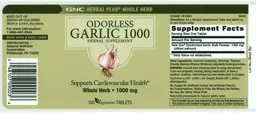
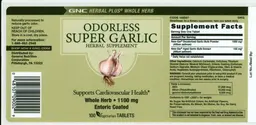
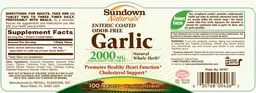
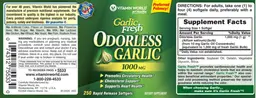
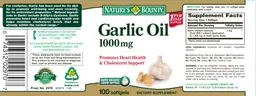
Top-rated Garlic products
Ranked by safety score and evidence coverage
Drug–supplement interactions
56 documented interactions
| Drug | Severity | Mechanism | Evidence |
|---|---|---|---|
| Antiarrhythmics | Critical | Garlic is a weak inhibitor of CYP2C9, which decreases metabolism of CYP2C9 subst | cyp-inferred |
| Anticonvulsants | Critical | Garlic is a weak inhibitor of CYP3A4, which decreases metabolism of CYP3A4 subst | cyp-inferred |
| Digoxin | Critical | Garlic is a moderate inhibitor of P-gp, which decreases metabolism of P-gp subst | cyp-inferred |
| GI Prokinetics | Critical | Garlic is a weak inhibitor of CYP3A4, which decreases metabolism of CYP3A4 subst | cyp-inferred |
| Immunosuppressants | Critical | Garlic is a weak inhibitor of CYP3A4, which decreases metabolism of CYP3A4 subst | cyp-inferred |
| Theophylline | Critical | Garlic is a weak inhibitor of CYP3A4, which decreases metabolism of CYP3A4 subst | cyp-inferred |
| ARB | Moderate | Garlic is a weak inhibitor of CYP2C9, which decreases metabolism of CYP2C9 subst | cyp-inferred |
| Abciximab | Moderate | Interaction identified from DDInter 2.0 database. Specific drugs: Abciximab | ddinter-verified |
| Alteplase | Moderate | Interaction identified from DDInter 2.0 database. Specific drugs: Alteplase | ddinter-verified |
| Anistreplase | Moderate | Interaction identified from DDInter 2.0 database. Specific drugs: Anistreplase | ddinter-verified |
How it's sold
Data aggregated from 534 product labels
Research evidence
Showing top 10 of 142 sources, sorted by quality
BACKGROUND: Garlic is widely used by patients for its blood pressure lowering effects. A meta-analysis published in 2008 concluded that garlic consumption lowers blood pressure in hypertensive and normotensive patients. Therefore, it is imp…
**Xiaohui et al., 2023** | Afr Health Sci | Meta Analysis Xiaohui Liu, Jinqi Li, ... Renxiu Niu. Garlic supplementation for the treatment of chronic liver disease: a meta-analysis of randomized controlled trials. Afr Health Sci. 2023-Jun;23…
**Zhou et al., 2011** | Gastroenterology | Meta Analysis Zhou Yong, Zhuang Wen, ... Wu Xiao-Ting. Consumption of large amounts of Allium vegetables reduces risk for gastric cancer in a meta-analysis. Gastroenterology. 2011-Jul;141(1):80-9. …
**Lissiman et al., 2014** | Cochrane Database Syst Rev | Systematic Review Lissiman Elizabeth, Bhasale Alice L, Cohen Marc. Garlic for the common cold. Cochrane Database Syst Rev. 2014-Nov-11;2014(11):CD006206. doi:10.1002/14651858.CD006206…
**Behrouz et al., 2026** | Nutr Rev | Meta Analysis Behrouz Vahideh, Zahroodi Mehrnaz, ... Rivaz Raha. Effects of Garlic Supplementation on Cardiovascular Risk Factors in Adults: A Comprehensive Updated Systematic Review and Meta-Analysis o…
**Neves et al., 2021** | Compr Rev Food Sci Food Saf | Meta Analysis Neves Thaís de Moura, da Cunha Diogo Thimoteo, ... Domene Semíramis Martins Álvares. Effects of seasoning on the formation of heterocyclic amines and polycyclic aromatic h…
**Gyawali et al., 2021** | Medicina (Kaunas) | Meta Analysis Gyawali Dinesh, Vohra Rini, ... Schneider Robert H. A Systematic Review and Meta-Analysis of Ayurvedic Herbal Preparations for Hypercholesterolemia. Medicina (Kaunas). 2021-May-28…
Allium sativum (garlic) certainly is one of the oldest horticultural crops in the world and presents bioactive compounds that are related to the garlic's effects on human health. Several authors have shown beneficial effects on diabetes, hy…
**Hou et al., 2015** | Asia Pac J Clin Nutr | Meta Analysis Hou Li-qiong, Liu Yun-hui, Zhang Yi-yi. Garlic intake lowers fasting blood glucose: meta-analysis of randomized controlled trials. Asia Pac J Clin Nutr. 2015;24(4):575-82. doi:10.6…
**Lissiman et al., 2012** | Cochrane Database Syst Rev | Systematic Review Lissiman Elizabeth, Bhasale Alice L, Cohen Marc. Garlic for the common cold. Cochrane Database Syst Rev. 2012-Mar-14(3):CD006206. doi:10.1002/14651858.CD006206.pub3 …
Frequently asked questions
What is garlic and what are its main health benefits?
Garlic (Allium sativum) is a widely used dietary supplement known for its bioactive compounds. Research suggests it may provide moderate benefits for cardiovascular health, glycemic control, and lipid profiles, though evidence for other uses like the common cold is limited.
Does garlic help lower blood pressure or improve heart health?
Yes, there is moderate evidence indicating that garlic can lower blood pressure and improve cardiovascular risk factors. Multiple meta-analyses support its potential to positively impact components of metabolic syndrome, making it a supportive option for heart health.
Can garlic help control blood sugar levels?
Evidence suggests that garlic intake can lower fasting blood glucose levels, with moderate support from meta-analyses. This indicates it may be beneficial for glycemic control, although specific effective doses were not provided in the available research.
Is garlic effective for preventing or treating the common cold?
No, there is insufficient evidence to support garlic's efficacy in treating or preventing the common cold. Cochrane systematic reviews indicate that current research does not substantiate claims that garlic prevents colds, so its use for this purpose is not recommended based on current data.
Does garlic interact with blood thinners like Warfarin?
Yes, garlic has a moderate interaction with antiplatelet drugs and Warfarin, as it has antiplatelet properties that may add to their effects. This combination increases the risk of bleeding, so individuals on these medications should be cautious and monitor for signs of excessive bleeding.
Who should avoid taking garlic supplements?
People taking antiplatelet drugs, Warfarin, or Saquinavir should avoid or use garlic supplements with caution due to moderate interaction risks. Additionally, those on Chlorzoxazone should monitor for reduced muscle relaxant effects. Pregnant individuals or those with specific health conditions should consult a healthcare provider before use.
Is there evidence that garlic helps with liver disease?
There is weak evidence suggesting potential benefits for chronic liver disease, but further high-quality RCTs are needed to confirm these findings. While recent meta-analyses show promise, the evidence is not yet strong enough to definitively recommend garlic for this condition.