Passionflower
Also known as maypop, passiflora, passiflora incarnata
Key takeaways
- Passionflower may be as effective as oxazepam for the treatment of generalized anxiety (PMID: 11679026).
- Passiflora incarnata showed positive effects on polysomnographic sleep parameters in subjects with insomnia disorder (PMID: 31714321).
- Passionflower, alone or in combination with Valeriana officinalis, helps control anxiety during dental extractions (PMID: 38743126, PMID: 27918731).
What the research shows
AI-synthesized from 7 peer-reviewed sources · Updated 2025
Passionflower (Passiflora incarnata) is a herbal supplement used primarily for its anxiolytic and sedative properties. Research suggests it may be effective in reducing anxiety and improving sleep quality, though evidence is limited by small sample sizes.
By condition
Anxiety
Moderate
Studies indicate passionflower can be effective for general anxiety and situational dental anxiety, sometimes performing comparably to benzodiazepines like oxazepam or midazolam.
Insomnia/Sleep Quality
Weak
Preliminary evidence from RCTs suggests improvements in subjective sleep quality and polysomnographic sleep parameters.
Effective doses
Specific dosing ranges were not detailed in the provided abstracts, though administration methods included herbal tea and standardized extracts.
Safety & interactions
No specific safety warnings provided in the abstracts; however, as a sedative, it may interact with other CNS depressants.
Limitations
The available evidence is limited by small sample sizes in pilot studies and a lack of large-scale, long-term clinical trials.
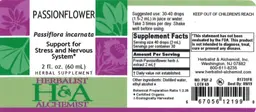
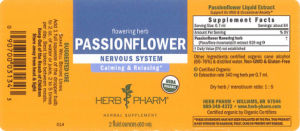
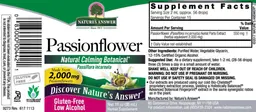
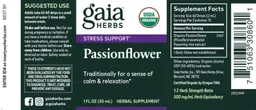
Top-rated Passionflower products
Ranked by safety score and evidence coverage
How it's sold
Data aggregated from 93 product labels
Research evidence
Showing top 10 of 7 sources, sorted by quality
**Miyasaka et al., 2007** | Cochrane Database Syst Rev | Meta Analysis Miyasaka L S, Atallah A N, Soares B G O. Passiflora for anxiety disorder. Cochrane Database Syst Rev. 2007-Jan-24(1):CD004518 BACKGROUND: Anxiety is a very common mental…
**Lee et al., 2020** | Int Clin Psychopharmacol | Rct Lee Jeewon, Jung Han-Young, ... Kim Shin-Gyeom. Effects of Passiflora incarnata Linnaeus on polysomnographic sleep parameters in subjects with insomnia disorder: a double-blind randomize…
**Velasquez et al., 2024** | Oral Maxillofac Surg | Rct Velasquez Amalia Celsy Abregu, Tsuji Mayumi, ... Scariot Rafaela. Effects of Passiflora incarnata and Valeriana officinalis in the control of anxiety due to tooth extraction: a randomi…
**Ngan et al., 2011** | Phytother Res | Rct Ngan A, Conduit R. A double-blind, placebo-controlled investigation of the effects of Passiflora incarnata (passionflower) herbal tea on subjective sleep quality. Phytother Res. 2011-Aug;25(8):115…
**Dantas et al., 2017** | Med Oral Patol Oral Cir Bucal | Rct Dantas L-P, de Oliveira-Ribeiro A, ... Groppo F-C. Effects of passiflora incarnata and midazolam for control of anxiety in patients undergoing dental extraction. Med Oral Patol O…
BACKGROUND: Global lifetime prevalence of anxiety disorders has been estimated at approximately 16.6%, with subclinical prevalence likely much higher. Herbal approaches to reduce anxiety may be as effective as pharmacological treatments and…
**Akhondzadeh et al., 2001** | J Clin Pharm Ther | Rct Akhondzadeh S, Naghavi H R, ... Khani M. Passionflower in the treatment of generalized anxiety: a pilot double-blind randomized controlled trial with oxazepam. J Clin Pharm Ther. 2001-O…
Frequently asked questions
What is passionflower and what is it used for?
Passionflower (Passiflora incarnata) is a herbal supplement primarily used for its anxiolytic and sedative properties. Research suggests it may help reduce anxiety and improve sleep quality, although the evidence is limited by small sample sizes.
Does passionflower work for anxiety?
There is moderate evidence indicating that passionflower can be effective for general anxiety and situational dental anxiety. Some studies suggest it may perform comparably to benzodiazepines like oxazepam, though research is limited by small sample sizes.
Can passionflower help with insomnia or sleep quality?
There is weak evidence from preliminary randomized controlled trials suggesting passionflower may improve subjective sleep quality and polysomnographic sleep parameters in subjects with insomnia. However, the evidence is limited and more robust research is needed.
What is the effective dose of passionflower?
Specific dosing ranges were not detailed in the provided evidence summaries. Administration methods in studies have included herbal tea and standardized extracts, so you should consult a healthcare provider for appropriate dosage guidance.
Is passionflower safe to take with other medications?
While no specific drug interactions are documented, passionflower acts as a sedative and may interact with other central nervous system (CNS) depressants. Individuals on medications or with health conditions should consult a healthcare provider before use.
Who should avoid taking passionflower?
Because passionflower has sedative effects, it may interact with other CNS depressants, so those taking such medications should avoid it without medical advice. Additionally, due to limited safety data, pregnant or breastfeeding individuals should consult a healthcare provider before use.
What are the side effects of passionflower?
The provided evidence does not list specific side effects, but notes that as a sedative, it may interact with other CNS depressants. You should monitor for drowsiness and consult a healthcare provider if you experience adverse effects.