Soy
Also known as daidzein, genistein, glycine max, soy isoflavones
Key takeaways
- Soy isoflavones prevent bone resorption and loss in postmenopausal populations (PMID: 31290343).
- Isoflavone interventions positively impact bone mineral density in postmenopausal women (PMID: 37875614).
- Soy protein demonstrates cholesterol-lowering effects in men (PMID: 9848504).
What the research shows
AI-synthesized from 16 peer-reviewed sources · Updated 2025
Soy, specifically in the form of isoflavones, is widely studied for its role in bone health and metabolic support. Research indicates a significant benefit in preventing bone resorption and maintaining bone mineral density, particularly in postmenopausal women.
By condition
Bone Mineral Density / Osteoporosis
Strong
Multiple meta-analyses and RCTs demonstrate that soy isoflavones effectively prevent bone resorption and help maintain bone mineral density in postmenopausal women.
Cholesterol Management
Moderate
Some evidence suggests soy protein can have a cholesterol-lowering effect in both normocholesterolemic and hypercholesterolemic men.
Menopausal Symptoms
Weak
Research into the use of soy isoflavones for urogenital and general menopausal symptoms shows mixed or limited efficacy compared to other phytoestrogens.
Effective doses
Specific dose ranges were not detailed in the provided abstracts, though interventions focused on isoflavone-rich soy protein isolates and genistein.
Safety & interactions
No specific safety contraindications were listed in the provided abstracts; however, as a phytoestrogen, it may interact with hormone-sensitive conditions.
Limitations
While bone health evidence is robust, other applications like weight loss and IBS treatment lack sufficient high-quality data in the provided set. Many studies focus exclusively on postmenopausal women, limiting generalizability to other populations.
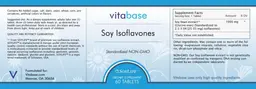
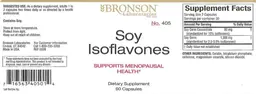
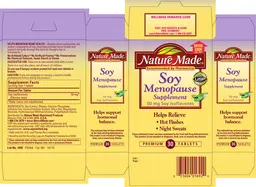
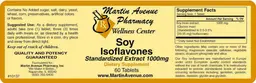
Top-rated Soy products
Ranked by safety score and evidence coverage
How it's sold
Data aggregated from 109 product labels
Research evidence
Showing top 10 of 16 sources, sorted by quality
**Akhlaghi et al., 2020** | Crit Rev Food Sci Nutr | Meta Analysis Akhlaghi Masoumeh, Ghasemi Nasab Maryam, ... Sadeghi Fatemeh. Soy isoflavones prevent bone resorption and loss, a systematic review and meta-analysis of randomized controlle…
**Inpan et al., 2024** | Osteoporos Int | Meta Analysis Inpan Ratchanon, Na Takuathung Mingkwan, ... Koonrungsesomboon Nut. Isoflavone intervention and its impact on bone mineral density in postmenopausal women: a systematic review and meta…
**Kanadys et al., 2021** | Int J Environ Res Public Health | Meta Analysis Kanadys Wiesław, Barańska Agnieszka, ... Kanecki Krzysztof. Effects of Soy Isoflavones on Biochemical Markers of Bone Metabolism in Postmenopausal Women: A Systemati…
**Inpan et al., 2024** | Arch Osteoporos | Meta Analysis Inpan Ratchanon, Dukaew Nahathai, ... Koonrungsesomboon Nut. Effects of isoflavone interventions on bone turnover markers and factors regulating bone metabolism in postmenopausal wome…
**Sansai et al., 2020** | Osteoporos Int | Meta Analysis Sansai K, Na Takuathung M, ... Koonrungsesomboon N. Effects of isoflavone interventions on bone mineral density in postmenopausal women: a systematic review and meta-analysis of rando…
**Taku et al., 2010** | Bone | Meta Analysis Taku Kyoko, Melby Melissa K, ... Ishimi Yoshiko. Effects of soy isoflavone supplements on bone turnover markers in menopausal women: systematic review and meta-analysis of randomized controlled t…
**Wong et al., 1998** | Am J Clin Nutr | Rct Wong W W, Smith E O, ... Pownell H J. Cholesterol-lowering effect of soy protein in normocholesterolemic and hypercholesterolemic men. Am J Clin Nutr. 1998-Dec;68(6 Suppl):1385S-1389S. doi:10.109…
**Abdi et al., 2021** | Eur J Obstet Gynecol Reprod Biol | Systematic Review Abdi Fatemeh, Rahnemaei Fatemeh Alsadat, ... Pakzad Reza. Impact of phytoestrogens on treatment of urogenital menopause symptoms: A systematic review of randomized…
**Chen et al., 2023** | Comb Chem High Throughput Screen | Meta Analysis Chen Jiayang, Feng Li, ... Li Hao. Identification of the Key Active Pharmaceutical Ingredients of Yishen Qutong Granule, A Chinese Medicine Formula, In The Treatment o…
OBJECTIVE: This randomized, double-blind, parallel-group clinical trial aimed to evaluate the efficacy of Black Cohosh, Soy Isoflavones, and SDG Lignans in alleviating menopausal symptoms compared to a placebo. METHODS: Ninety-six postmenop…
Frequently asked questions
What is soy and what are its main health benefits?
Soy is a plant-based food widely studied for its isoflavones, which support bone health and metabolic function. Research indicates strong evidence that soy isoflavones help prevent bone resorption and maintain bone mineral density, particularly in postmenopausal women. It also has moderate evidence for helping manage cholesterol levels in men.
Does soy help with bone health and osteoporosis?
Yes, there is strong evidence that soy isoflavones effectively prevent bone resorption and help maintain bone mineral density in postmenopausal women. Multiple meta-analyses and randomized controlled trials support this benefit for bone health. However, specific effective doses were not detailed in the provided research summaries.
Can soy lower cholesterol levels?
There is moderate evidence suggesting that soy protein can have a cholesterol-lowering effect in both normocholesterolemic and hypercholesterolemic men. While promising, the evidence is not as strong as it is for bone health. You should consult a healthcare provider to determine if soy is appropriate for your specific lipid management goals.
Is soy effective for treating menopausal symptoms?
Research into the use of soy isoflavones for urogenital and general menopausal symptoms shows mixed or limited efficacy compared to other phytoestrogens. The evidence for this benefit is considered weak, meaning results are inconsistent. It is not reliably supported as a primary treatment for these symptoms based on current data.
Are there any safety concerns or side effects with soy supplements?
While no specific safety contraindications were listed, soy acts as a phytoestrogen and may interact with hormone-sensitive conditions. Individuals with such conditions should exercise caution and consult a healthcare provider before use. As with any supplement, it is important to monitor for individual reactions.
Who should avoid taking soy isoflavones?
Because soy is a phytoestrogen, individuals with hormone-sensitive conditions should avoid or strictly limit use without medical advice. Pregnant or breastfeeding women should also consult a healthcare provider, as safety data for these groups is not explicitly detailed. Always discuss potential interactions with your doctor before starting.
Does soy interact with any medications?
No drug interactions were documented in the provided evidence summary. However, because soy may interact with hormone-sensitive conditions, it is crucial to speak with a healthcare provider if you are taking medications related to hormonal health. This ensures safe integration into your routine.