Betaine
Also known as betaine anhydrous, betaine hcl, tmg, trimethylglycine
Key takeaways
- Betaine combined with low-dose B vitamins significantly lowers homocysteine concentrations in Chinese adults (PMID: 36717385).
- Betaine, along with folic acid and B vitamins, helps manage homocysteine levels in middle-aged men consuming alcohol (PMID: 26771632).
- Fibrates may cause abnormal urinary betaine loss, which is associated with elevated plasma homocysteine (PMID: 19653086).
What the research shows
AI-synthesized from 23 peer-reviewed sources · Updated 2025
Betaine is a derivative of choline that plays a critical role in methylation and homocysteine regulation. Research indicates it is primarily effective in lowering homocysteine levels, particularly when combined with B vitamins, and is studied for its role in liver health and metabolic disorders.
By condition
Hyperhomocysteinemia
Strong
Betaine supplementation, especially in combination with B vitamins, effectively lowers plasma homocysteine concentrations.
Nonalcoholic Fatty Liver Disease (NAFLD)
Weak
Preliminary RCT evidence has explored betaine for NAFLD, though definitive efficacy remains limited in the provided data.
Cystathionine beta-synthase deficiency
Moderate
Betaine is included in clinical guidelines for the management of specific methylation and homocystinuria disorders.
Effective doses
Not explicitly specified in the provided abstracts.
Safety & interactions
No specific contraindications provided, though it is often used as part of a B-vitamin complex for metabolic disorders.
Limitations
Many studies focus on metabolic markers (homocysteine) rather than clinical outcomes. There is a lack of large-scale, long-term RCTs for general health or specific disease treatment.
Top-rated Betaine products
Ranked by safety score and evidence coverage
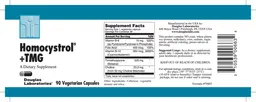
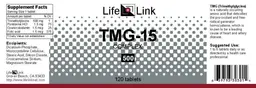
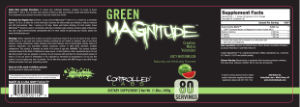
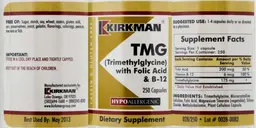
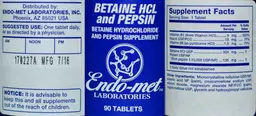
How it's sold
Data aggregated from 253 product labels
Research evidence
Showing top 10 of 23 sources, sorted by quality
UNLABELLED: Moderate regular consumption of alcoholic beverages is believed to protect against atherosclerosis but can also increase homocysteine or dimethylglycine, which are putative risk factors for atherosclerosis. We aimed (1) to inves…
**Abdelmalek et al., 2009** | Hepatology | Rct Abdelmalek Manal F, Sanderson Schuyler O, ... Lindor Keith D. Betaine for nonalcoholic fatty liver disease: results of a randomized placebo-controlled trial. Hepatology. 2009-Dec;50(6):1818-26.…
**Morris et al., 2017** | J Inherit Metab Dis | Systematic Review Morris Andrew A M, Kožich Viktor, ... Chapman Kimberly A. Guidelines for the diagnosis and management of cystathionine beta-synthase deficiency. J Inherit Metab Dis. 2017-Jan…
**Huemer et al., 2015** | J Inherit Metab Dis | Systematic Review Huemer Martina, Kožich Viktor, ... Blom Henk J. Newborn screening for homocystinurias and methylation disorders: systematic review and proposed guidelines. J Inherit Metab Di…
**Lu et al., 2023** | Eur J Nutr | Rct Lu Xiao-Ting, Wang Yi-Na, ... Zhu Hui-Lian. Effects of low-dose B vitamins plus betaine supplementation on lowering homocysteine concentrations among Chinese adults with hyperhomocysteinemia: a randomi…
**Imani et al., 2019** | Int Orthod | Meta Analysis Imani Mohammad Moslem, Lopez-Jornet Pia, ... Sadeghi Masoud. Association of Betaine-Homocysteine S-Methyl Transferase (rs3797546 and rs3733890) polymorphisms with non-syndromic cleft lip/p…
BACKGROUND: Choline deficiency has numerous negative health consequences; although the preponderance of the US population consumes less than the recommended Adequate Intake (AI), clinical assessment of choline status is difficult. Further, …
BACKGROUND AND AIMS: Alcohol Use Disorder (AUD) is a psychiatric disorder characterized notably by gut microbial dysbiosis and insufficient dietary fiber (DF) intake. This study aims to investigate the effect of DF placebo-controlled interv…
BACKGROUND: Choline is an essential nutrient, and insufficient intake negatively affects the liver, brain, and muscles. In the United States, habitual choline intake remains below the adequate intake (AI). To date, no circulating metabolite…
**Lever et al., 2009** | Cardiovasc Drugs Ther | Rct Lever Michael, George Peter M, ... Chambers Stephen T. Fibrates may cause an abnormal urinary betaine loss which is associated with elevations in plasma homocysteine. Cardiovasc Drugs The…
Frequently asked questions
What is betaine and what is it used for?
Betaine is a derivative of choline that plays a critical role in methylation and regulating homocysteine levels. It is primarily used to support liver health and manage metabolic disorders, particularly those involving elevated homocysteine.
Does betaine lower homocysteine levels?
Yes, there is strong evidence that betaine supplementation effectively lowers plasma homocysteine concentrations, especially when combined with B vitamins. Research indicates this combination is particularly effective for managing homocysteine levels in adults.
Is betaine effective for nonalcoholic fatty liver disease (NAFLD)?
Evidence for betaine treating NAFLD is currently weak, as preliminary research has not yet established definitive efficacy. While it has been studied for this condition, the available data remains limited and inconclusive.
Can betaine help with cystathionine beta-synthase deficiency?
Yes, there is moderate evidence supporting its use, as betaine is included in clinical guidelines for managing this specific methylation disorder. It helps address the homocystinuria associated with this condition.
What is the effective dose of betaine?
The provided evidence does not explicitly specify effective doses for betaine supplementation. Consumers should consult a healthcare provider to determine appropriate dosage, as specific amounts are not detailed in the current research summaries.
Are there any drug interactions with betaine?
No specific drug interactions are documented in the provided data. However, fibrates may cause abnormal urinary betaine loss, which is associated with elevated plasma homocysteine, so those taking fibrates should be monitored.
Is betaine safe to take?
While no specific contraindications are provided, betaine is often used as part of a B-vitamin complex for metabolic disorders. Pregnant individuals, those on medications, or people with specific health conditions should consult a healthcare provider before use to ensure safety.