D Aspartic Acid
Also known as aspartic acid, d aspartic acid, d-aspartic acid, daa
Key takeaways
- Short-term supplementation did not affect serum biomarkers associated with the HPG axis in male climbers (PMID: 29893592).
- Three months of supplementation in resistance-trained men did not significantly improve outcomes (PMID: 28841667).
- Research in rats suggests DAA plays a role in the release and synthesis of LH and testosterone (PMID: 19860889).
What the research shows
AI-synthesized from 9 peer-reviewed sources · Updated 2025
D-Aspartic Acid (DAA) is an amino acid supplement hypothesized to increase testosterone levels and athletic performance. Current clinical evidence is mixed, with some studies showing no significant effect on hormonal biomarkers or muscle growth in healthy males.
By condition
Testosterone and Athletic Performance
Weak
RCTs in resistance-trained men and climbers generally show no significant effect on serum biomarkers of the hypothalamic-pituitary-gonadal axis or muscle gains.
Effective doses
One study utilized a dose of 6 grams per day (PMID: 38201906).
Safety & interactions
No specific adverse effects reported in the provided studies, but caution is advised regarding its interaction with the NMDA receptor system.
Limitations
Many studies have very small sample sizes (e.g., N=11) and there is a significant discrepancy between animal models and human clinical trials.
Top-rated D Aspartic Acid products
Ranked by safety score and evidence coverage

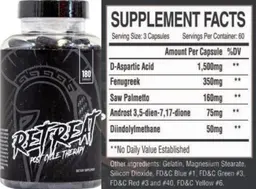

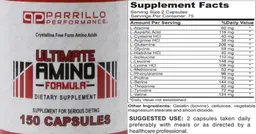
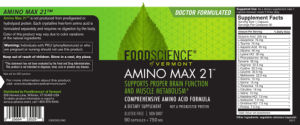
How it's sold
Data aggregated from 90 product labels
Research evidence
Showing top 10 of 9 sources, sorted by quality
**Płoszczyca et al., 2023** | Nutrients | Rct Płoszczyca Kamila, Czuba Miłosz, ... Gajda Robert. The Effects of Six-Gram D-Aspartic Acid Supplementation on the Testosterone, Cortisol, and Hematological Responses of Male Boxers Subjected to …
**Pringle et al., 2012** | J Psychopharmacol | Rct Pringle A, Parsons E, ... Harmer C J. Using an experimental medicine model to understand the antidepressant potential of the N-Methyl-D-aspartic acid (NMDA) receptor antagonist memantine. J…
**Melville et al., 2017** | PLoS One | Rct Melville Geoffrey W, Siegler Jason C, Marshall Paul W M. The effects of d-aspartic acid supplementation in resistance-trained men over a three month training period: A randomised controlled trial. …
**Crewther et al., 2019** | Int J Sport Nutr Exerc Metab | Rct Crewther Blair, Witek Konrad, ... Obmiński Zbigniew. Short-Term d-Aspartic Acid Supplementation Does Not Affect Serum Biomarkers Associated With the Hypothalamic-Pituitary-Gonad…
**Wan et al., 2021** | Neurosci Lett | Other Wan Lin, Yang Guang, ... Wang Jing. Combined melatonin and adrenocorticotropic hormone treatment attenuates N-methyl-d-aspartate-induced infantile spasms in a rat model by regulating activation o…
**Wiech et al., 2004** | Anesth Analg | Rct Wiech Katja, Kiefer Ralph-Thomas, ... Birbaumer Niels. A placebo-controlled randomized crossover trial of the N-methyl-D-aspartic acid receptor antagonist, memantine, in patients with chronic phan…
**Hatanaka et al., 2018** | Brain Dev | Other Hatanaka Mari, Shimakawa Shuichi, ... Tamai Hiroshi. The efficacy of adrenocorticotropic hormone in a girl with anti-N-methyl-D-aspartate receptor encephalitis. Brain Dev. 2018-Mar;40(3):247-250…
**Topo et al., 2009** | Reprod Biol Endocrinol | Other Topo Enza, Soricelli Andrea, ... D'Aniello Gemma. The role and molecular mechanism of D-aspartic acid in the release and synthesis of LH and testosterone in humans and rats. Reprod Biol…
**Hsu et al., 2000** | Neuroendocrinology | Other Hsu C, Hsieh Y L, ... Hsu H K. Blockage of N-methyl-D-aspartate receptors decreases testosterone levels and enhances postnatal neuronal apoptosis in the preoptic area of male rats. Neuroendo…
Frequently asked questions
What is D-Aspartic Acid and what is it used for?
D-Aspartic Acid (DAA) is an amino acid supplement hypothesized to increase testosterone levels and improve athletic performance. While animal research suggests it may play a role in hormone release, current clinical evidence in humans is mixed, with some studies showing no significant effect on hormonal biomarkers or muscle growth in healthy males.
Does D-Aspartic Acid work for increasing testosterone?
Evidence for DAA increasing testosterone in humans is weak. Randomized controlled trials in resistance-trained men and climbers generally show no significant effect on serum biomarkers of the hypothalamic-pituitary-gonadal axis. Therefore, research is mixed, and it is not reliably effective for this purpose in healthy individuals.
Does D-Aspartic Acid help with muscle growth or athletic performance?
Research indicates that DAA does not significantly improve muscle gains or athletic performance in healthy males. Studies involving resistance-trained men and climbers found no significant effects on muscle outcomes, suggesting the evidence for this benefit is weak.
What is the effective dose of D-Aspartic Acid?
One study utilized a dose of 6 grams per day (PMID: 38201906). However, because clinical evidence regarding its efficacy is mixed and generally weak, there is no universally established effective dose for improving testosterone or performance in humans.
Is D-Aspartic Acid safe to take?
No specific adverse effects were reported in the provided studies, but caution is advised regarding its interaction with the NMDA receptor system. Pregnant or breastfeeding women, as well as individuals on medications, should consult a healthcare provider before use, as safety data is limited.
Does D-Aspartic Acid have any drug interactions?
No drug interactions have been documented for D-Aspartic Acid in the provided evidence. However, because it may interact with the NMDA receptor system, individuals taking medications that affect this system should consult a healthcare provider to ensure safety.
Who should avoid taking D-Aspartic Acid?
Individuals with known sensitivities to amino acids or those taking medications that interact with the NMDA receptor system should avoid this supplement without medical advice. Pregnant or breastfeeding women should also consult a healthcare provider, as safety for these groups has not been established.