Magnesium Oxide
Also known as magnesia, magnesium oxide, mgo, milk of magnesia
Key takeaways
- Magnesium oxide is effective for bowel cleansing before colonoscopy in children (PMID: 39400405).
- Magnesium oxide is used as a treatment option for chronic constipation (PMID: 32969946).
- Magnesium oxide is being investigated for the reduction of metabolic risk factors in hyperoxaluria kidney stone formers (PMID: 39077820).
What the research shows
AI-synthesized from 7 peer-reviewed sources · Updated 2025
Magnesium oxide is a mineral supplement primarily utilized for bowel preparation and the management of constipation. Research indicates varying efficacy across different conditions, with stronger evidence for gastrointestinal applications and limited or mixed results for neurological and musculoskeletal issues.
By condition
Bowel Preparation/Constipation
Strong
Effective as a laxative for chronic constipation and as a component of bowel cleansing protocols for colonoscopy.
Osteoporosis
Weak
Research explored its effect on bone mineral content in healthy girls, but results are not definitive for general osteoporosis prevention.
Migraine
Insufficient
Studied for the prevention of migraine headaches, but evidence from a single crossover study is limited.
Nocturnal Leg Cramps
Weak
Evaluated for the treatment of nocturnal leg cramps, though evidence supporting its effectiveness remains sparse.
Kidney Stones
Moderate
Used to manage metabolic risk factors in kidney stone formers with idiopathic hyperoxaluria.
Effective doses
Specific dose ranges were not provided in the provided abstracts.
Safety & interactions
Not specified in the provided abstracts; typically requires caution in patients with renal impairment.
Limitations
Many of the studies are small-scale RCTs or crossover designs, and there is a lack of standardized dosing across the provided research.
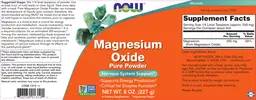
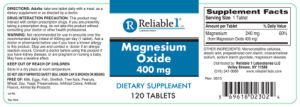
Top-rated Magnesium Oxide products
Ranked by safety score and evidence coverage



How it's sold
Data aggregated from 50 product labels
Research evidence
Showing top 10 of 7 sources, sorted by quality
**Furio et al., 2025** | J Pediatr Gastroenterol Nutr | Meta Analysis Furio Silvia, Lucarini Alessio, ... Di Nardo Giovanni. Effectiveness and safety of polyethylene-glycol-4000 versus sodium picosulphate plus magnesium oxide and citric aci…
CONTEXT: The role of magnesium (Mg) as a determinant of bone mass has not been extensively explored. Limited studies suggest that dietary Mg intake and bone mineral density are correlated in adults, but no data from interventional studies i…
**Morishita et al., 2021** | Am J Gastroenterol | Rct Morishita Daisuke, Tomita Toshihiko, ... Miwa Hiroto. Senna Versus Magnesium Oxide for the Treatment of Chronic Constipation: A Randomized, Placebo-Controlled Trial. Am J Gastroenterol. …
Migraine is a disabling disorder that affects the quality of life of patients. Different medications have been used in prevention of migraine headache. In this study, we evaluated the effectiveness of magnesium oxide in comparison with valp…
BACKGROUND: Magnesium supplements are widely used for prophylaxis and treatment of nocturnal leg cramps (NLC). However, there is little evidence in support of their effectiveness. The main impediment stems from the lack of assessments of ce…
This prospective, randomized and double-blind study aims to compare two different protocols used for bowel preparation in patients scheduled for colonoscopy. The protocols were composed by solutions of Mannitol or sodium picosulfate combine…
Magnesium is one of the recommended treatments for calcium stone formers (CSFs) with hyperoxaluria. In this study, we compared the effect of magnesium oxide (MgO) or magnesium citrate (MgCit) with placebo on 24-hour urine (24-U) metabolites…
Frequently asked questions
What is magnesium oxide and what is it primarily used for?
Magnesium oxide is a mineral supplement primarily utilized for bowel preparation and the management of constipation. Research indicates it has strong evidence for use as a laxative for chronic constipation and as a component of bowel cleansing protocols for colonoscopy.
Does magnesium oxide help with migraines?
Evidence for using magnesium oxide to prevent migraine headaches is currently insufficient. Research from a single crossover study is limited, so it is not considered a proven treatment for this condition.
Can magnesium oxide prevent osteoporosis or treat leg cramps?
Research supporting magnesium oxide for these conditions is weak or mixed. While it has been explored for bone mineral content in healthy girls, results are not definitive for osteoporosis prevention, and evidence for treating nocturnal leg cramps remains sparse.
Is magnesium oxide effective for kidney stones?
There is moderate evidence that magnesium oxide can manage metabolic risk factors in kidney stone formers with idiopathic hyperoxaluria. It is used as a treatment option for this specific group, though specific effective doses were not provided in the available data.
What are the safety concerns and who should avoid magnesium oxide?
Patients with renal impairment should use magnesium oxide with caution due to potential safety risks. Although specific side effects are not detailed in the summary, individuals with kidney issues or those on medications should consult a healthcare provider before use.
Does magnesium oxide interact with other medications?
No drug interactions have been documented for magnesium oxide in the provided evidence. However, because safety profiles can vary by individual health status, it is important to consult a healthcare provider to ensure it is safe for your specific situation.
What is the recommended dosage for magnesium oxide?
Specific effective dose ranges for magnesium oxide were not provided in the available research abstracts. Consumers should consult a healthcare professional to determine an appropriate dosage for their specific needs, such as bowel preparation or constipation management.