Spirulina
Also known as arthrospira platensis, blue-green algae, spirulina extract, spirulina powder
Key takeaways
- Significant impact on the reduction of plasma lipid concentrations (PMID: 26433766).
- Dose-response meta-analysis confirms a positive effect on lipid profiles (PMID: 37263369).
- Potential to improve glycemic control and serum lipoproteins in patients with metabolic syndrome (PMID: 31359513).
What the research shows
AI-synthesized from 10 peer-reviewed sources · Updated 2025
Spirulina is a nutrient-dense blue-green microalga used as a dietary supplement. Research indicates it may provide metabolic benefits, particularly in improving lipid profiles and reducing oxidative stress in individuals with metabolic syndrome.
By condition
metabolic syndrome/dyslipidemia
Moderate
Multiple meta-analyses and systematic reviews suggest Spirulina effectively lowers plasma lipid concentrations and improves glycemic control.
Alzheimer's disease
Weak
A small RCT investigated its effects on clinical and metabolic parameters, but evidence is limited by small sample size.
obesity
Weak
Preliminary evidence suggests it may synergistically improve inflammatory and lipid biomarkers when combined with high-intensity interval training.
Effective doses
Not explicitly specified in the provided abstracts; typically administered as a supplement over 12 weeks in cited RCTs.
Safety & interactions
No specific contraindications provided in the source text; generally considered safe, though users should monitor for potential interactions with metabolic medications.
Limitations
Many studies have small sample sizes (e.g., N=30), and there is a need for more large-scale, long-term RCTs to confirm clinical efficacy across diverse populations.
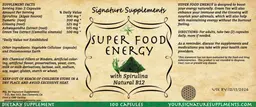
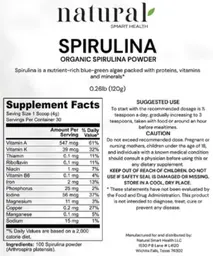
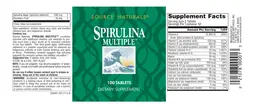
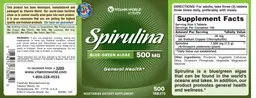
Top-rated Spirulina products
Ranked by safety score and evidence coverage
How it's sold
Data aggregated from 148 product labels
Research evidence
Showing top 10 of 10 sources, sorted by quality
**Rahnama et al., 2023** | Pharmacol Res | Meta Analysis Rahnama Iman, Arabi Seyyed Mostafa, ... Sahebkar Amirhossein. The effect of Spirulina supplementation on lipid profile: GRADE-assessed systematic review and dose-response meta-analysi…
**Serban et al., 2016** | Clin Nutr | Meta Analysis Serban Maria-Corina, Sahebkar Amirhossein, ... Banach Maciej. A systematic review and meta-analysis of the impact of Spirulina supplementation on plasma lipid concentrations. Clin Nutr. 20…
**Tejero et al., 2024** | Nutr Rev | Systematic Review Tejero Pérez Adrian, Kapravelou Garyfallia, ... Martínez Martínez Rosario. Potential benefits of microalgae intake against metabolic diseases: beyond spirulina-a systematic review of an…
**Yousefi et al., 2019** | Complement Ther Med | Systematic Review Yousefi Reyhaneh, Saidpour Atoosa, Mottaghi Azadeh. The effects of Spirulina supplementation on metabolic syndrome components, its liver manifestation and related inflammato…
**Hamedifard et al., 2019** | Phytother Res | Meta Analysis Hamedifard Zahra, Milajerdi Alireza, ... Asemi Zatollah. The effects of spirulina on glycemic control and serum lipoproteins in patients with metabolic syndrome and related disorde…
**Tamtaji et al., 2023** | Phytother Res | Rct Tamtaji Omid Reza, Heidari-Soureshjani Reza, ... Kouchaki Ebrahim. The effects of spirulina intake on clinical and metabolic parameters in Alzheimer's disease: A randomized, double-blind, contr…
Lipid peroxidation is associated with the development of some pathologies, such as cardiovascular diseases. Reduction in oxidative stress by antioxidants, such as Arthrospira (formely Spirulina), helps improving this redox imbalance. The ai…
The present research assessed the efficacy of 12-week high-intensity interval training (HIIT) and blue-green algae (Spirulina) consumption on pro-inflammatory and anti-inflammatory factors (Dectin-1, IL-1β, and IL-10), along with lipid-asso…
**NCT ID**: NCT01141777 **Phase**: NA **Status**: COMPLETED **Enrollment**: 33 **Completion**: 2009-02
**NCT ID**: NCT01248221 **Phase**: NA **Status**: COMPLETED **Enrollment**: 30 **Completion**: 2011-12
Frequently asked questions
What is Spirulina and what is it used for?
Spirulina is a nutrient-dense blue-green microalga used as a dietary supplement. Research indicates it may provide metabolic benefits, particularly in improving lipid profiles and reducing oxidative stress in individuals with metabolic syndrome.
Does Spirulina help with high cholesterol or lipid levels?
There is moderate evidence suggesting Spirulina effectively lowers plasma lipid concentrations and improves glycemic control. Multiple meta-analyses and systematic reviews confirm a positive effect on lipid profiles, though it should not replace prescribed medication.
Can Spirulina help with weight loss or obesity?
Evidence for Spirulina's effect on obesity is currently weak. Preliminary evidence suggests it may synergistically improve inflammatory and lipid biomarkers when combined with high-intensity interval training, but research is limited by small sample sizes.
Is Spirulina safe to take with other medications?
While no specific drug interactions are documented, users should monitor for potential interactions with metabolic medications. It is generally considered safe, but you should consult a healthcare provider before use, especially if you are on other drugs.
Who should avoid taking Spirulina?
Individuals taking metabolic medications should exercise caution due to potential interactions. Additionally, because research is limited for certain groups, pregnant individuals or those with specific health conditions should consult a healthcare provider before starting supplementation.
What is the effective dose of Spirulina?
The provided evidence does not explicitly specify an effective dose, noting only that it is typically administered as a supplement over 12 weeks in cited studies. Consumers should follow product labels and consult a healthcare provider for personalized dosing advice.
Does Spirulina help with Alzheimer's disease?
Evidence for Spirulina's effect on Alzheimer's disease is weak. A small RCT investigated its effects on clinical and metabolic parameters, but the evidence is limited by a small sample size and is not sufficient to draw firm conclusions.