Ashwagandha
Also known as indian ginseng, ksm-66, sensoril, winter cherry
Key takeaways
- Significant reduction in cortisol levels in stressed subjects (PMID: 40746175).
- Positive effects on sleep quality in healthy adults (PMID: 32540634).
- Improvement in VO2max for athletic performance (PMID: 32316411).
What the research shows
AI-synthesized from 63 peer-reviewed sources · Updated 2025
Ashwagandha (Withania somnifera) is an adaptogenic herb used primarily to manage stress, anxiety, and sleep quality. Research generally indicates positive effects on cortisol reduction and sleep improvement, though results for perceived stress and anxiety are sometimes conflicting across meta-analyses.
By condition
Stress and Anxiety
Moderate
Multiple meta-analyses show significant cortisol reduction and benefits for anxiety, though some studies report conflicting results regarding perceived stress.
Sleep
Moderate
Systematic reviews and RCTs suggest Ashwagandha extract improves sleep quality and is effective for insomnia.
Athletic Performance
Moderate
Evidence indicates a positive effect on maximum oxygen consumption (VO2max).
Cognition
Weak
Identified as a plant-derived nootropic, though specific cognitive outcomes require more robust evidence.
Effective doses
Specific dose ranges were not detailed in the provided abstracts, though standardized root extracts are commonly used in the cited RCTs.
Safety & interactions
May act as an immunostimulant and could potentially flare autoimmune skin diseases (PMID: 41475897).
Limitations
Research shows conflicting results across different meta-analyses regarding perceived stress, and some studies have very small sample sizes (e.g., N=9 for cortisol reviews).
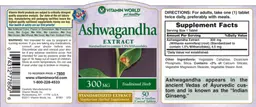
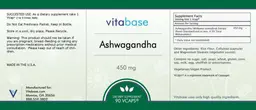
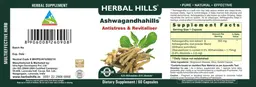
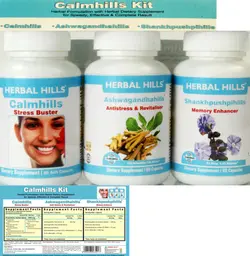
Top-rated Ashwagandha products
Ranked by safety score and evidence coverage
How it's sold
Data aggregated from 640 product labels
Research evidence
Showing top 10 of 63 sources, sorted by quality
**Weiner et al., 2025** | Lupus Sci Med | Systematic Review Weiner Jeffrey D, Hill Alannah, ... Werth Victoria P. Identifying immunostimulatory herbal supplements that may flare autoimmune skin diseases: a systematic scoping review. Lupus S…
The purpose of this study was to systematically review the scientific literature about the effects of supplementation with Ashwagandha (Withania somnifera) on maximum oxygen consumption (VO2max), as well as to provide directions for clinica…
Clinical trial studies revealed conflicting results on the effect of Ashwagandha extract on anxiety and stress. Therefore, we aimed to evaluate the effect of Ashwagandha supplementation on anxiety as well as stress. A systematic search was …
**Çakici et al., 2019** | Psychol Med | Meta Analysis Çakici N, van Beveren N J M, ... Sommer I E C. An update on the efficacy of anti-inflammatory agents for patients with schizophrenia: a meta-analysis. Psychol Med. 2019-Oct;49(14):2307-2…
OBJECTIVE: Despite the historical neurological use of Withania somnifera, limited evidence supports its efficacy for conditions like anxiety and insomnia. Given its known anti-stress properties, this review evaluated its safety and efficacy…
OBJECTIVE: To determine the effect of Ashwagandha extract on sleep. METHODS: A comprehensive search was conducted in CENTRAL, MEDLINE, SCOPUS, Google Scholars, World Health Organization Trials Portal, ClinicalTrials.gov, Clinical Trial Regi…
**Lorca et al., 2023** | Crit Rev Food Sci Nutr | Systematic Review Lorca Cristina, Mulet María, ... Serra Aida. Plant-derived nootropics and human cognition: A systematic review. Crit Rev Food Sci Nutr. 2023;63(22):5521-5545. doi:10.1080/1…
BACKGROUND: Ashwagandha (Withania somnifera) is an adaptogenic herb used to prevent and treat psychosomatic disorders. This systematic review and meta-analysis evaluated the effects and safety of Ashwagandha on psychosomatic functions relat…
**Wang et al., 2025** | Front Pharmacol | Systematic Review Wang Lu, Xu Xiaofan, ... Yu Zhenghong. Systematic review and network meta-analysis of the effects of plant active substance on quality of life in breast cancer patients. Front Phar…
**Łuszczak et al., 2026** | Ann Agric Environ Med | Systematic Review Łuszczak Joanna, Kocki Janusz. Clinical evidence for the adaptogenic effects of Withania somnifera and Rhodiola rosea - A systematic review with molecular interpretation …
Frequently asked questions
What is Ashwagandha and what is it used for?
Ashwagandha (Withania somnifera) is an adaptogenic herb primarily used to manage stress, anxiety, and sleep quality. Research generally indicates positive effects on reducing cortisol levels and improving sleep, though results for perceived stress can be conflicting.
Does Ashwagandha help with stress and anxiety?
There is moderate evidence that Ashwagandha significantly reduces cortisol levels and benefits anxiety. However, research regarding its effect on perceived stress is mixed, with some studies reporting conflicting results.
Can Ashwagandha improve sleep quality?
Yes, there is moderate evidence from systematic reviews and RCTs suggesting that Ashwagandha extract improves sleep quality and is effective for insomnia in healthy adults.
Does Ashwagandha boost athletic performance?
There is moderate evidence indicating that Ashwagandha has a positive effect on maximum oxygen consumption (VO2max), which supports athletic performance.
Does Ashwagandha improve cognition or memory?
Evidence for cognitive benefits is currently weak. While it is identified as a plant-derived nootropic, specific cognitive outcomes require more robust evidence to confirm its effectiveness.
What is the effective dose of Ashwagandha?
Specific dose ranges were not detailed in the provided evidence summaries. However, standardized root extracts are commonly used in the cited research studies.
Is Ashwagandha safe for people with autoimmune diseases?
No, Ashwagandha may act as an immunostimulant and could potentially flare autoimmune skin diseases. Individuals with autoimmune conditions should avoid it or consult a healthcare provider first.
Who should avoid taking Ashwagandha?
People with autoimmune diseases should avoid Ashwagandha due to the risk of flaring skin conditions. Additionally, because research is ongoing, pregnant individuals or those on medications should consult a healthcare provider before use.