Bitter Orange
Also known as bitter orange, citrus aurantium, seville orange, synephrine
Key takeaways
- p-Synephrine increases fat oxidation during exercise in elite cyclists (PMID: 32859142).
- Acute ingestion increases whole-body fat oxidation during 1 hour of cycling at Fatmax (PMID: 31691018).
- p-Synephrine increases fat oxidation rates during exercise of increasing intensity in healthy active women (PMID: 36297036).
What the research shows
AI-synthesized from 7 peer-reviewed sources · Updated 2025
Bitter Orange, specifically its primary alkaloid p-synephrine, is used as a metabolic stimulant. Research consistently indicates that it can increase fat oxidation rates during various intensities of exercise in both elite and healthy populations.
By condition
Fat oxidation during exercise
Strong
Multiple RCTs demonstrate that p-synephrine significantly increases the rate of fat oxidation during cycling and exercise of increasing intensity.
Effective doses
Specific dose ranges were explored in dose-response studies (PMID: 29024325), though exact milligram ranges are not detailed in the provided abstracts.
Safety & interactions
Research has monitored effects on blood pressure and heart rate (PMID: 21537493); users should be cautious of potential stimulant-like effects on the cardiovascular system.
Limitations
The evidence is heavily concentrated on acute exercise performance and fat oxidation rather than long-term weight loss. Several studies are authored by the same primary investigator, limiting the diversity of research groups.
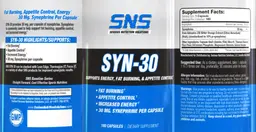
Top-rated Bitter Orange products
Ranked by safety score and evidence coverage
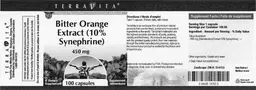
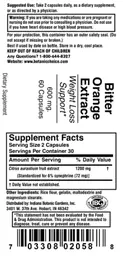
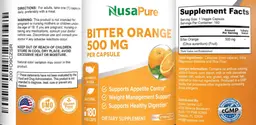
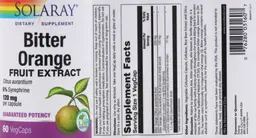
How it's sold
Data aggregated from 34 product labels
Research evidence
Showing top 10 of 7 sources, sorted by quality
**Gutiérrez-Hellín et al., 2021** | Eur J Sport Sci | Rct Gutiérrez-Hellín Jorge, Baltazar-Martins Gabriel, ... Del Coso Juan. p-Synephrine, the main protoalkaloid of Citrus aurantium, raises fat oxidation during exercise in elite cyclists.…
**Gutiérrez-Hellín et al., 2022** | Nutrients | Rct Gutiérrez-Hellín Jorge, Aguilar-Navarro Millán, ... Varillas-Delgado David. Effect of p-Synephrine on Fat Oxidation Rate during Exercise of Increasing Intensity in Healthy Active Women. Nu…
**Gutiérrez-Hellín et al., 2022** | Nutrients | Rct Gutiérrez-Hellín Jorge, Del Coso Juan, ... Muñoz Alejandro. Does the Time of Day Play a Role in the Acute Effect of p-Synephrine on Fat Oxidation Rate during Exercise in Women? A Randomize…
**Stohs et al., 2011** | Int J Med Sci | Rct Stohs Sidney J, Preuss Harry G, ... Kaats Gilbert R. Effects of p-synephrine alone and in combination with selected bioflavonoids on resting metabolism, blood pressure, heart rate and self-report…
**Gutiérrez-Hellín et al., 2020** | Eur J Nutr | Rct Gutiérrez-Hellín Jorge, Ruiz-Moreno Carlos, Del Coso Juan. Acute p-synephrine ingestion increases whole-body fat oxidation during 1-h of cycling at Fatmax. Eur J Nutr. 2020-Oct;59(7):3341…
**Gutiérrez-Hellín et al., 2016** | Br J Clin Pharmacol | Rct Gutiérrez-Hellín Jorge, Del Coso Juan. Acute p-synephrine ingestion increases fat oxidation rate during exercise. Br J Clin Pharmacol. 2016-Aug;82(2):362-8. doi:10.1111/bcp.12952…
**Gutiérrez-Hellín et al., 2018** | Phytother Res | Rct Gutiérrez-Hellín Jorge, Del Coso Juan. Dose-Response Effects of p-Synephrine on Fat Oxidation Rate During Exercise of Increasing Intensity. Phytother Res. 2018-Feb;32(2):370-374. doi:1…
Frequently asked questions
What is Bitter Orange and what is it used for?
Bitter Orange is a supplement primarily used as a metabolic stimulant, with its effects largely attributed to the alkaloid p-synephrine. It is commonly taken to support weight management by increasing the rate of fat oxidation during exercise. Research indicates this effect occurs across various intensities of physical activity in both healthy and elite populations.
Does Bitter Orange help with fat loss during exercise?
Yes, there is strong evidence that p-synephrine increases fat oxidation rates during exercise. Multiple randomized controlled trials demonstrate that it significantly enhances the body's ability to burn fat during activities like cycling and other exercises of increasing intensity. This benefit has been observed in both healthy active women and elite cyclists.
What is the effective dose of Bitter Orange for fat oxidation?
While specific milligram dosages are not detailed in the provided evidence, dose-response studies have explored effective ranges for p-synephrine. Consumers should note that exact optimal dosing is not explicitly defined in the available summaries, so consulting a healthcare provider for personalized advice is recommended.
Is Bitter Orange safe for people with high blood pressure?
Individuals with high blood pressure should use caution, as research has monitored p-synephrine for potential stimulant-like effects on the cardiovascular system. Studies have evaluated its impact on blood pressure and heart rate, indicating potential risks for those with cardiovascular conditions. It is essential to consult a healthcare provider before use if you have existing heart or blood pressure issues.
What are the side effects of taking Bitter Orange?
The primary concern with Bitter Orange is its potential for stimulant-like effects on the cardiovascular system, including changes in heart rate and blood pressure. While generally monitored in studies, users should be aware of these physiological impacts. Pregnant or breastfeeding women and those on medications affecting heart function should avoid use without medical supervision.
Does Bitter Orange interact with other medications?
No drug interactions have been documented for Bitter Orange in the provided evidence summary. However, due to its potential effects on heart rate and blood pressure, individuals taking medications for cardiovascular conditions should still consult a healthcare provider to ensure safety.
Who should avoid taking Bitter Orange?
People with cardiovascular conditions, high blood pressure, or those taking medications that affect heart rate should avoid Bitter Orange or use it only under medical guidance. Pregnant or breastfeeding individuals should also consult a healthcare provider before use. Because it acts as a metabolic stimulant, it is not suitable for everyone, particularly those sensitive to stimulants.