Copper
Also known as copper gluconate, copper sulfate, cu, cupric
Key takeaways
- Copper deficiency is a common but overlooked complication after metabolic and bariatric surgery (PMID: 39755772).
- There is a documented risk of micronutrient deficiency in long-term enterally fed patients (PMID: 36513481).
- Copper levels and the copper/zinc ratio are being investigated as potential biomarkers for lung cancer and autism spectrum disorder (PMID: 35987182, PMID: 41372683).
What the research shows
AI-synthesized from 42 peer-reviewed sources · Updated 2025
Copper is an essential trace mineral involved in numerous physiological processes, including immune function and neurological health. Research primarily focuses on its role as a biomarker for various diseases and the management of deficiency in clinical populations, such as those undergoing metabolic surgery or parenteral nutrition.
By condition
Post-Bariatric Surgery
Moderate
Copper deficiency is a frequently overlooked complication following metabolic and bariatric surgery (MBS).
Parenteral/Enteral Nutrition
Strong
Patients on long-term enteral or parenteral nutrition are at significant risk for micronutrient deficiencies, requiring standardized supplementation guidelines.
Autoimmune/Inflammatory Diseases
Weak
Research indicates associations between copper levels and conditions such as Systemic Lupus Erythematosus and immune-mediated skin diseases, though primarily as a biomarker.
Neurological Disorders
Weak
Studies have explored copper's association with Multiple Sclerosis, Alzheimer's, and Parkinson's disease, often focusing on blood trace element status.
Effective doses
Specific therapeutic dose ranges were not provided in the provided abstracts; research focuses on deficiency prevention and biomarker analysis.
Safety & interactions
Copper balance is closely linked to zinc levels; an imbalance in the zinc/copper ratio can be clinically significant. Proper monitoring is required in patients receiving parenteral nutrition.
Limitations
Much of the available evidence is based on meta-analyses of observational or case-control studies rather than interventional RCTs. There is a lack of standardized dosing data for therapeutic supplementation across different conditions.
Dietary Reference Intakes
Source: IOM/NAM · Dietary Reference Intakes: Copper
| Measure | Value | Description |
|---|
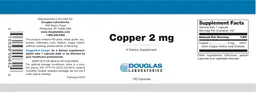
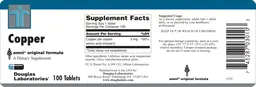
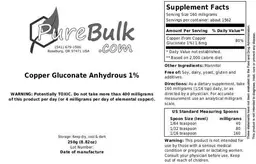
Top-rated Copper products
Ranked by safety score and evidence coverage


How it's sold
Data aggregated from 192 product labels
Research evidence
Showing top 10 of 42 sources, sorted by quality
**Shao et al., 2025** | Nutr Rev | Meta Analysis Shao Xinyi, Ou Yi, ... Chen Jin. Trace Elements and Risk of Immune-Mediated Skin Disease: A Systematic Review and Meta-analysis. Nutr Rev. 2025-Aug-01;83(8):1462-1474. doi:10.1093/nutrit/nuaf…
**Nirooei et al., 2022** | Biol Trace Elem Res | Meta Analysis Nirooei Elahe, Kashani Seyyed Mohammad Amin, ... Akbari Hamed. Blood Trace Element Status in Multiple Sclerosis: a Systematic Review and Meta-analysis. Biol Trace Elem Res. 2022…
**Osland et al., 2022** | Clin Nutr ESPEN | Systematic Review Osland Emma J, Polichronis Kelly, ... Blake Claire. Micronutrient deficiency risk in long-term enterally fed patients: A systematic review. Clin Nutr ESPEN. 2022-Dec;52:395-420. …
**Wang et al., 2023** | Biol Trace Elem Res | Meta Analysis Wang Hua, Li Xian-Bao, ... Li Bao-Zhu. Essential Trace Element Status in Systemic Lupus Erythematosus: a Meta-analysis Based on Case-Control Studies. Biol Trace Elem Res. 2023-May;…
**Zhang et al., 2022** | J Trace Elem Med Biol | Meta Analysis Zhang Ling, Shao Ji, ... Shan Xiao-Yue. Association between serum copper/zinc ratio and lung cancer: A systematic review with meta-analysis. J Trace Elem Med Biol. 2022-Dec;74:1…
**Takami et al., 2025** | Int J Mol Sci | Systematic Review Takami Akiyoshi, Uchino Kaori, ... Enomoto Megumi. Vacuolated Marrow Cytopenias from Copper Deficiency to UBA1-Mutant VEXAS: Molecular Landscape, Systematic Review, and Cost-Effici…
**Stehle et al., 2016** | Eur J Clin Nutr | Systematic Review Stehle P, Stoffel-Wagner B, Kuhn K S. Parenteral trace element provision: recent clinical research and practical conclusions. Eur J Clin Nutr. 2016-Aug;70(8):886-93. doi:10.1038/…
**Xu et al., 2025** | Obes Surg | Meta Analysis Xu Bangrong, Xiao Taifu, ... Liang Daoming. Copper Deficiency: A Frequently Overlooked Complication After MBS-A Systematic Review and Meta-analysis. Obes Surg. 2025-Feb;35(2):602-613. doi:10.1…
**Muñoz-Bravo et al., 2025** | Carcinogenesis | Meta Analysis Muñoz-Bravo Carlos, Marín-Burdallo Inés, ... Olmedo-Requena Rocío. Copper in colorectal cancer patients: a systematic review and meta-analysis. Carcinogenesis. 2025-Jan-20;46(1).…
**Bjørklund et al., 2026** | Biometals | Meta Analysis Bjørklund Geir. Zinc deficiency and zinc/copper ratio imbalance in autism spectrum disorder: a reanalysis of six multinational studies. Biometals. 2026-Feb;39(1):285-296. doi:10.1007/s1…
Frequently asked questions
What is copper and what does it do in the body?
Copper is an essential trace mineral involved in numerous physiological processes, including immune function and neurological health. The Recommended Dietary Allowance (RDA) for adults is 900 mcg/day to maintain proper balance.
Does copper help prevent deficiency after bariatric surgery?
Yes, there is moderate evidence that copper deficiency is a frequently overlooked complication following metabolic and bariatric surgery. Research indicates that monitoring and supplementation are important for these patients to prevent deficiency.
Is copper supplementation necessary for people on long-term feeding tubes?
Yes, there is strong evidence that patients on long-term enteral or parenteral nutrition are at significant risk for micronutrient deficiencies. Standardized supplementation guidelines are required for this population to ensure adequate intake.
Can copper levels help diagnose or monitor autoimmune diseases?
Research indicates associations between copper levels and conditions such as Systemic Lupus Erythematosus and immune-mediated skin diseases, though the evidence is weak. These levels are primarily investigated as biomarkers rather than a direct treatment method.
Is there a link between copper and neurological disorders like Alzheimer's?
Studies have explored copper's association with Multiple Sclerosis, Alzheimer's, and Parkinson's disease, but the evidence is weak. Research often focuses on blood trace element status as a biomarker, and specific therapeutic doses are not established.
What are the safety risks and drug interactions of copper?
Copper balance is closely linked to zinc levels, and an imbalance in the zinc/copper ratio can be clinically significant. While no drug interactions are documented, proper monitoring is required in patients receiving parenteral nutrition to avoid toxicity.
Who should avoid taking copper supplements?
Individuals with Wilson's disease or those with specific genetic disorders affecting copper metabolism should avoid supplementation unless directed by a doctor. Patients on long-term parenteral nutrition or those undergoing metabolic surgery require professional monitoring to manage their copper levels safely.