Home/ Supplements/ Vitamin A/ Ultra Cardio Support Pack

Ultra Cardio Support Pack

product on market Other (e.g. tea bag) Douglas Laboratories Safety: 90/100
90/100

This product looks safe

  • Niacin/Niacinamide: 95mg is 2.7× the Tolerable Upper Intake Level (35mg)
  • Contains proprietary blend — exact ingredient amounts not disclosed
  • 48% of ingredients have research evidence
C Label Compliance Grade

What the Evidence Says

AI-generated · Qwen 3.6 · methodology

Vitamin C and Vitamin A provide antioxidant support, with strong evidence for their roles in cellular protection. However, the overall evidence coverage for this specific ingredient profile is very limited. The formulation maintains a high safety score.

AI-generated summary based on research evidence. Not medical advice.

Alerts

Safety Alerts

Niacin/Niacinamide: 95mg is 2.7× the Tolerable Upper Intake Level (35mg)

Contains proprietary blend — exact ingredient amounts not disclosed

Label

Product Label

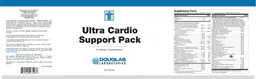
Label for Ultra Cardio Support Pack
Open Full PDF View on NIH DSLD →
Details

Label Data

1 Packet(s)
Serving Size
30
Servings
Other Combinations
Product Type
48%
Evidence Coverage
Ingredients

Supplement Facts — Evidence Check

Calories
16 {Calories}
Calories from Fat
16 {Calories}
Total Fat
1.8 Gram(s) (3% DV)
Vitamin A
7500 IU (150% DV)
700 mg (1167% DV)
7.8× RDA — above typical dose (UL: 2000 mg) 250 studies (A:6, B:97)
500 IU (125% DV)
Within RDA (0.8× RDA) 608 studies (A:16, B:251)
607 IU (2023% DV)
27.1× RDA — above typical dose (UL: 1000 mg) 179 studies (A:3, B:90)
50 mg (3333% DV)
41.7× RDA — above typical dose 76 studies (A:0, B:33)
25 mg (1471% DV)
19.2× RDA — above typical dose 13 studies (A:0, B:1)
95 mg (475% DV)
Exceeds UL by 2.7× (UL: 35 mg) 196 studies (A:5, B:63)
Vitamin B-6 {Complex}
125 mcg (2083% DV)
400 mcg (100% DV)
Within RDA (1.0× RDA) 226 studies (A:10, B:105)
125 mcg (2083% DV)
52.1× RDA — above typical dose 139 studies (A:1, B:44)
150 mcg (50% DV)
5.0× RDA — above typical dose 27 studies (A:0, B:11)
250 mg (2500% DV)
50.0× RDA — above typical dose 2 studies — no high-quality reviews
250 mg (25% DV)
Market median: 4002.0mg (1 products) 21 studies (A:0, B:2)
100 mcg (67% DV)
Within RDA (0.7× RDA) 245 studies (A:4, B:133)
250 mg (63% DV)
Within RDA (0.6× RDA) 316 studies (A:8, B:159)
13 mg (87% DV)
1.2× RDA — within safe limits 263 studies (A:6, B:134)
100 mcg (143% DV)
1.8× RDA — within safe limits 173 studies (A:0, B:67)
1 mg (50% DV)
1.1× RDA — within safe limits 37 studies (A:0, B:11)
5 mg (250% DV)
2.2× RDA — within safe limits 9 studies — no high-quality reviews
100 mcg (83% DV)
2.9× RDA — within safe limits 199 studies (A:1, B:55)
50 mcg (67% DV)
1.1× RDA — within safe limits 3 studies — no high-quality reviews
Potassium
50 mg (1% DV)
Market median: 750.0mg (447 products) 393 studies (A:18, B:204)
500 mg
Market median: 500.0mg (861 products) 61 studies (A:4, B:13)
Plant Sterols
400 mg
Sytrinol
150 mg
Proprietary Organic Fruit and Vegetable Blend
350 mg
Market median: 100.0mg (283 products) 144 studies (A:1, B:64)
L-Cysteine/N-Acetyl L-Cysteine
75 mg
57 mg
Market median: 496.0mg (192 products) 20 studies — no high-quality reviews
Market median: 250.0mg (182 products) 10 studies (A:0, B:2)
50 mg
Market median: 500.0mg (497 products) 135 studies (A:0, B:40)
Cauliflower
50 mg
50 mg
Market median: 200.0mg (107 products)
50 mg
Market median: 4.0mg (67 products)
Green Papaya extract
50 mg
50 mg
Market median: 550.0mg (217 products) 29 studies (A:0, B:5)
Rose Hips
50 mg
Market median: 500.0mg (283 products) 174 studies (A:0, B:62)
Blackberry
40 mg
Celery poweder
35 mg
Black Radish powder
35 mg
Apricot powder
35 mg
30 mg
Within RDA (0.1× RDA) 38 studies (A:1, B:7)
Market median: 260.0mg (249 products) 158 studies (A:4, B:61)
25 mg
Market median: 500.0mg (9 products) 7 studies — no high-quality reviews
Apple Pectin
25 mg
1.7× RDA — within safe limits 179 studies (A:3, B:90)
25 mg
Market median: 200.0mg (136 products) 3 studies — no high-quality reviews
Market median: 100.0mg (284 products) 10 studies (A:0, B:4)
Hesperidin
17.5 mg
12.5 mg
Market median: 500.0mg (19 products)
Glutamic Acid
10 mg
Market median: 500.0mg (193 products) 7 studies — no high-quality reviews
3 mg
Market median: 10.0mg (105 products) 2 studies (A:0, B:1)
3 mg
Market median: 10.0mg (35 products) 6 studies (A:0, B:2)
0.5 mg
Market median: 4.0mg (32 products)
0.75 mg
Market median: 3.0mg (58 products) 3 studies — no high-quality reviews
Trace Elements
50 mcg
25 mcg
Market median: 0.5mg (6 products) 1 studies (A:0, B:1)

Other Ingredients

Cellulose Gelatin Vegetable Stearate ultra refined Fish Oil concentrate Glycerin Water Silica Hydroxypropyl Methylcellulose Medium Chain Triglycerides Polysorbate 80 Polyglycerol Fatty Acid Esters Citrus Oil extract Ethylcellulose Coconut Oil Ammonium Hydroxide Sodium Alginate Stearic Acid
Claims

Label Claims — Verification

Unverified All Other
Info

Product Information

Directions for Use

Suggested Usage: As a dietary supplement, adults take 1 pack daily or as directed by your healthcare professional. This product is best taken with meals.

Warnings & Precautions

Tamper resistant package, do not use if outer seal is missing.

KEEP OUT OF REACH OF CHILDREN.

Formulation Notes

This product contains NO yeast, milk/dairy, corn, sugar, starch, artificial coloring, preservatives or flavoring.

Additional Information

For optimal storage conditions, store in a cool, dry place. (59(0)-77(0)F/15(0)-25(0)C) (35-65% relative humidity)

OPC-85 (TM) ANTIOXIDANT U.S. PATENT 4,698,360

Formula #65389

Metadata

Product Details

UPC / SKU3 10539 03543 6
DSLD Entry Date2013-11-25
Product TypeOther Combinations
FormOther (e.g. tea bag)
DSLD ID27277
Data Updated2026-04-11
Research

Research Evidence

337
Research Sources
54
Avg Quality
161
Meta Analysis
68
Systematic Review
51
Rct
48
Clinical Trial
2
Other
2
Regulatory Source
1
Narrative Review
1
Cochrane Review
1
Guideline
1
Openfda Safety
A Vitamin A supplementation for preventing morbidity and mortality in children from six months to five years of age
Meta Analysis The Cochrane database of systematic reviews 2017 PubMed DOI
A Vitamin A supplementation for the prevention of morbidity and mortality in infants six months of age or less
Meta Analysis The Cochrane database of systematic reviews 2011 PubMed DOI
A Vitamin A supplementation for reducing the risk of mother-to-child transmission of HIV infection
Meta Analysis The Cochrane database of systematic reviews 2011 PubMed DOI
A Vitamin A supplements for preventing mortality, illness, and blindness in children aged under 5: systematic review and meta-analysis
Meta Analysis BMJ (Clinical research ed.) 2011 PubMed DOI
A Fortification of staple foods with vitamin A for vitamin A deficiency
Systematic Review The Cochrane database of systematic reviews 2019 PubMed DOI
A Vitamin A supplementation for the prevention of morbidity and mortality in infants one to six months of age
Narrative Review The Cochrane database of systematic reviews 2016 PubMed DOI
A Vitamin A and fish oils for preventing the progression of retinitis pigmentosa
Meta Analysis The Cochrane database of systematic reviews 2020 PubMed DOI
A Exercise training-induced changes in exerkine concentrations may be relevant to the metabolic control of type 2 diabetes mellitus patients: A systematic review and meta-analysis of randomized controlled trials
Meta Analysis Journal of sport and health science 2023 PubMed DOI
A Food fortification with multiple micronutrients: impact on health outcomes in general population
Meta Analysis The Cochrane database of systematic reviews 2019 PubMed DOI
A Oral vitamin A supplements to prevent acute upper respiratory tract infections in children up to seven years of age
Meta Analysis The Cochrane database of systematic reviews 2024 PubMed DOI
View all evidence for Vitamin A →
Compare

Similar Products

View all Vitamin A products →

This product page is for informational purposes only and does not constitute medical advice. Always consult your healthcare provider before taking any supplement.