Big Noise Rainbow Candy
100/100
This product looks safe
- No ingredients exceed tolerable upper intake levels
- 43% of ingredients have research evidence
A
Label Compliance Grade
What the Evidence Says
AI-generated · Qwen 3.6 · methodologyThe profile includes choline and betaine anhydrous, which have moderate evidence for supporting cognitive function and metabolic health. Acetyl L-Carnitine and glucosyl hesperidin are included for potential neuroprotective and circulatory benefits, though evidence for these specific forms is more limited. These ingredients are generally recognized as safe for consumption.
AI-generated summary based on research evidence. Not medical advice.
Label
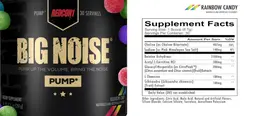
Product Label
Details
Label Data
8.7 Gram(s)
Serving Size
30
Servings
Other Combinations
Product Type
43%
Evidence Coverage
Ingredients
Supplement Facts — Evidence Check
407 mg
(74% DV)
Within RDA (0.7× RDA)
38 studies (A:1, B:7)
Sodium
140 mg
(6% DV)
2500 mg
Market median: 496.0mg (192 products)
20 studies — no high-quality reviews
Market median: 500.0mg (861 products)
61 studies (A:4, B:13)
Glucosyl Hesperidin
200 mg
100 mg
Market median: 200.0mg (358 products)
9 studies (A:0, B:2)
100 mg
Market median: 650.0mg (87 products)
1 studies — no high-quality reviews
Other Ingredients
Citric Acid
Malic Acid
Natural and Artificial flavors
Silicon Dioxide
Calcium Silicate
Sucralose
Acesulfame Potassium
Claims
Label Claims — Verification
Unverified
No Claim
Info
Product Information
Formulation Notes
Rainbow Candy Naturally and Artificially Flavored
Additional Information
Pump Pump up the volume, Bring the noise
Metadata
Product Details
Research
Research Evidence
28
Research Sources
47
Avg Quality
11
Clinical Trial
8
Rct
2
Guideline
2
Meta Analysis
2
Regulatory Source
1
Systematic Review
1
Openfda Safety
B
Greater Choline-Containing Compounds and Myo-inositol in Treatment-Resistant Versus Responsive Schizophrenia: A 1H-Magnetic Resonance Spectroscopy Meta-analysis
B
Integrating multi-structure covalent docking with machine-learning consensus scoring enhances potency ranking of human acetylcholinesterase inhibitors.
B
Evidence-based clinical practice guidelines for functional dyspepsia 2021.
B
Scientific Opinion on health claims related to choline
C
Effectiveness of nutritional interventions to prevent nonprogressive congenital and perinatal brain injuries: a systematic review and meta-analysis of randomized trials
C
Two methods for assessment of choline status in a randomized crossover study with varying dietary choline intake in people: isotope dilution MS of plasma and in vivo single-voxel magnetic resonance spectroscopy of liver.
C
Choline and betaine concentrations in plasma discriminate levels of dietary choline intake in healthy adults: analysis of a double-blind randomized crossover controlled feeding study.
C
Nutrient-based therapies for bipolar disorder: a systematic review
C
The association of betaine, homocysteine and related metabolites with cognitive function in Dutch elderly people
Compare
Similar Products
Alpha-GPC 50%
Hard Rhino · Powder
100
Alpha-GPC 50%
Hard Rhino · Powder
100
Choline Bitartrate
Hard Rhino · Powder
100
Choline Bitartrate
Hard Rhino · Powder
100
Lecithin
Higher Nature · Powder
100
This product page is for informational purposes only and does not constitute medical advice. Always consult your healthcare provider before taking any supplement.