100/100
This product looks safe
- No ingredients exceed tolerable upper intake levels
- 33% of ingredients have research evidence
A
Label Compliance Grade
What the Evidence Says
✨ AI-generated · Qwen 3.6
· methodology
Phosphatidylcholine is a phospholipid that supports cell membrane integrity and may influence cognitive function. Research providing evidence for these effects is generally moderate, though specific clinical outcomes vary. The overall ingredient profile is considered safe for general consumption.
AI-generated summary based on research evidence. Not medical advice.
Details
Label Data
3 Vegetarian Capsule(s)
Serving Size
Fat/Fatty Acid
Product Type
Ingredients
Supplement Facts — Evidence Check
Total Fat
2 Gram(s)
(3% DV)
4.4× RDA — above typical dose (UL: 3500 mg)
38 studies (A:1, B:7)
Other Ingredients
Safflower Oil
neutral Spirits
Cellulose
Claims
Label Claims — Verification
Unverified
Nutrient
Unverified
All Other
Info
Product Information
Directions for Use
Suggested Usage: As a dietary supplement, take 3-4 capsules per day, or as directed by your health care practitioner.
Warnings & Precautions
Do not take if tamper resistant seal is broken or missing.
Formulation Notes
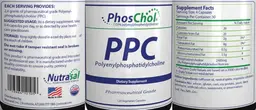
Each Serving Provides:
2.4 grams of pharmaceutical grade Polyenylphosphatidylcholine (PPC).
This product is pharmaceutical grade and intended for professional use. It is manufactured under strict quality controls to ensure purity, potency and reliability.
(100% polyenylphosphatidylcholine)
PPC
Polyenylphosphatidylcholine
Pharmaceutical grade
Contains No: Wheat, gluten, corn, soy protein, yeast, dairy products, artificial colors, sweeteners, or preservatives.
Additional Information
Storage: Keep tightly closed in a cool dry place, out of the reach of children.
Made in USA
cGMP Compliant
Metadata
Product Details
UPC / SKU0 13964 12105 6
DSLD Entry Date2022-02-23
Product TypeFat/Fatty Acid
FormCapsule
Data Updated2026-04-11
Research
Research Evidence
B
Greater Choline-Containing Compounds and Myo-inositol in Treatment-Resistant Versus Responsive Schizophrenia: A 1H-Magnetic Resonance Spectroscopy Meta-analysis
Meta Analysis
Biological psychiatry. Cognitive neuroscience and neuroimaging
2024
PubMed
DOI
B
Integrating multi-structure covalent docking with machine-learning consensus scoring enhances potency ranking of human acetylcholinesterase inhibitors.
Guideline
Briefings in bioinformatics
2026
PubMed
DOI
B
Evidence-based clinical practice guidelines for functional dyspepsia 2021.
Guideline
Journal of gastroenterology
2022
PubMed
DOI
B
Scientific Opinion on health claims related to choline
Regulatory Source
EFSA Journal
2011
DOI
C
Effectiveness of nutritional interventions to prevent nonprogressive congenital and perinatal brain injuries: a systematic review and meta-analysis of randomized trials
Meta Analysis
Nutrition reviews
2022
PubMed
DOI
C
Two methods for assessment of choline status in a randomized crossover study with varying dietary choline intake in people: isotope dilution MS of plasma and in vivo single-voxel magnetic resonance spectroscopy of liver.
Rct
The American journal of clinical nutrition
PubMed
DOI
C
Choline and betaine concentrations in plasma discriminate levels of dietary choline intake in healthy adults: analysis of a double-blind randomized crossover controlled feeding study.
Rct
The American journal of clinical nutrition
PubMed
DOI
C
Nutrient-based therapies for bipolar disorder: a systematic review
Systematic Review
Psychotherapy and psychosomatics
2013
PubMed
DOI
C
The association of betaine, homocysteine and related metabolites with cognitive function in Dutch elderly people
Rct
The British journal of nutrition
2007
PubMed
C
Differential metabolism of choline supplements in adult volunteers.
View all evidence for Choline →
This product page is for informational purposes only and does not constitute medical advice. Always consult your healthcare provider before taking any supplement.