Vitamin B3 Niacin 1000 mg
Review before taking
- Niacin: 1000mg is 28.6× the Tolerable Upper Intake Level (35mg)
- 100% of ingredients have research evidence
What the Evidence Says
AI-generated · Qwen 3.6 · grounded in 1 source · methodologyNiacin is used to support lipid profiles and cardiovascular health, though research evidence for high-dose supplementation is mixed. Due to the 1000 mg strength, potential safety concerns include flushing and liver enzyme elevations. Evidence for its efficacy in preventing heart disease is considered moderate to limited.
AI-generated summary based on research evidence. Not medical advice.
Safety Alerts
Niacin: 1000mg is 28.6× the Tolerable Upper Intake Level (35mg)
This product received a low safety score because it contains 1000mg of Niacin, which is nearly 29 times higher than the recommended maximum daily limit.
Product Label
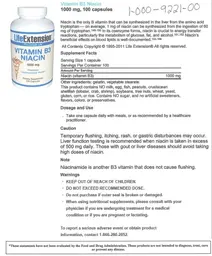
Label Data
Supplement Facts — Evidence Check
Other Ingredients
Label Claims — Verification
Product Information
Directions for Use
Dosage and Use Take one capsule daily with meals, or as recommended by a healthcare practitioner.
Warnings & Precautions
- When using nutritional supplements, please consult with your physician if you are undergoing treatment for a medical condition or if you are pregnant or lactating.
Caution Temporary flushing, itching, rash, or gastric disturbances may occur. Liver function testing is recommended when niacin is taken in excess of 500 mg daily. Those with gout or liver diseases should avoid taking high doses of niacin.
Warnings - KEEP OUT OF REACH OF CHILDREN.
- DO NOT EXCEED RECOMMENDED DOSE.
- Do not purchase if outer seal is broken or damaged.
Formulation Notes
This product contains NO milk, egg, fish, peanuts, crustacean shellfish (lobster, crab, shrimp), soybeans, tree nuts, wheat, yeast, gluten, corn, or rice. Contains NO sugar, and no artificial sweeteners, flavors, colors, or preservatives.
Vitamin B3 Niacin 1000 mg, 100 capsules
Additional Information
Note Niacinamide is another B3 vitamin that does not cause flushing.
Niacin is the only B vitamin that can be synthesized in the liver from the amino acid tryptophan — on average, 1 mg of niacin can be synthesized from the ingestion of 60 mg of tryptophan.148-150 In its coenzyme forms, niacin is crucial to energy transfer reactions, particularly the metabolism of glucose, fat, and alcohol.151,152 Niacin’s beneficial effects on blood lipids is well-documented.153-166
Promotes Cardiovascular Health
Product Details
Research Evidence
Similar Products
This product page is for informational purposes only and does not constitute medical advice. Always consult your healthcare provider before taking any supplement.