🟢 100/100

This product looks safe

  • No ingredients exceed tolerable upper intake levels
  • Limited research evidence available for ingredients
B Label Compliance Grade

Product Label

📸

Have a supplement label? Find it here.

Upload a photo of any supplement label to search our database of 92,312 products.

Label Data

3 Capsule(s) Serving Size
30 Servings
Other Combinations Product Type
0% Evidence Coverage

Supplement Facts — Evidence Check

1 Gram(s)
📊 Market median: 2000.0mg (63 products)
Median 2000.0mg This product: 1mg
Mediator 50P
600 mg
Ajuga turkestanica extract
200 mg
Pine Bark Extract
150 mg
BioPerine Black Pepper fruit extract
5 mg

Other Ingredients

Capsule Rice Flour Silicon Dioxide Magnesium Stearate

Label Claims — Verification

All Other
Structure/Function
All Other (97% of products) Structure/Function (94% of products) Nutrient (48% of products) No Claim (2% of products)

Target Groups

Adult (18 - 50 Years)

Product Information

📋 Directions for Use

Suggested Use: Take 3 capsules daily with 8-12 fl. oz. of water.

⚠️ Warnings & Precautions

Warning: Not intended for anyone under the age of 18.

If you are nursing, pregnant, taking medication or have a medical condition, consult your physician before taking this product.

Keep out of reach of children.

Manufactured in a facility which processes milk, eggs, fish, shellfish, tree nuts, peanuts, wheat, soybeans, and sesame.

🧪 Formulation Notes

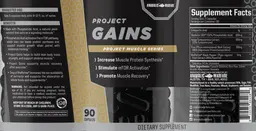
Benefits: Made with Phosphatidic Acid, a natural plant nutrient that acts as a signaling molecule. Phosphatidic Acid activates the mTOR pathway, which then can boost protein synthesis and support muscle growth when paired with resistance training.

Project Gains helps to build lean body mass, strength, and support skeletal muscle. Project Gains supports muscle recovery after exercise.

5 mg of BioPerine increases the bio-availability of nutrients and supports the absorption of whole foods and supplements.

Increase muscle protein synthesis Stimulate mTOR activation Promote muscle recovery

Additional Information

Store in a cool, dry & dark place.

cGMP Good Manufacturing Practice Inspected Facility

Project Muscle Series

Facebook.com/anabolicwarfare Instagram @anabolicwarfare

Product Details

UPC / SKU 8 12575 03498 0
DSLD Entry Date 2023-01-23
Product Type Other Combinations
Form Capsule
DSLD ID 273270
Data Updated 2026-04-11

Research Evidence

9 Research Sources
37 Avg Quality Score
5 Rct
4 Other
C The Effects of Six-Gram D-Aspartic Acid Supplementation on the Testosterone, Cortisol, and Hematological Responses of Male Boxers Subjected to 11 Days of Nocturnal Exposure to Normobaric Hypoxia
Rct Nutrients 2023
C Using an experimental medicine model to understand the antidepressant potential of the N-Methyl-D-aspartic acid (NMDA) receptor antagonist memantine
Rct Journal of psychopharmacology (Oxford, England) 2012
C The effects of d-aspartic acid supplementation in resistance-trained men over a three month training period: A randomised controlled trial
Rct PloS one 2017
C Short-Term d-Aspartic Acid Supplementation Does Not Affect Serum Biomarkers Associated With the Hypothalamic-Pituitary-Gonadal Axis in Male Climbers
Rct International journal of sport nutrition and exercise metabolism 2019
C Combined melatonin and adrenocorticotropic hormone treatment attenuates N-methyl-d-aspartate-induced infantile spasms in a rat model by regulating activation of the HPA axis
Other Neuroscience letters 2021
D A placebo-controlled randomized crossover trial of the N-methyl-D-aspartic acid receptor antagonist, memantine, in patients with chronic phantom limb pain
Rct Anesthesia and analgesia 2004
D The efficacy of adrenocorticotropic hormone in a girl with anti-N-methyl-D-aspartate receptor encephalitis
Other Brain & development 2018
D The role and molecular mechanism of D-aspartic acid in the release and synthesis of LH and testosterone in humans and rats
Other Reproductive biology and endocrinology : RB&E 2009
F Blockage of N-methyl-D-aspartate receptors decreases testosterone levels and enhances postnatal neuronal apoptosis in the preoptic area of male rats
Other Neuroendocrinology 2000
View all evidence for D Aspartic Acid →

Compare Similar Products

View all D Aspartic Acid products →