Home/ Supplements/ Niacin/ Niacin 250 mg

Niacin 250 mg

product on market Tablet or Pill 21st Century Safety: 80/100
80/100

This product is generally safe

  • Niacin: 250mg is 7.1× the Tolerable Upper Intake Level (35mg)
  • 50% of ingredients have research evidence
C Label Compliance Grade

What the Evidence Says

AI-generated · Qwen 3.6 · methodology

Niacin is used to support cholesterol levels and skin health, though evidence for specific therapeutic outcomes varies. Calcium is essential for bone density and nerve function, supported by strong clinical research. Due to the very low evidence coverage for this specific formulation, the overall profile remains limited.

AI-generated summary based on research evidence. Not medical advice.

Alerts

Safety Alerts

Niacin: 250mg is 7.1× the Tolerable Upper Intake Level (35mg)

Label

Product Label

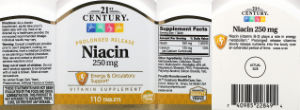
Label for Niacin 250 mg
Open Full PDF View on NIH DSLD →
Details

Label Data

1 Tablet(s)
Serving Size
110
Servings
Single Vitamin and Mineral
Product Type
50%
Evidence Coverage
Ingredients

Supplement Facts — Evidence Check

250 mg (1563% DV)
Exceeds UL by 7.1× (UL: 35 mg) 196 studies (A:5, B:63)
Calcium
125 mg (10% DV)

Other Ingredients

Hydroxypropyl Methylcellulose Cellulose Stearic Acid Maltodextrin Contains Less Than 2% of
Claims

Label Claims — Verification

Unverified Nutrient
Unverified All Other
Unverified Structure/Function
Info

Product Information

Directions for Use

Directions: As a vitamin supplement, adults take one (1) tablet daily with any meal or as directed by a healthcare provider. Do not exceed recommended dosage.

Warnings & Precautions

Do not exceed recommended dosage.

Warning: Consult a healthcare provider prior to use if pregnant, nursing, on medications, have a medical condition or are planning a medical procedure.

Stop use and contact a physician if adverse reactions occur.

Keep out of reach of children.

Do not use if product appears to be tampered with or seal is broken.

Formulation Notes

No added Sugar, Yeast, Preservatives, Artificial Flavors or Colors.

Prolonged release Energy & Circulatory Support

Gluten free

Niacin (vitamin B-3) plays a role in energy metabolism.

Prolonged release vitamins slowly release nutrients into the body over an extended period of time.

Additional Information

Individual results may vary.

Store at room temperature.

Guaranteed quality Laboratory tested

Metadata

Product Details

UPC / SKU7 40985 22849 4
DSLD Entry Date2022-01-22
Product TypeSingle Vitamin and Mineral
FormTablet or Pill
DSLD ID258478
Data Updated2026-04-11
Research

Research Evidence

241
Research Sources
55
Avg Quality
113
Meta Analysis
75
Systematic Review
32
Rct
11
Clinical Trial
3
Other
3
Regulatory Source
1
Cochrane Review
1
Narrative Review
1
Openfda Safety
A Niacin for primary and secondary prevention of cardiovascular events
Meta Analysis The Cochrane database of systematic reviews 2017 PubMed DOI
A Use of high potency statins and rates of admission for acute kidney injury: multicenter, retrospective observational analysis of administrative databases
Meta Analysis BMJ (Clinical research ed.) 2013 PubMed DOI
A Effect on cardiovascular risk of high density lipoprotein targeted drug treatments niacin, fibrates, and CETP inhibitors: meta-analysis of randomised controlled trials including 117,411 patients
Meta Analysis BMJ (Clinical research ed.) 2014 PubMed DOI
A A terminal metabolite of niacin promotes vascular inflammation and contributes to cardiovascular disease risk
Meta Analysis Nature medicine 2024 PubMed DOI
A Meta-analysis and imputation refines the association of 15q25 with smoking quantity
Meta Analysis Nature genetics 2010 PubMed DOI
A Genome-wide meta-analyses identify multiple loci associated with smoking behavior
Meta Analysis Nature genetics 2010 PubMed DOI
A Antidepressants for smoking cessation
Meta Analysis The Cochrane database of systematic reviews 2014 PubMed DOI
A Topical azelaic acid, salicylic acid, nicotinamide, sulphur, zinc and fruit acid (alpha-hydroxy acid) for acne
Meta Analysis The Cochrane database of systematic reviews 2020 PubMed DOI
B Assessment of the Role of Niacin in Managing Cardiovascular Disease Outcomes: A Systematic Review and Meta-analysis
Meta Analysis JAMA network open 2019 PubMed DOI
B Association Between Lowering LDL-C and Cardiovascular Risk Reduction Among Different Therapeutic Interventions: A Systematic Review and Meta-analysis
Meta Analysis JAMA 2016 PubMed DOI
View all evidence for Niacin →
Compare

Similar Products

View all Niacin products →

This product page is for informational purposes only and does not constitute medical advice. Always consult your healthcare provider before taking any supplement.