Prosterin
100/100
This product looks safe
- No ingredients exceed tolerable upper intake levels
- 33% of ingredients have research evidence
A
Label Compliance Grade
What the Evidence Says
AI-generated · Qwen 3.6 · methodologyPhytosterols and pumpkin extract have moderate evidence for supporting prostate and urinary health. Quercetin and PomElla provide antioxidant properties, though clinical data for this specific combination is limited. The ingredient profile is associated with a high safety score.
AI-generated summary based on research evidence. Not medical advice.
Label
Product Label
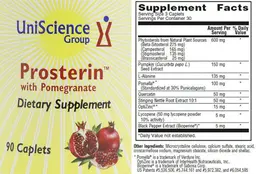
Details
Label Data
3 Caplet(s)
Serving Size
30
Servings
Other Combinations
Product Type
33%
Evidence Coverage
Ingredients
Supplement Facts — Evidence Check
Phytosterols
600 mg
Pumpkin extract
150 mg
L-Alanine
135 mg
PomElla
100 mg
50 mg
Market median: 500.0mg (283 products)
174 studies (A:0, B:62)
Stinging Nettle extract
50 mg
15 mg
1.4× RDA — within safe limits
263 studies (A:6, B:134)
5 mg
Market median: 10.0mg (35 products)
6 studies (A:0, B:2)
Black Pepper extract
5 mg
Other Ingredients
Microcrystalline Cellulose
Calcium Sulfate
Stearic Acid
Croscarmellose Sodium
Magnesium Stearate
Silicon Dioxide
Shellac
Claims
Label Claims — Verification
Unverified
No Claim
Info
Product Information
Formulation Notes
Prosterin with pomegranate
Metadata
Product Details
DSLD Entry Date2020-11-21
Product TypeOther Combinations
FormOther (e.g. tea bag)
BrandUniScience Group
DSLD ID240354
Data Updated2026-04-11
Research
Research Evidence
184
Research Sources
55
Avg Quality
91
Systematic Review
75
Meta Analysis
7
Rct
7
Clinical Trial
2
Cochrane Review
1
Openfda Safety
B
Treatment of gouty arthritis with traditional Chinese medicine decoction: Meta-analysis, network pharmacology analysis, and molecular docking
B
Effects of quercetin supplementation on lipid profile: A systematic review and meta-analysis of randomized controlled trials
B
Dietary polyphenols and the risk of metabolic syndrome: a systematic review and meta-analysis
B
Quercetin and endurance exercise capacity: a systematic review and meta-analysis
B
Dietary flavonoid intake and smoking-related cancer risk: a meta-analysis
B
Clinical efficacy evaluation and potential mechanism prediction on Guizhi-Shaoyao-Zhimu decoction in the treatment of gouty arthritis based on meta-analysis, network pharmacology analysis, and molecular docking
B
A Systematic Review: Quercetin-Secondary Metabolite of the Flavonol Class, with Multiple Health Benefits and Low Bioavailability
B
Dietary flavonoid for preventing colorectal neoplasms.
B
Flavonoids for treating venous leg ulcers.
Compare
Similar Products
Quercetin 1000 mg
GNC Preventive Nutrition · Other (e.g. tea bag)
100
Citrus Bioflavonoids 1000 mg
Vitamin World · Other (e.g. tea bag)
100
Quercetin 500 mg
GNC · Other (e.g. tea bag)
100
Citrus Bioflavonoids 1000 mg
Puritan's Pride · Other (e.g. tea bag)
100
Ear Care with Bioflavonoids
Puritan's Pride · Other (e.g. tea bag)
100
Quercetin research
Best Quercetin
All Quercetin products
More from UniScience Group
View on NIH DSLD →
This product page is for informational purposes only and does not constitute medical advice. Always consult your healthcare provider before taking any supplement.