Home/ Supplements/ Vitamin E/ Co-Q10 30 mg

Co-Q10 30 mg

product on market Softgel Capsule Carlson Safety: 100/100
100/100

This product looks safe

  • No ingredients exceed tolerable upper intake levels
  • 100% of ingredients have research evidence
A Label Compliance Grade

What the Evidence Says

AI-generated · Qwen 3.6 · grounded in 1 source · methodology

Co-Q10 and Vitamin E are antioxidants that support cellular energy production and protect cells from oxidative damage. Research provides strong evidence for the role of Co-Q10 in mitochondrial function and cardiovascular health. These ingredients are generally well-tolerated and maintain a high safety profile.

AI-generated summary based on research evidence. Not medical advice.

Label

Product Label

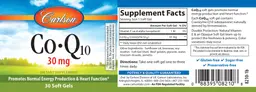
Label for Co-Q10 30 mg
Open Full PDF View on NIH DSLD →
Details

Label Data

1 Softgel(s)
Serving Size
Non-Nutrient/Non-Botanical
Product Type
100%
Evidence Coverage
Ingredients

Supplement Facts — Evidence Check

1 IU (3% DV)
Market median: 80.0mg (1390 products) 179 studies (A:3, B:90)
30 mg
Market median: 100.0mg (283 products) 144 studies (A:1, B:64)

Other Ingredients

Sunflower Oil Beeswax Soy Lecithin Soft Gel Shell
Claims

Label Claims — Verification

Unverified All Other
Unverified Structure/Function
Info

Product Information

Directions for Use

Directions: Take one soft gel one to three times daily.

Formulation Notes

Promotes Normal Energy Production & Heart Function

CoQ10 soft gels promote normal energy production and heart function. Each CoQ10 soft gel contains Coenzyme Q10 (ubiquinone) naturally derived by fermentation. Double Protection: Natural Vitamin E & an Opaque Soft Gel team up to protect the freshness & potency. Color variations may occur.

Gluten-free Sugar-free Preservative-free

Additional Information

Potency & Quality Guaranteed

An FDA Regulated Facility

Metadata

Product Details

UPC / SKU0 88395 08210 8
DSLD Entry Date2019-12-22
Product TypeNon-Nutrient/Non-Botanical
FormSoftgel Capsule
BrandCarlson
DSLD ID209178
Data Updated2026-04-11
Research

Research Evidence

253
Research Sources
55
Avg Quality
128
Meta Analysis
52
Systematic Review
41
Rct
24
Clinical Trial
3
Regulatory Source
1
Narrative Review
1
Other
1
Guideline
1
Openfda Safety
A Vitamin E supplementation in pregnancy
Meta Analysis The Cochrane database of systematic reviews 2015 PubMed DOI
A Vitamin E for Alzheimer's dementia and mild cognitive impairment
Systematic Review The Cochrane database of systematic reviews 2017 PubMed DOI
A Vitamin E for Alzheimer's disease and mild cognitive impairment
Meta Analysis The Cochrane database of systematic reviews 2008 PubMed DOI
A Vitamin E for Alzheimer's dementia and mild cognitive impairment
Meta Analysis The Cochrane database of systematic reviews 2012 PubMed DOI
A Exercise for intermittent claudication
Meta Analysis The Cochrane database of systematic reviews 2017 PubMed DOI
A Effects of vitamin E supplementation on the risk and progression of AD: a systematic review and meta-analysis
Meta Analysis Nutritional neuroscience 2021 PubMed DOI
A Effect of vitamin E supplementation in rheumatoid arthritis: a systematic review and meta-analysis
Meta Analysis European journal of clinical nutrition 2023 PubMed DOI
A Vitamin E and the risk of prostate cancer: the Selenium and Vitamin E Cancer Prevention Trial (SELECT)
Rct JAMA 2011 PubMed DOI
A Vitamin E for Alzheimer's dementia and mild cognitive impairment
Meta Analysis The Cochrane database of systematic reviews 2017 PubMed DOI
B Vitamin, Mineral, and Multivitamin Supplementation to Prevent Cardiovascular Disease and Cancer: US Preventive Services Task Force Recommendation Statement.
Guideline JAMA 2022 PubMed DOI
View all evidence for Vitamin E →
Compare

Similar Products

View all Vitamin E products →

This product page is for informational purposes only and does not constitute medical advice. Always consult your healthcare provider before taking any supplement.