Home/ Supplements/ Red Yeast Rice/ Red Yeast Rice with Ubiquinol QH

Red Yeast Rice with Ubiquinol QH

product on market Capsule Patient One 1 MediNutritionals Safety: 100/100
100/100

This product looks safe

  • No ingredients exceed tolerable upper intake levels
  • 100% of ingredients have research evidence
A Label Compliance Grade

What the Evidence Says

AI-generated · Qwen 3.6 · grounded in 1 source · methodology

Red yeast rice contains monacolin K, which has strong evidence for lowering LDL cholesterol levels. Coenzyme Q10 is often included to support mitochondrial function and mitigate potential muscle soreness associated with statin-like compounds. Together, these ingredients target lipid management and cellular energy production based on moderate to strong clinical research.

AI-generated summary based on research evidence. Not medical advice.

Label

Product Label

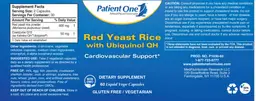
Label for Red Yeast Rice with Ubiquinol QH
Open Full PDF View on NIH DSLD →
Details

Label Data

2 Capsule(s)
Serving Size
30
Servings
Non-Nutrient/Non-Botanical
Product Type
100%
Evidence Coverage
Ingredients

Supplement Facts — Evidence Check

Market median: 1000.0mg (223 products) 11 studies (A:0, B:5)
50 mg
Market median: 100.0mg (283 products) 144 studies (A:1, B:64)

Other Ingredients

D-Limonene Vegetable Cellulose Medium Chain Triglycerides Chlorophyll D-Alpha-Tocopheryl Acetate
Claims

Label Claims — Verification

Unverified All Other
Unverified Structure/Function
Info

Product Information

Directions for Use

Suggested use: Take 2 vegetarian capsules daily as a dietary supplement or as directed by a qualified health professional.

Warnings & Precautions

Keep out of reach of children.

Caution: Consult physician if you have any medical conditions or are taking any medications for a cholesterol condition or intend to use this product to support cholesterol levels.

Do not use if you are allergic to yeast, have a history of liver disease, are an organ transplant recipient, or have had major surgery.

Discontinue use if you experience unexplained muscle pain or tenderness, especially if accompanied by flu-like symptoms.

If pregnant, nursing, or taking medications, consult doctor before use.

Discontinue use and consult doctor if any adverse reactions occur.

Formulation Notes

Free of: Milk, egg, fish, peanuts, crustacean shellfish (lobster, crab, or shrimp), soybeans, tree nuts, wheat, gluten, corn, and artificial sweeteners, flavors, colors, and preservatives. Free of ingredients derived from GMOs.

Gluten free

Vegetarian

Additional Information

Store in a cool, dry place and avoid excessive heat.

Cardiovascular support

Non GMO

BPA free

Metadata

Product Details

DSLD Entry Date2019-08-23
Product TypeNon-Nutrient/Non-Botanical
FormCapsule
DSLD ID205603
Data Updated2026-04-11
Research

Research Evidence

13
Research Sources
53
Avg Quality
5
Rct
5
Meta Analysis
2
Clinical Trial
1
Regulatory Source
B Impact of red yeast rice supplementation on lipid profile: a systematic review and meta-analysis of randomized-controlled trials
Meta Analysis Expert review of clinical pharmacology 2023 PubMed DOI
B Low Dose Monacolin K Combined with Coenzyme Q10, Grape Seed, and Olive Leaf Extracts Lowers LDL Cholesterol in Patients with Mild Dyslipidemia: A Multicenter, Randomized Controlled Trial
Rct Nutrients 2023 PubMed DOI
B Original Research: The Effects of Red Yeast Rice Supplementation on Cholesterol Levels in Adults
Meta Analysis The American journal of nursing 2017 PubMed DOI
B Randomized, Double-Blind, Placebo-Controlled Trial to Test the Effects of a Nutraceutical Combination Monacolin K-Free on the Lipid and Inflammatory Profile of Subjects with Hypercholesterolemia
Rct Nutrients 2022 PubMed DOI
B Low dose red yeast rice with monacolin K lowers LDL cholesterol and blood pressure in Japanese with mild dyslipidemia: A multicenter, randomized trial
Rct Asia Pacific journal of clinical nutrition 2021 PubMed DOI
C Impact of Monacolin K-Containing Supplements on Lipid Profile: A Meta-Analysis of Randomised Controlled Trials
Meta Analysis Endocrinology, diabetes & metabolism 2026 PubMed DOI
C Traditional Chinese lipid-lowering agent red yeast rice results in significant LDL reduction but safety is uncertain - a systematic review and meta-analysis
Meta Analysis Atherosclerosis 2015 PubMed DOI
C Effects of a nutraceutical combination containing berberine (BRB), policosanol, and red yeast rice (RYR), on lipid profile in hypercholesterolemic patients: A meta-analysis of randomised controlled trials
Meta Analysis Clinica e investigacion en arteriosclerosis : publicacion oficial de la Sociedad Espanola de Arteriosclerosis 2016 PubMed DOI
C Can red yeast rice and olive extract improve lipid profile and cardiovascular risk in metabolic syndrome?: A double blind, placebo controlled randomized trial
Rct BMC complementary and alternative medicine 2015 PubMed DOI
C No additional cholesterol-lowering effect observed in the combined treatment of red yeast rice and Lactobacillus casei in hyperlipidemic patients: A double-blind randomized controlled clinical trial
Rct Chinese journal of integrative medicine 2017 PubMed DOI
View all evidence for Red Yeast Rice →
Compare

Similar Products

View all Red Yeast Rice products →

This product page is for informational purposes only and does not constitute medical advice. Always consult your healthcare provider before taking any supplement.