SLO-NIACIN 500 mg
Review before taking
- Niacin: 500mg is 14.3× the Tolerable Upper Intake Level (35mg)
- 100% of ingredients have research evidence
What the Evidence Says
AI-generated · Qwen 3.6 · grounded in 1 source · methodologyNiacin is used to manage lipid levels and support cardiovascular health, though clinical evidence for these effects varies. Due to the safety score, potential concerns include flushing and liver toxicity at high doses. Research provides moderate evidence for its efficacy in specific metabolic applications.
AI-generated summary based on research evidence. Not medical advice.
Safety Alerts
Niacin: 500mg is 14.3× the Tolerable Upper Intake Level (35mg)
This product received a low safety score because it contains 500mg of Niacin, which is over 14 times the recommended upper daily limit.
Product Label
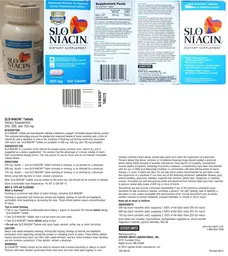
Label Data
Supplement Facts — Evidence Check
Other Ingredients
Label Claims — Verification
Product Information
Directions for Use
Directions: Adults - one Slo-Niacin tablet morning or evening, or as directed by a physician. Before using 500 mg daily or more, consult a physician. Note: Slo-Niacin tablets may be broken on the score line, but should not be crushed or chewed.
Suggested Use Slo-Niacin is a member of the vitamin B-complex group (nicotinic acid, vitamin B3) and is suggested as a dietary supplement. This product has the advantage of a slower release of niacin than conventional dosage forms. This may permit its use by those who do not tolerate immediate-release tablets.
Directions 250 mg: Adults — one Slo-Niacin Tablet morning or evening, or as directed by a physician. 500 mg: Adults — one Slo-Niacin Tablet morning or evening, or as directed by a physician. 750 mg: Adults — one Slo-Niacin Tablet morning or evening, or as directed by a physician.
Note: Slo-Niacin tablets may be broken on the score line, but should not be crushed or chewed.
Warnings & Precautions
Caution Niacin may cause temporary flushing, itching and tingling, feelings of warmth and headache, particularly when beginning, increasing the amount or changing brand of niacin. These effects seldom require discontinuing niacin use. Skin rash, upset stomach, and low blood pressure when standing are less common symptoms, if they persist, contact a physician.
Warnings Slo-Niacin tablets should not be used by persons with a known sensitivity or allergy to niacin.
Persons with heart disease, particularly those who have recurrent chest pain (angina) or who recently suffered a heart attack, should take niacin only under the supervision of a physician. Persons taking high blood pressure or cholesterol-lowering drugs should contact a physician before taking niacin because of possible interactions. Case reports of myopathy (unexplained muscle related complaints, including discomfort, weakness, or tenderness) have been documented with the use of HMG-CoA Reductase Inhibitors in combination with lipid-altering doses of niacin therapy (=1 gram of niacin per day).
Do not take niacin unless recommended by and taken under the supervision of a physician if you have any of the following conditions: gallbladder disease, gout, arterial bleeding, glaucoma, diabetes, impaired liver function, peptic ulcer, pregnancy or lactating women.
Increased uric acid and glucose levels and abnormal liver function tests have been reported in persons taking daily doses of 500 mg or more of niacin.
Discontinue use and consult a physician immediately if any of the following symptoms occur: persistent flu-like symptoms (nausea, vomiting, a general “not well” feeling); loss of appetite; a decrease in urine output associated with dark-colored urine; muscle discomfort such as tender, swollen muscles or muscle weakness; irregular heartbeat; or cloudy or blurry vision.
Keep out of reach of children.
Before using 500 mg daily or more, consult a physician.
Formulation Notes
Slo-Niacin 500 mg
Contains a doctor-recommended form of niacin
Contains a doctor recommended form or niacin-nicotinic acid
500 mg niacin (nicotinic acid), supplying 2,500% of the Daily Value (DV) for niacin.
Each tablet also contains: hypromellose, hydrogenated vegetable oil, silicon dioxide, magnesium stearate, glyceryl behenate, Red 40.
Additional Information
Unique polygel system designed to minimize flushing
Clinically proven to support good cholesterol (HDL)
#1 Pharmacist Recommended 2013-2014 U.S.News & World Report Pharmacy Times
Controlled release to reduce flushing
This exclusive technology ensures the gradual and measured release of niacin (nicotinic acid, a form of vitamin B3) and is designed to reduce the incidence of flushing and itching commonly associated with niacin use.
Store at controlled room temperature, 15-30(0)C (59-86(0)F). Keep tightly closed.
107699-02 R0513
Helps maintain good cholesterol (HDL) within the normal range
Unique polygel system designed to minimize flushing
1. Data on file. Upsher-Smith Laboratories, Inc. 2. Slo-Niacin (product information). Minneapolis, MN: Upsher-Smith Laboratories, Inc; 2011.
105186-03 08
250, 500, and 750 mg
Ingredients 250 mg niacin (nicotinic acid), supplying 1,250% of the Daily Value (DV) for niacin.
750 mg niacin (nicotinic acid), supplying 3,750% of the Daily Value (DV) for niacin.
105186-03 Revised 0614
Product Details
Research Evidence
Similar Products
This product page is for informational purposes only and does not constitute medical advice. Always consult your healthcare provider before taking any supplement.