Flush-Free Niacin 500 mg
This product is generally safe
- Niacin: 500mg is 14.3× the Tolerable Upper Intake Level (35mg)
- 100% of ingredients have research evidence
What the Evidence Says
AI-generated · Qwen 3.6 · grounded in 1 source · methodologyNiacin is supported by strong evidence for managing lipid levels, while inositol is often used to reduce the flushing response associated with niacin. Research indicates these ingredients may support metabolic health, though the overall evidence coverage for this specific formulation is limited.
AI-generated summary based on research evidence. Not medical advice.
Safety Alerts
Niacin: 500mg is 14.3× the Tolerable Upper Intake Level (35mg)
Product Label
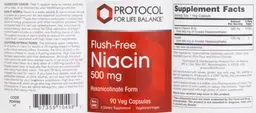
Label Data
Supplement Facts — Evidence Check
Other Ingredients
Label Claims — Verification
Product Information
Directions for Use
Suggested Usage: Take 1 capsule daily as needed, preferably with a meal, or as directed by your healthcare practitioner.
Warnings & Precautions
Cautions/Interactions: The tolerable upper intake level for all forms of niacin for adults is 35 mg/day based on flushing as the critical adverse effect; however, the form of niacin in this product is unlikely to cause a flushing response. High-dose niacin has been associated with liver dysfunction. Although this occurs most commonly with slow-release niacin, it can occur with any type of niacin when taken at a daily dose of > 500 mg (usually greater than equal to 3 g). Regular blood tests to evaluate liver function are recommended when using high-dose niacin. The anti-TB drug Isoniazid may increase the need for niacin. If you have liver disease, ulcers, gout, gallbladder disease, or drink alcohol. do not take high-dose niacin unless directed by your healthcare practitioner. If you are taking tetracycline, take at least two hours before or after taking niacin.
High-dose niacin may interact with statin drugs and may interfere with the absorption of tetracycline
Not manufactured with wheat, gluten, soy, milk, egg, fish, shellfish or tree nut ingredients. Produced in a GMP facility that processes other ingredients containing these allergens.
Formulation Notes
How it works: Niacin is a water soluble B vitamin whose main role is to serve as a precursor for two essential biochemical coenzymes, NAD and NADP. These two cofactors participate in virtually every aspect of energy production and other metabolic processes. Niacin coenzymes help the cell use carbohydrates, fats, and proteins to produce energy and are critical for DNA replication and repair. Inositol hexanicotinate is a stable, non-flushing source of niacin. This superior source of niacin works to reduce the common "niacin-flush" associated with high dose niacin supplements.
Flush-Free Niacin Hexanicotinate form
Non-GMO
Vegetarian/Vegan
Not manufactured with wheat, gluten, soy, milk, egg, fish, shellfish or tree nut ingredients.
Inositol hexanicotinate is a stable, non-flushing source of niacin. This superior source of niacin works to reduce the common "niacin-flush" problems associated with high doses of niacin supplements.
Natural color variation may occur in this product.
Product Details
Research Evidence
Similar Products
This product page is for informational purposes only and does not constitute medical advice. Always consult your healthcare provider before taking any supplement.