🟡 60/100

Review before taking

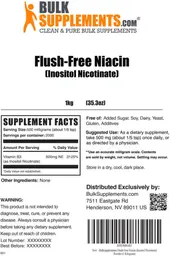
  • Vitamin B3: 500mg is 14.3× the Tolerable Upper Intake Level (35mg)
  • 100% of ingredients have research evidence
C Label Compliance Grade

Product Label

📸

Have a supplement label? Find it here.

Upload a photo of any supplement label to search our database of 92,312 products.

Safety Alerts

⚠️ Vitamin B3: 500mg is 14.3× the Tolerable Upper Intake Level (35mg)

This product received a low safety score because its dose of Vitamin B3 is significantly higher than the recommended maximum daily limit.

Label Data

500 mg Serving Size
2000 Servings
Vitamin Product Type
100% Evidence Coverage

Supplement Facts — Evidence Check

500 mg NE (3125% DV)
⚠️ Exceeds Tolerable Upper Intake Level by 14.3× (UL: 35 mg) 📚 193 studies (Tier A: 5, B: 63)
RDA 14mg This product: 500mg UL 35mg

Label Claims — Verification

All Other
Structure/Function
All Other (99% of products) Structure/Function (78% of products) Nutrient (22% of products)

Target Groups

Adult (18 - 50 Years) Gluten Free Dairy Free

Product Information

📋 Directions for Use

Suggested use: As a dietary supplement, take 500 mg (about 1/5 tsp) once daily, or as directed by a physician.

⚠️ Warnings & Precautions

Always consult a physician before taking any dietary supplement.

Keep out of reach of children.

🧪 Formulation Notes

Free of: Added sugar, soy, dairy, yeast, gluten, additives

Additional Information

Contents are sold by weight, not volume. Settling may occur.

Store in a dry, cool, dark place.

Use an accurate milligram scale. New

Product Details

UPC / SKU X0019M9AR3
DSLD Entry Date 2024-05-23
Product Type Vitamin
Form Powder
DSLD ID 312497
Data Updated 2026-04-11

Research Evidence

32 Research Sources
50 Avg Quality Score
19 Rct
7 Meta Analysis
3 Clinical Trial
2 Other
1 Systematic Review
B Greater Choline-Containing Compounds and Myo-inositol in Treatment-Resistant Versus Responsive Schizophrenia: A 1H-Magnetic Resonance Spectroscopy Meta-analysis
Meta Analysis Biological psychiatry. Cognitive neuroscience and neuroimaging 2024
B Inositol for Polycystic Ovary Syndrome: A Systematic Review and Meta-analysis to Inform the 2023 Update of the International Evidence-based PCOS Guidelines
Meta Analysis The Journal of clinical endocrinology and metabolism 2024
B Antenatal dietary supplementation with myo-inositol for preventing gestational diabetes
Meta Analysis The Cochrane database of systematic reviews 2023
B Effectiveness of inositol, metformin and their combination in women with PCOS undergoing assisted reproduction: systematic review and meta-analysis
Meta Analysis Gynecological endocrinology : the official journal of the International Society of Gynecological Endocrinology 2022
B Effects of myo-inositol vs. metformin on hormonal and metabolic parameters in women with PCOS: a meta-analysis
Meta Analysis Irish journal of medical science 2023
B Inositol for subfertile women with polycystic ovary syndrome
Meta Analysis The Cochrane database of systematic reviews 2018
B Treatment of lean PCOS teenagers: a follow-up comparison between Myo-Inositol and oral contraceptives
Rct European review for medical and pharmacological sciences 2021
B The 40:1 myo-inositol/D-chiro-inositol plasma ratio is able to restore ovulation in PCOS patients: comparison with other ratios
Rct European review for medical and pharmacological sciences 2019
C Investigating the effect of combined use of selenium and Myo-inositol supplements on thyroid function and autoimmune characteristics in thyroid disorders: a systematic review and meta-analysis
Meta Analysis Expert review of endocrinology & metabolism 2024
C Myo-inositol supplementation to prevent gestational diabetes in overweight non-obese women: bioelectrical impedance analysis, metabolic aspects, obstetric and neonatal outcomes - a randomized and open-label, placebo-controlled clinical trial.
Rct International journal of food sciences and nutrition
View all evidence for Inositol →

Compare Similar Products

View all Inositol products →