Home/ Supplements/ Aloe Vera/ YST-Dysbio-Cleanz

YST-Dysbio-Cleanz

product on market Capsule Nutri-West Safety: 100/100
100/100

This product looks safe

  • No ingredients exceed tolerable upper intake levels
  • 50% of ingredients have research evidence
A Label Compliance Grade

What the Evidence Says

AI-generated · Qwen 3.6 · methodology

This formula combines grapefruit seed extract, goldenseal, and Berberis aquifolium, which are researched for their antimicrobial and antimicrobial properties. Aloe vera is included for its soothing effects on the gastrointestinal lining. Overall, clinical evidence supporting this specific combination for dysbiosis is limited.

AI-generated summary based on research evidence. Not medical advice.

Label

Product Label

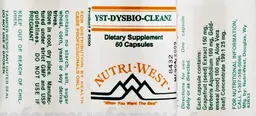
Label for YST-Dysbio-Cleanz
Open Full PDF View on NIH DSLD →
Details

Label Data

1 Capsule(s)
Serving Size
Botanical
Product Type
50%
Evidence Coverage
Ingredients

Supplement Facts — Evidence Check

Market median: 250.0mg (50 products)
Market median: 500.0mg (234 products) 95 studies (A:0, B:35)
Goldenseal
100 mg
Market median: 100.0mg (166 products) 11 studies (A:0, B:1)
Claims

Label Claims — Verification

Unverified All Other
Info

Product Information

Directions for Use

Directions for use: One capsule daily or as directed.

Warnings & Precautions

KEEP OUT OF REACH OF CHILDREN.

DO NOT USE IF PREGNANT

TAMPER RESISTANT OUTER SEAL DO NOT USE IF BROKEN.

Formulation Notes

Contains no starch, salt, sugar wheat, corn, yeast or soy derivatives.

Additional Information

Manufactured under strict GMP and USP guidelines.

Product # 2500

FOR DISTRIBUTION BY HEALTH CARE PROFESSIONALS ONLY.

Store in cool, dry place.

"When You Want The Best"

8432 MFG04/2009

Metadata

Product Details

DSLD Entry Date2013-12-24
Product TypeBotanical
FormCapsule
DSLD ID28361
Data Updated2026-04-11
Research

Research Evidence

13
Research Sources
48
Avg Quality
7
Rct
4
Systematic Review
1
Meta Analysis
1
Clinical Trial
B Aloe vera for prevention and treatment of infusion phlebitis
Meta Analysis The Cochrane database of systematic reviews 2014 PubMed DOI
B Aloe vera gel and cesarean wound healing; a randomized controlled clinical trial
Rct Global journal of health science 2014 PubMed DOI
C The use of babosa (Aloe vera) in treating burns: a literature review
Systematic Review Brazilian journal of biology = Revista brasleira de biologia 2021 PubMed DOI
C Topical Aloe Vera Gel for Accelerated Wound Healing of Split-Thickness Skin Graft Donor Sites: A Double-Blind, Randomized, Controlled Trial and Systematic Review
Systematic Review Plastic and reconstructive surgery 2018 PubMed DOI
C The efficacy of aloe vera used for burn wound healing: a systematic review
Systematic Review Burns : journal of the International Society for Burn Injuries 2007 PubMed
C Effects of Aloe Sterol Supplementation on Skin Elasticity, Hydration, and Collagen Score: A 12-Week Double-Blind, Randomized, Controlled Trial
Rct Skin pharmacology and physiology 2016 PubMed DOI
C Effects of low-dose Aloe sterol supplementation on skin moisture, collagen score and objective or subjective symptoms: 12-week, double-blind, randomized controlled trial
Rct The Journal of dermatology 2020 PubMed DOI
C Effectiveness of Aloe Vera gel compared with 1% silver sulphadiazine cream as burn wound dressing in second degree burns
Rct JPMA. The Journal of the Pakistan Medical Association 2013 PubMed
C Evaluation of the Remineralizing Effect of Aloe Vera Versus Diode Laser for Management of Deep Carious Lesions.
Clinical Trial ClinicalTrials.gov 2021
C Phase III double-blind evaluation of an aloe vera gel as a prophylactic agent for radiation-induced skin toxicity
Rct International journal of radiation oncology, biology, physics 1996 PubMed
View all evidence for Aloe Vera →
Compare

Similar Products

View all Aloe Vera products →

This product page is for informational purposes only and does not constitute medical advice. Always consult your healthcare provider before taking any supplement.