Organically Bound Minerals
This product looks safe
- No ingredients exceed tolerable upper intake levels
- 33% of ingredients have research evidence
What the Evidence Says
AI-generated · Qwen 3.6 · methodologyIodine and kelp provide essential nutrients that support thyroid function, while alfalfa juice contributes a variety of minerals. Research evidence for these specific organic mineral sources is limited. The ingredient profile maintains a high safety rating for general use.
AI-generated summary based on research evidence. Not medical advice.
Product Label
Label Data
Supplement Facts — Evidence Check
Other Ingredients
Label Claims — Verification
Product Information
Formulation Notes
Vegetarian (Lacto-ovo)
Each tablet supplies approximately: 60 mg of naturally occurring alkaline ash minerals.
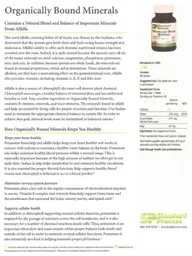
Contains a Natural Blend and Balance of Important Minerals From Alfalfa
This product contains less than 10 parts per million of gluten per serving size or less than 20 parts per million per the suggested use listed on each product label.
Additional Information
How Organically Bound Minerals Keeps You Healthy
The word alfalfa, meaning father of all foods, was chosen by the Arabians, who discovered that the sprouts gave both them and their racing horses strength and endurance. Alfalfa's ability to offer such dynamic nutritional returns has been revealed over the years. Indeed, it is aptly named because the sprouts carry all six of the major minerals we need: calcium, magnesium, phosphorus, potassium, iron, and zinc. In addition, because sprouts are whole foods, the minerals are found in natural proportions, which aid in absorption. These minerals are alkaline, yet they have a neutralizing effect on the gastrointestinal tract. Alfalfa also provides vitamins, including vitamins A, K, P, and folic acid.
Alfalfa is also a source of chlorophyll, the most well-known plant chemical. Chlorophyll encourages a healthy balance of intestinal flora and has additional benefits as well. Kelp, another ingredient in Organically Bound Minerals, contains B vitamins, minerals, and trace elements. The minerals found in alfalfa and kelp are needed by living cells for proper structure and function. Our bodies need to maintain the appropriate chemical balance to sustain life. In order to achieve that goals, mineral levels must be maintained in balanced rations.
sold through health care professionals.
6275
Keeps your heart healthy Potassium from kelp and alfalfa helps keep your heart healthy and works in concert with sodium to maintain a healthy water balance in the body. Potassium also helps maintain healthy blood pressure within a normal range. This is especially important because of the high amount of sodium we often get in or daily diets. Iodine in kelp helps metabolize fat and maintain healthy circulation. It is also essential for proper thyroid function. Kelp supports healthy blood vessels and chlorophyll is believed to act as a blood purifier.
Maintains nervous system function Potassium plays a key roll in the regular transmission of electrochemical impulses in nerves. Vitamin B complex and minerals from kelp support brain tissue and the membranes that surround the brain, sensory nerves, and spinal cord.
Introduced in 1935
Supports cellular health In addition to chlorophyll supporting normal cellular function, potassium is required for the passage of nutrients across the cell membrane, and it is also necessary for a number of chemical reactions inside cells. Thus, potassium is an important electrolyte and must remain within proper balance both inside and outside of the cell in order to maintain normal cellular functions. Potassium is also intimately involved in helping maintain proper pH balance.
GF V
Product Details
Research Evidence
Similar Products
This product page is for informational purposes only and does not constitute medical advice. Always consult your healthcare provider before taking any supplement.