🟢 100/100

This product looks safe

  • No ingredients exceed tolerable upper intake levels
  • Limited research evidence available for ingredients
B Label Compliance Grade

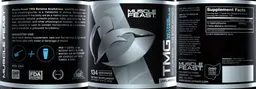
Product Label

📸

Have a supplement label? Find it here.

Upload a photo of any supplement label to search our database of 92,312 products.

Label Data

2.2 Gram(s) Serving Size
134 Servings
Non-Nutrient/Non-Botanical Product Type
0% Evidence Coverage

Supplement Facts — Evidence Check

📊 Market median: 496.0mg (192 products) 📚 20 studies — no high-quality reviews
This product: 2200mg

Other Ingredients

None

Label Claims — Verification

All Other
Structure/Function
All Other (100% of products) Structure/Function (82% of products) Nutrient (8% of products)

Target Groups

Vegan Vegetarian Adult (18 - 50 Years) Women (not pregnant or lactating)

Product Information

📋 Directions for Use

Suggested use: As an adult dietary supplement, take one 3cc serving (2.2 g) one to two times daily with water or beverage of choice. Mix 1 level (2.2 g) scoop with 6-8 oz. water or beverage of choice up to 3 times a day.

⚠️ Warnings & Precautions

Keep out of reach of children.

Do not exceed the recommended dose. Consult your physician before using this product.

Do not use this product if you are pregnant or nursing. Do not use this product if you are taking any prescription medication.

Do not use this product if you are under the age of 18.

Warning: This product is manufactured in a GMP compliant plant that processes milk.

🧪 Formulation Notes

Muscle Feast TMG Betaine Anyhdrous, scientifically referred to as trimethylglycine, is a metabolite of choline. Betaine's two main functions in the body are as a methyl donor and osmolyte. As an osmolyte, betaine protects proteins, cells, and enzymes from heat, dehydration, and other physiological stresses. As a methyl donor, betaine is used to convert homocysteine to L-methionine, and is therefore, a precursor to creatine.

Certified Vegan American Vegetarian Association

134 servings 2200 mg per serving / pure betaine anhydrous

Additional Information

GMP Good Manufacturing Practice Made in an FDA Registered Facility Certified Vegan American Vegetarian Association

SDVOSB Service Disabled Veteran Owned Small Business

Keep tightly closed in a cool, dry place away from sunlight.

Ohio family owned business

Product Details

DSLD Entry Date 2022-02-23
Product Type Non-Nutrient/Non-Botanical
Form Powder
Brand Muscle Feast
DSLD ID 260362
Data Updated 2026-04-11

Research Evidence

23 Research Sources
47 Avg Quality Score
18 Rct
3 Systematic Review
1 Meta Analysis
1 Clinical Trial
B Effect of Folic Acid, Betaine, Vitamin B₆, and Vitamin B12 on Homocysteine and Dimethylglycine Levels in Middle-Aged Men Drinking White Wine
Rct Nutrients 2016
C Betaine for nonalcoholic fatty liver disease: results of a randomized placebo-controlled trial
Rct Hepatology (Baltimore, Md.) 2009
C Guidelines for the diagnosis and management of cystathionine beta-synthase deficiency
Systematic Review Journal of inherited metabolic disease 2017
C Newborn screening for homocystinurias and methylation disorders: systematic review and proposed guidelines
Systematic Review Journal of inherited metabolic disease 2015
C Effects of low-dose B vitamins plus betaine supplementation on lowering homocysteine concentrations among Chinese adults with hyperhomocysteinemia: a randomized, double-blind, controlled preliminary clinical trial
Rct European journal of nutrition 2023
C Association of Betaine-Homocysteine S-Methyl Transferase (rs3797546 and rs3733890) polymorphisms with non-syndromic cleft lip/palate: A meta-analysis
Meta Analysis International orthodontics 2019
C Two methods for assessment of choline status in a randomized crossover study with varying dietary choline intake in people: isotope dilution MS of plasma and in vivo single-voxel magnetic resonance spectroscopy of liver.
Rct The American journal of clinical nutrition
C Effect of inulin supplementation on fecal and blood metabolome in alcohol use disorder patients: A randomised, controlled dietary intervention.
Rct Clinical nutrition ESPEN
C Choline and betaine concentrations in plasma discriminate levels of dietary choline intake in healthy adults: analysis of a double-blind randomized crossover controlled feeding study.
Rct The American journal of clinical nutrition
C Fibrates may cause an abnormal urinary betaine loss which is associated with elevations in plasma homocysteine
Rct Cardiovascular drugs and therapy 2009
View all evidence for Betaine →

Compare Similar Products

View all Betaine products →