Home/ Supplements/ Vitamin E/ Vitamin E Succinate

Vitamin E Succinate

product on market Capsule NutriCology Safety: 100/100
100/100

This product looks safe

  • No ingredients exceed tolerable upper intake levels
  • 50% of ingredients have research evidence
A Label Compliance Grade

What the Evidence Says

AI-generated · Qwen 3.6 · methodology

Vitamin E serves as a fat-soluble antioxidant that protects cell membranes from oxidative damage. Research provides strong evidence for its role in supporting immune function and skin health. The succinate form is a stable ester used to deliver this nutrient to the body.

AI-generated summary based on research evidence. Not medical advice.

Label

Product Label

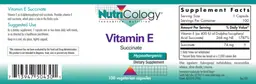
Label for Vitamin E Succinate
Open Full PDF View on NIH DSLD →
Details

Label Data

1 Capsule(s)
Serving Size
100
Servings
Other Combinations
Product Type
50%
Evidence Coverage
Ingredients

Supplement Facts — Evidence Check

268 mg NE (1787% DV)
17.9× RDA — above typical dose (UL: 1000 mg) 179 studies (A:3, B:90)
Succinate
74 mg

Other Ingredients

Hydroxypropyl Methylcellulose Microcrystalline Cellulose Silicon Dioxide L-Leucine
Claims

Label Claims — Verification

Unverified Nutrient
Unverified All Other
Unverified Structure/Function
Info

Product Information

Directions for Use

Suggested Use As a dietary supplement, 1 capsule one or two times daily with meals, or as directed by a healthcare practitioner.

Formulation Notes

Vitamin E as d-alpha-tocopheryl acid succinate. Provides vitamin E, and succinate, which plays a role in the Krebs cycle.

Hypoallergenic

Additional Information

Keep in a cool, dry place, tightly capped.

Metadata

Product Details

UPC / SKU7 13947 50430 1
DSLD Entry Date2022-01-22
Product TypeOther Combinations
FormCapsule
DSLD ID258782
Data Updated2026-04-11
Research

Research Evidence

253
Research Sources
55
Avg Quality
128
Meta Analysis
52
Systematic Review
41
Rct
24
Clinical Trial
3
Regulatory Source
1
Narrative Review
1
Other
1
Guideline
1
Openfda Safety
A Vitamin E supplementation in pregnancy
Meta Analysis The Cochrane database of systematic reviews 2015 PubMed DOI
A Vitamin E for Alzheimer's dementia and mild cognitive impairment
Systematic Review The Cochrane database of systematic reviews 2017 PubMed DOI
A Vitamin E for Alzheimer's disease and mild cognitive impairment
Meta Analysis The Cochrane database of systematic reviews 2008 PubMed DOI
A Vitamin E for Alzheimer's dementia and mild cognitive impairment
Meta Analysis The Cochrane database of systematic reviews 2012 PubMed DOI
A Exercise for intermittent claudication
Meta Analysis The Cochrane database of systematic reviews 2017 PubMed DOI
A Effects of vitamin E supplementation on the risk and progression of AD: a systematic review and meta-analysis
Meta Analysis Nutritional neuroscience 2021 PubMed DOI
A Effect of vitamin E supplementation in rheumatoid arthritis: a systematic review and meta-analysis
Meta Analysis European journal of clinical nutrition 2023 PubMed DOI
A Vitamin E and the risk of prostate cancer: the Selenium and Vitamin E Cancer Prevention Trial (SELECT)
Rct JAMA 2011 PubMed DOI
A Vitamin E for Alzheimer's dementia and mild cognitive impairment
Meta Analysis The Cochrane database of systematic reviews 2017 PubMed DOI
B Vitamin, Mineral, and Multivitamin Supplementation to Prevent Cardiovascular Disease and Cancer: US Preventive Services Task Force Recommendation Statement.
Guideline JAMA 2022 PubMed DOI
View all evidence for Vitamin E →
Compare

Similar Products

View all Vitamin E products →

This product page is for informational purposes only and does not constitute medical advice. Always consult your healthcare provider before taking any supplement.